
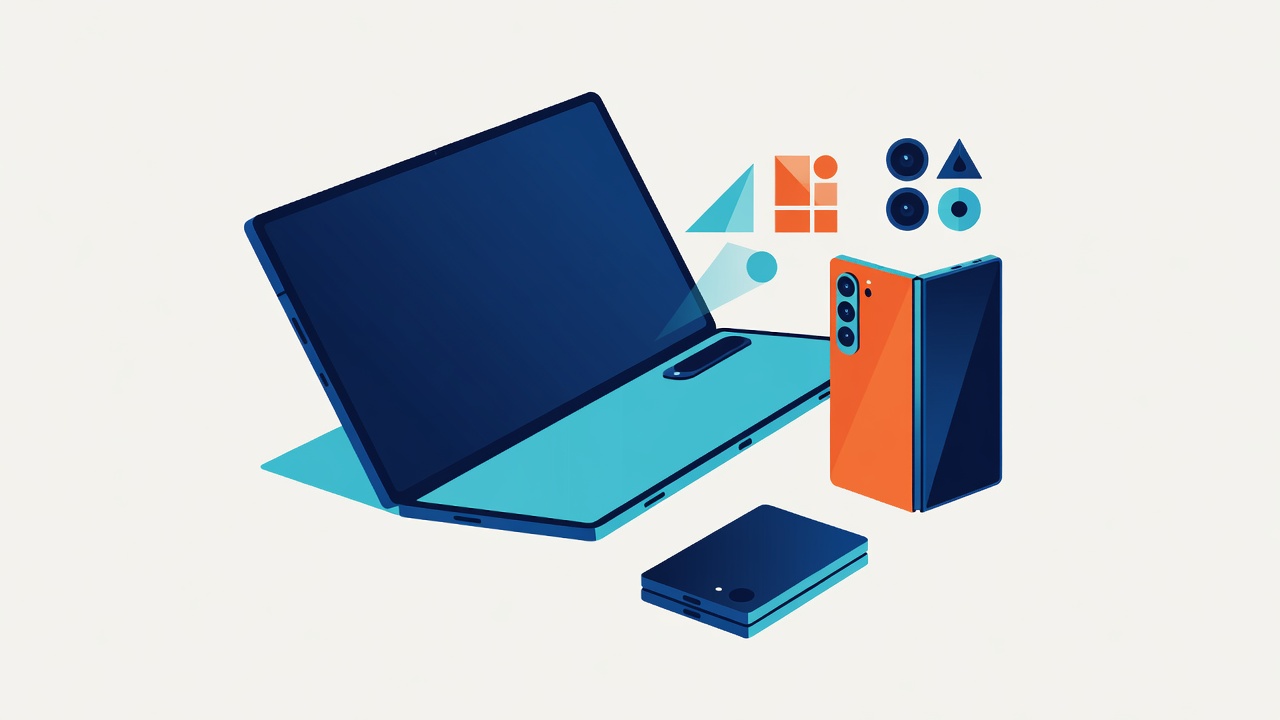
Samsung stands on the verge of a major shift in its foldable lineup. Leaks point to two distinct Galaxy Z Fold 8 models launching July 22 in London. One keeps the tall, narrow profile familiar since 2019. The other, long rumored as the Wide variant but now seemingly branded simply as the Galaxy Z Fold 8, flips the script with broader proportions.
That change targets the single complaint voiced most often by owners of earlier Folds. The cover screen feels too narrow for comfortable one-handed use. Apps look cramped. Typing suffers. Many users end up unfolding the device for even basic tasks. But a wider outer display could alter that equation entirely.
Recent leaks show the Wide model delivering a 5.4-inch cover screen at roughly 4.7:3 aspect ratio alongside a 7.6-inch inner display at 4:3.
The numbers matter. Previous Galaxy Z Folds opened to tall, narrow tablets better suited for reading than split-screen work or video. The new 4:3 inner panel offers more horizontal space. Productivity apps gain breathing room. Video content fills the frame without black bars. And that cover display finally approaches the width of a conventional flagship phone.
Ice Universe posted a render comparison that drives the point home. Placed next to the Galaxy S26 Ultra, the Fold 8 cover appears only slightly wider. Digital Trends highlighted the image. “The comparison suggests the Fold 8’s cover display is only slightly wider than Samsung’s flagship slab phone,” the publication wrote. “If that comparison holds up, Samsung could finally be delivering a Fold that doesn’t feel like a compromise when it’s closed.”
Users have waited years for this adjustment. The original Galaxy Fold in 2019 carried a narrow 4.6-inch cover. Successive models widened it modestly. Yet the experience still lagged behind slab phones. Early reviews of the Z Fold 7 praised its refinements but repeated the same critique. The closed phone felt like an accessory rather than a primary device.
Now Samsung prepares two paths. The Galaxy Z Fold 8 Ultra, according to multiple reports, evolves the traditional tall design with upgrades to display, battery and cameras. It carries a 200MP main sensor, 5,000mAh battery and telephoto lens. The Wide version trims back to a dual-camera array of 50MP primary and 50MP ultrawide. Its battery sits around 4,800mAh. Weight drops near 200 grams. The tradeoff buys a form that feels more like a small tablet when open and a normal phone when closed.
Hands-on images of dummy units reinforce the difference. Sonny Dickson shared photos in May showing the Wide model’s chassis. The outer display looks noticeably broader in the hand. The frame appears remarkably thin. Dickson compared the folded thickness to “an S25 Edge thin.” 9to5Google reported the leak and noted the wider aspect ratio makes the profile look even slimmer despite similar measurements to the Z Fold 7.
But. The hinge still exists. Creases remain a topic. Leaks mention thicker 60-micrometer glass on the Wide model to reduce visibility of the fold line. Results will vary by lighting and content. Durability questions persist until real units reach reviewers.
Camera choices split opinions too. The Wide skips the telephoto. That decision keeps cost and thickness in check. Yet it cedes ground to the Ultra variant for zoom enthusiasts. Samsung clearly segments the audience. One model chases productivity and media consumption. The other prioritizes photography and the classic Fold experience.
Recent filings add weight to the timeline. FCC certification cleared both models along with the Z Flip 8 and new watches. Case renders from certification databases confirm the dramatic width difference. The Wide version looks almost square when closed. Forbes examined the documents and noted Samsung’s confusing naming. What started as Fold 8 Wide now appears positioned as the standard Fold 8. The taller model takes the Ultra badge.
Colors leaked as well. The Wide comes in cream, graphite, lavender and pistachio. The Ultra offers cream, graphite, green shadow and violet shadow. Storage options reach 1TB on both. Pricing speculation starts above $2,000 for the higher model. Exact figures wait for the London stage.
Competition looms. Google’s Pixel 9 Pro Fold already embraced a wider aspect. Huawei sells book-style foldables with broad covers in markets outside the U.S. Apple’s rumored foldable iPhone, expected later, will likely follow a similar wide philosophy. Samsung refuses to cede the narrative. By launching first with two options it hedges bets while pushing the category forward.
The Wide model’s 4:3 inner display stands out in analysis from The Gadgeteer. “The productivity math is the part nobody else is breaking down,” the site reported. “A 4:3 inner panel gives you meaningfully more horizontal room for split-screen apps.” That observation captures the practical benefit beyond marketing language.
Accessory makers face headaches. Existing cases and screen protectors won’t fit the new dimensions. A full reset arrives for the ecosystem. Some buyers will see this as opportunity. Others may delay purchase until third-party options mature.
Software must adapt too. Samsung’s One UI already supports flexible multitasking. The wider canvas should make those features feel natural rather than forced. Multitask window snapping, app continuity when unfolding, and improved keyboard layouts could shine here. Yet developers still need to optimize for the new ratios.
So the stakes feel high. Foldables have grown from niche experiments to serious flagship contenders. Sales climbed each generation. But the narrow cover remained the persistent drawback that kept many professionals on conventional phones. If these leaks prove accurate, the Galaxy Z Fold 8 Wide removes that barrier.
Not every user wants the wider shape. Some prefer the tall profile for one-handed pocketability or specific workflows. The dual-model strategy lets Samsung serve both groups. Early indications suggest the Wide could become the volume seller. Its shape aligns closer to what consumers expect from a modern phone that happens to fold.
July 22 sits close now. Real hardware will replace dummy units and CAD renders. Battery life tests, crease visibility under different angles, hinge durability after thousands of folds. Those answers arrive soon. Until then the leaks paint an optimistic picture of a foldable that finally feels complete in both states.
And that represents real progress. Samsung didn’t chase novelty for its own sake. It listened to years of feedback and adjusted the fundamental shape. The result could broaden the appeal of foldables beyond early adopters to the much larger audience still waiting for a device that works equally well open or closed.


 WebProNews is an iEntry Publication