
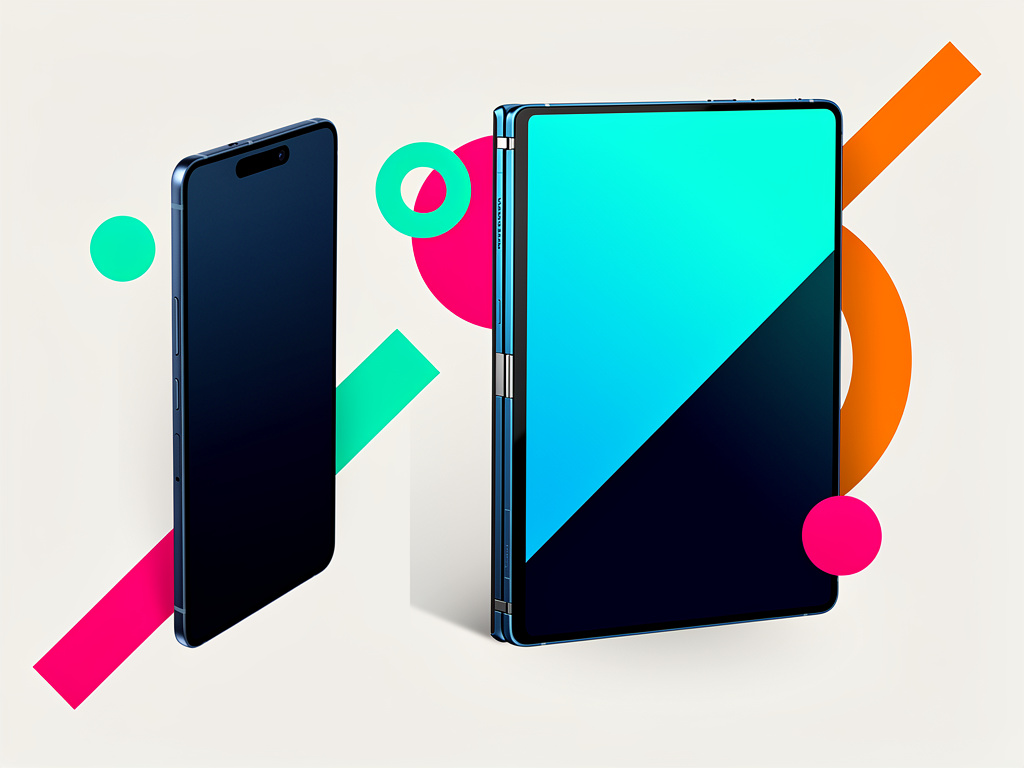
Samsung has a problem it created for itself. When the Galaxy Z Fold 7 launched, it arrived thinner, lighter, and more refined than any foldable the company had previously shipped. It also arrived with a cover screen so narrow that typing on it felt like an exercise in frustration. Now, barely months later, leaked renders of the Galaxy Z Fold 8 suggest Samsung knows exactly what went wrong — and is already course-correcting.
The renders, first reported by Digital Trends, come from prolific leaker OnLeaks in collaboration with Android Headlines. They show a device that retains the Fold 7’s general design language but makes one critical change: a wider cover display. The outer screen appears to have grown meaningfully, bringing the phone closer to the proportions of a standard smartphone when folded shut. That single adjustment could resolve the most persistent complaint users have lobbed at Samsung’s flagship foldable line for years.
This isn’t a minor tweak. It’s a philosophical admission.
Samsung spent the better part of the Fold 7’s development cycle chasing thinness. The result was a device that measured just 4.6mm when unfolded — an engineering achievement, no question — but one that came at the cost of usability in its most basic form. The cover screen, which is the display users interact with most frequently throughout the day, shrank to a width that made one-handed typing genuinely difficult. App layouts compressed awkwardly. The keyboard became a minefield of mistyped letters. For a device that starts at roughly $1,900, that kind of compromise felt tone-deaf.
Competitors noticed. The OnePlus Open and Google’s Pixel Fold both offered wider cover screens that functioned more like normal phones. Honor’s Magic V3 pushed the same direction. Samsung’s insistence on a tall, narrow front display began to look less like a design choice and more like a stubborn holdover from earlier engineering constraints.
The Render Details: What’s Changed and What Hasn’t
According to the OnLeaks renders analyzed by Digital Trends, the Galaxy Z Fold 8 appears to maintain the Fold 7’s flat-edged industrial design, its triple rear camera arrangement, and its overall material finish. The hinge mechanism looks similar, though it’s difficult to assess internal changes from external renders alone. The most visible difference is that wider cover screen — and the slightly adjusted aspect ratio it implies for the inner foldable display as well.
The camera module remains in a horizontal bar configuration across the upper portion of the rear panel. Three lenses. No radical repositioning. Samsung seems content with the imaging hardware layout it established with the Fold 7, which itself borrowed heavily from the Galaxy S25 Ultra’s design ethos.
What’s less clear from the renders is whether Samsung has managed to keep the Fold 7’s impressive thinness while widening the device. A wider cover screen necessarily means a wider folded body, which changes the phone’s pocket feel and one-handed grip. There’s a tension here between the thinness Samsung clearly prizes and the usability that customers demand. The Fold 8 renders suggest Samsung is willing to give back a few millimeters of width to make the phone actually pleasant to use when closed.
That trade-off matters enormously. Foldable phones live and die by the quality of their folded experience. Most owners spend the majority of their screen time on the cover display — quick texts, notifications, email triage, maps. The inner screen is for focused tasks: reading, video, multitasking. If the cover screen can’t handle the basics comfortably, the entire value proposition of carrying a foldable collapses. You’re just carrying a thick phone that happens to open into a tablet you use occasionally.
Samsung’s own internal data almost certainly reflects this. The company doesn’t publicly share detailed usage telemetry, but industry analysts have long noted that foldable owners use their outer screens for roughly 70% of daily interactions. Ignore that screen, and you ignore your customer.
The Competitive Pressure Samsung Can No Longer Sidestep
Samsung still dominates global foldable sales, but its grip is loosening. Huawei’s Mate X6 and the OnePlus Open have eaten into Samsung’s market share in key regions. In China — the world’s largest foldable market — Samsung is barely a factor. Honor, Oppo, Vivo, and Xiaomi have all shipped foldables with wider cover screens, better hinge durability claims, and increasingly competitive cameras.
Google’s Pixel 9 Pro Fold, while not a blockbuster seller, demonstrated that a wider cover screen and a more conventional phone shape resonated with reviewers and early adopters. The message from the market has been consistent: people want a foldable that doesn’t force them to relearn how to use a phone when it’s closed.
And then there’s Apple. While Cupertino hasn’t shipped a foldable yet, persistent rumors suggest a foldable iPhone could arrive as early as 2026 or 2027. When Apple enters a category, it tends to define the baseline expectations for the mass market. Samsung needs its foldable line to be as polished and compromise-free as possible before that happens. A narrow, hard-to-type-on cover screen won’t cut it against whatever Apple eventually ships.
The timing of these Fold 8 leaks is notable. Samsung typically announces its foldables in July, with availability following in August. That puts the Fold 8 roughly six months out from its expected unveiling. Renders leaking this early suggest the design is largely finalized, and Samsung’s supply chain partners are already tooling up for production. Changes at this stage would be minor — color options, perhaps, or software tweaks. The hardware is set.
There are still unknowns. Processor details haven’t been confirmed, though the Snapdragon 8 Elite Gen 2 — or whatever Qualcomm brands its next flagship chip — is the likely candidate. Battery capacity, charging speeds, and camera sensor upgrades remain unaddressed by the current leaks. Samsung may also be working on improvements to its under-display camera technology, which has been a weak point in previous Fold models, producing soft, low-detail selfies from the inner screen camera.
Software is another variable. Samsung’s One UI has grown increasingly capable on foldables, with better app continuity between screens and improved multitasking tools. But the company has also been aggressive about integrating Galaxy AI features across its lineup, and the Fold 8 will almost certainly serve as a showcase for whatever new AI capabilities Samsung has ready by mid-2025. Whether those features are genuinely useful or merely marketing fodder remains to be seen.
The durability question persists, too. Foldable screens still use ultra-thin glass that’s more susceptible to scratches and creasing than traditional smartphone displays. Samsung has improved its UTG (Ultra Thin Glass) technology with each generation, but the center crease remains visible on every Fold model shipped to date. Eliminating — or at least dramatically reducing — that crease would be a significant selling point. The renders can’t tell us whether Samsung has made progress here.
What the Fold 8 Needs to Prove
Samsung’s foldable ambitions have always been about proving that this form factor isn’t a niche curiosity but a legitimate mainstream product category. Five generations in, the company has made enormous strides. But the Fold line has also developed a pattern: each generation fixes the previous model’s most glaring flaw while introducing a new compromise. The Fold 6 improved durability but kept the narrow screen. The Fold 7 got dramatically thinner but made the narrow screen worse. If the Fold 8 widens the cover display but sacrifices battery life or raises the price, the cycle continues.
Breaking that cycle is what separates a good product from a great one.
The wider cover screen shown in these renders is encouraging. It suggests Samsung is listening — not just to reviewers, but to the actual usage patterns of the people buying these devices. A foldable phone that works beautifully as a phone first and a tablet second is the right priority order. Samsung appears to finally agree.
Whether the execution matches the intent won’t be clear until Samsung takes the stage later this year. But for the first time in several generations, the early signals point in the right direction. A wider screen. A familiar design. A company willing to admit it overcorrected.
Sometimes that’s enough.


 WebProNews is an iEntry Publication