
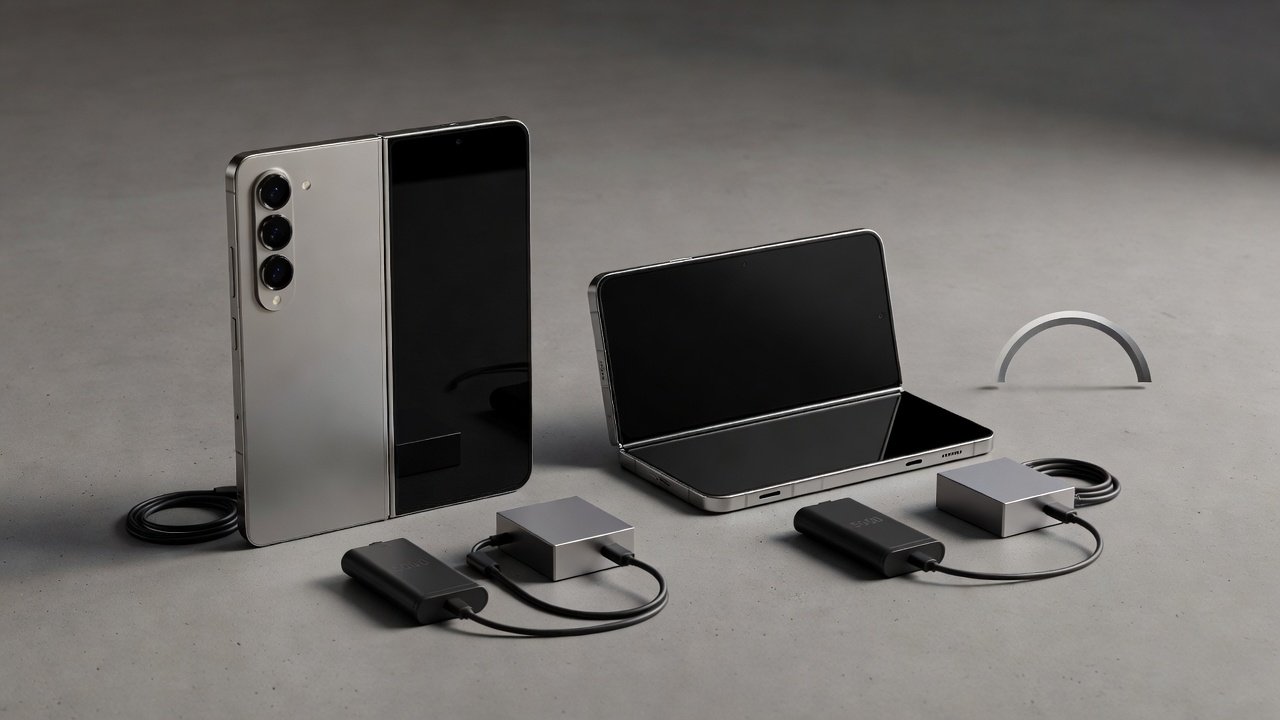
Samsung prepares to unveil its next book-style foldables on July 22 in London. The lineup splits in two distinct directions. One model sticks close to the familiar tall design. The other breaks the pattern with a shorter, wider frame that feels more like a traditional phone when closed and a tablet when open.
The Wide Variant Steals the Spotlight
Leaked dummy units and supply chain reports paint the device once called the Z Fold 8 Wide as the real story. It measures roughly 7.6 inches on the inner display with a near 4:3 aspect ratio. The outer screen sits at 5.4 inches in a similar proportion. This setup promises less letterboxing for video and easier one-handed operation compared with the elongated 6:5 ratio of prior Folds.
Android Police argues this shift proves Samsung can still innovate after years of incremental updates. “It’s certainly the first foldable I’ve been excited about in years — and it should excite you, too,” writes Mark Jansen. He plans to evaluate it closely as an upgrade from his Z Fold 5. The design addresses a core complaint. Tall foldables stretch too far for thumbs to reach the top without adjustment. A squatter body changes that equation.
But not everything lands as a win. Forbes reported in May that the standard Z Fold 8 successor, now expected to carry the Ultra name, shows limited progress on the display crease. Tipster Ice Universe stated on X that the crease “doesn’t improve much” and the model skips S Pen support along with the new privacy screen featured on the Galaxy S26 Ultra. Engineering challenges with ultra-thin flexible glass make the privacy layer difficult to adapt without adding thickness or hurting durability.
Recent leaks add concrete numbers. The wide variant tips the scales at just 201 grams, lighter than many conventional flagships. Its battery reaches about 4,800 mAh with 45W charging. The taller Ultra model gains a 5,000 mAh cell, also with 45W wired support, and unfolds to only 4.1 mm thick. Both run the Snapdragon 8 Elite Gen 5 for Galaxy chipset. Camera setups differ. The Ultra keeps a 200 MP main sensor, 50 MP ultrawide and 10 MP 3x telephoto. The wide version drops the telephoto for a simpler dual 50 MP array.
Mashable outlined these details in early June, noting the wide model’s focus on media consumption and its potential alignment with Apple’s rumored foldable iPhone. That device is also expected to favor a wider aspect ratio. Samsung may benefit if Apple normalizes the format the way it once did for smartwatches.
Yet cost pressures loom. Korean outlet Newspim, cited by Forbes, suggested Samsung could hold the base price at $1,999 while raising tiers for 512 GB and 1 TB models amid memory chip price spikes. PhoneArena and The Gadgeteer both point to the July 22 Unpacked event with availability in early August. FCC filings for the SM-F976U, labeled as the Z Fold 8 Ultra, confirm the timeline holds.
Recent reports add color options. Leaks shared on YouTube and covered by multiple outlets list pistachio, butter, violet shadow and graphite finishes. Some renders show minimal bezels and refined hinges that reduce the visible fold line, though real-world samples will decide if the crease truly fades.
Software plays a role too. One UI 9 based on Android 16 should arrive at launch with improved multitasking tailored to the wider canvas. Samsung has spent years refining Flex Mode and split-screen features. The new proportions could make those tools feel natural rather than compromised.
Competitors watch closely. Huawei and Chinese brands already ship wide foldables with strong battery life and fast charging. Apple’s entry, expected later in 2026, could shift consumer expectations overnight. Samsung’s decision to launch two different book-style phones at once hedges those bets. The Ultra targets existing Fold buyers who want the biggest screen and best cameras. The standard model, with its compact footprint and lower weight, courts newcomers who found previous Folds too awkward.
Price remains a flashpoint. If the wide model lands near $1,800 to $1,999 while the Ultra starts at $2,199 or higher, Samsung creates clear choices. Past launches saw the base Fold carry a $100 increase year over year. Supply chain reports suggest that pattern may continue in select configurations.
Durability questions persist. Foldables still carry higher repair costs and perceived fragility even after seven generations. Samsung’s latest hinges and thinner profiles aim to ease those worries. Real testing after launch will reveal if the wide design introduces new stress points or solves old ones.
Analysts see the move as preparation for broader adoption. The foldable market has grown but remains a fraction of total smartphone sales. A form factor that feels less like a compromise and more like an enhancement could accelerate that curve. And with Apple preparing its own device, the category gains mainstream credibility.
Samsung has led foldable development since the original Galaxy Fold in 2019. Its latest effort shows the company willing to question its own formula. The Z Fold 8 Ultra refines the proven path. The other model tests whether a wider shape better matches how people actually watch content, type messages or browse the web.
Early reactions on X mix optimism with skepticism. Some users praise the thinner profile and lighter weight. Others worry about software optimization for the new ratios or potential price creep. Ice Universe’s posts on colors and specs continue to drive discussion days before the official event.
Whatever the final specs, the dual approach signals ambition. Samsung refuses to cede the narrative to an incoming Apple foldable. Instead it offers two answers to the question of what a modern foldable should be. One looks backward with incremental gains. The other stretches the category in a fresh direction. Buyers will soon decide which vision wins.


 WebProNews is an iEntry Publication