
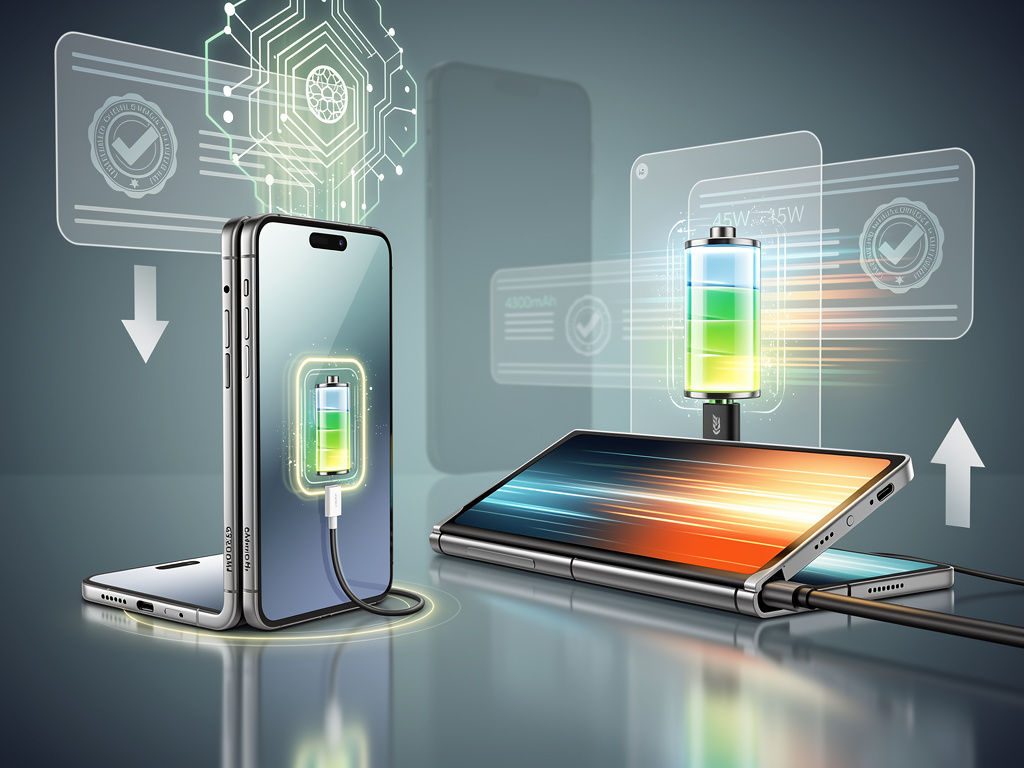
Samsung appears set to disappoint fans hoping for faster battery top-ups on its next clamshell foldable. The Galaxy Z Flip 8 will likely ship with the same 25-watt wired charging speed that has defined the lineup since the Galaxy Z Flip 4 launched in 2022.
Certification filings and multiple leaks point to no change in either charging rate or battery capacity. The device is expected to carry a 4,300mAh cell and support the familiar 25W wired input. Wireless charging stays at around 15W. Nothing more.
Digital Trends first highlighted the pattern days ago. Reports show Samsung has prioritized thinner designs, refined hinges and processor tweaks instead. The company leads global foldable sales. Yet on this one practical feature it has stood still.
But the contrast grows sharper this year. Samsung’s larger Galaxy Z Fold 8 models are tipped for 45W charging and bigger batteries. Chinese regulatory filings spotted by Tom’s Guide in March already signaled the shift. The Flip 8 receives no such boost. Four generations. Same speed.
Recent SGS certification listings for model numbers including SM-F776B confirm the limit. The database entry lists 9V at 2.77A. That math lands at exactly 25 watts. SamMobile reported the details yesterday. “It means Samsung has not upgraded charging speeds on its Z Flip series phones for four consecutive generations,” the publication noted.
And fresh confirmation arrived today. Android Headlines detailed the same SGS filing. The story underscores how power users may simply keep using their existing chargers. The article also lists expected extras such as a 50-megapixel main camera, 12GB of RAM and possible brighter displays. None of those fix the wait time at the outlet.
Real-world impact hits daily routines. A full charge from empty still takes roughly 80 to 90 minutes. Topping up to 50 percent requires more than 30 minutes. Competitors refuse to accept that pace. Motorola’s Razr models from last year already delivered 30W and even 45W options in some variants. PhoneArena spelled out the gap clearly. The Flip 8’s 25W looks slow next to those numbers.
Why hold the line? Samsung seems focused on other battles. Leaks describe a slimmer body, lighter weight near 180 grams and a less visible crease on the inner screen. The cover display may grow slightly more useful. An Exynos 2600 or Snapdragon 8-series chip will handle performance. Software brings One UI 9 and expanded Galaxy AI tools.
Yet battery life and refill speed remain pain points for foldables. The thin chassis limits space for larger cells or advanced cooling that could support faster rates. Heat management during 45W charging would challenge the folded form factor. Samsung apparently decided the engineering trade-offs weren’t worth it. Not yet.
Some hope remains for wireless improvements. Case leaks suggest possible magnetic rings. That could enable better Qi2 alignment and faster wireless speeds in the right accessory. PhoneArena examined dummy units and renders showing circular cutouts on certain cases. Even so, the base phone may still require a magnetic case rather than ship with built-in magnets. No guarantee of 15W or higher wireless out of the box.
Industry watchers see a deliberate split. The Fold series chases productivity and power users who tolerate thicker designs. The Flip targets fashion, pocketability and casual use. Faster charging might add cost or bulk that clashes with the Flip’s core appeal. So Samsung bets customers will accept the compromise.
That bet faces growing pressure. Chinese brands pack 50W, 66W and higher speeds into slim foldables. Huawei and others demonstrate the technical feasibility. Samsung maintains its lead through software polish, build quality and global carrier support. But the charging stasis risks turning into a talking point that hurts perception.
Expected pricing starts near $1,099 for the base model. Launch likely lands in July alongside the Fold 8. By then more leaks will surface. Early hands-on reports could reveal if efficiency gains from the new chip and software deliver better battery endurance despite the unchanged cell.
Even modest endurance improvements would help. The 4,300mAh capacity splits into two cells. One sits in the main body. The other hides behind the cover screen. A slight capacity bump occurred with the Flip 7. This year brings none. The dual-cell design already complicates fast charging due to thermal and balancing issues.
Consumers notice. Social media chatter on X shows frustration. Recent posts from accounts like @thesammyfans and @sammygurus highlight the SGS filing and question Samsung’s priorities. One widely shared render set lists the full expected specs. 25W charging draws repeated criticism in replies.
Samsung has delivered meaningful foldable advances before. Durability ratings improved. Hinges became more robust. Cameras gained useful zoom and low-light performance. The company invested heavily in ultra-thin glass and crease reduction. Those efforts succeeded. Charging simply lagged behind.
Perhaps the decision buys time for a bigger leap on the Z Flip 9. A 35W or 45W jump paired with an enlarged battery could feel transformative after years of stagnation. For now the Galaxy Z Flip 8 arrives as a careful evolution. Faster silicon, smarter software, refined hardware. And that same old charger in the box.
The choice reflects Samsung’s confidence in its foldable dominance. The firm captured the majority of worldwide shipments last year. Rivals scramble to match its software experience and retail presence. If the Flip 8 sells strongly without charging upgrades, the strategy validates itself.
But buyer expectations keep rising. Foldables no longer feel like experiments. They serve as primary phones for growing numbers of users. Those users want the full flagship treatment. Including quick charges that match the Galaxy S series.
Whether Samsung eventually closes the gap will shape the next chapter for its flip phones. The Z Flip 8 offers an early signal. Progress continues everywhere except the outlet. The company is betting design, AI and reliability will outweigh the wait.


 WebProNews is an iEntry Publication