
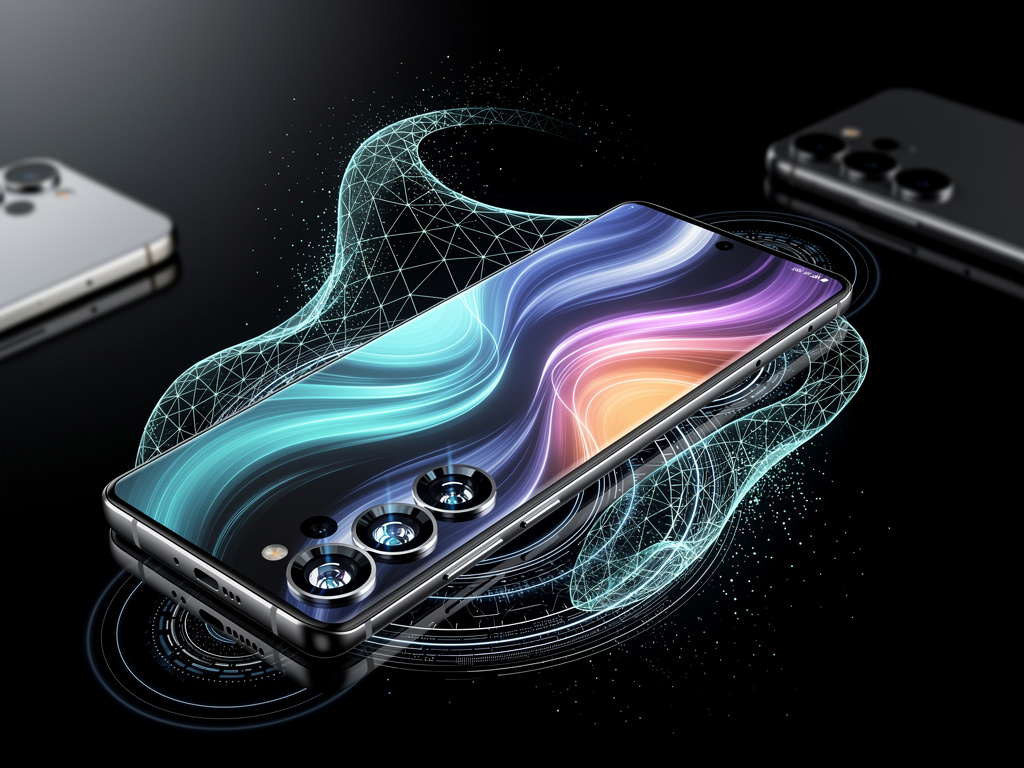
Samsung’s next flagship smartphone hasn’t even been officially announced, but the Galaxy S26 Ultra is already generating substantial buzz among industry watchers and mobile technology enthusiasts. A growing body of leaks, patent filings, and supply chain intelligence suggests that Samsung is preparing to introduce at least three significant hardware and software innovations that could catch even seasoned smartphone analysts off guard. The question isn’t whether Samsung will iterate on its Ultra line — it’s whether these reported features represent a meaningful leap forward or merely incremental polish on an already mature product category.
According to a detailed analysis published by Digital Trends, the Galaxy S26 Ultra appears poised to introduce a trio of tricks that stand out even in a market saturated with annual upgrades. The publication’s mobile editor expressed genuine surprise at the scope of what Samsung appears to be planning, noting that after years of covering smartphone launches, these particular innovations felt genuinely unexpected. The three features center on display technology, camera capabilities, and AI-powered software integration — the three pillars that have defined flagship competition for the past half-decade.
A Display That Adapts in Ways We Haven’t Seen Before
The first major feature involves Samsung’s display technology, an area where the South Korean giant has long held a commanding lead over its competitors. Reports suggest the Galaxy S26 Ultra will feature an advanced adaptive display system that goes well beyond the variable refresh rate technology currently found in premium smartphones. Rather than simply toggling between 1Hz and 120Hz based on content type, the new panel is expected to adjust its color temperature, brightness zones, and even pixel density rendering in real time based on ambient conditions and the specific content being displayed.
This isn’t just about making the screen brighter in sunlight or dimmer at night — features that already exist in current flagships. The reported technology would allow the display to allocate more processing power and higher effective resolution to the portion of the screen where the user’s eyes are focused, as detected by the front-facing sensor array. If accurate, this would represent a meaningful reduction in power consumption while simultaneously improving perceived visual quality. Samsung Display, the company’s panel-manufacturing arm, has been filing patents related to foveated rendering for mobile displays since at least 2023, lending credibility to these reports.
Camera Hardware That Breaks From Samsung’s Own Playbook
The second surprise involves the camera system, and it represents a departure from Samsung’s recent strategy of pushing megapixel counts ever higher. After introducing 200MP sensors with the Galaxy S23 Ultra and maintaining that specification through the S24 and S25 generations, Samsung appears ready to shift its emphasis. The Galaxy S26 Ultra is reportedly moving to a new sensor architecture that prioritizes per-pixel light gathering and computational photography throughput over raw resolution numbers.
As Digital Trends noted, this could mean a lower headline megapixel count paired with dramatically larger individual photosites — the light-collecting elements on the sensor. The approach mirrors what Apple did when it moved from 12MP to 48MP sensors: the company didn’t chase the highest number available but instead optimized for real-world image quality. For Samsung, which has spent years marketing its megapixel advantage, this would be a notable strategic pivot. Industry sources suggest the new sensor could be developed in partnership with either Sony or Samsung’s own ISOCELL division, with a stacked architecture that enables faster readout speeds and improved dynamic range.
AI Integration That Goes Beyond the Gimmick Phase
Perhaps the most consequential of the three reported features is Samsung’s approach to on-device artificial intelligence. While Galaxy AI debuted with the S24 series in early 2024 and was expanded with the S25 lineup, much of what Samsung offered felt like a first draft — useful in demonstrations but inconsistent in daily use. Translation features worked well in controlled environments but stumbled with accents and background noise. Photo editing tools were impressive but sometimes produced uncanny results. The S26 Ultra reportedly addresses these shortcomings not just through software refinement but through dedicated hardware.
The device is expected to ship with Qualcomm’s next-generation Snapdragon processor — likely branded as the Snapdragon 8 Elite Gen 2 or a similar designation — featuring a substantially upgraded neural processing unit. But the hardware alone isn’t the story. Samsung is reportedly building a persistent AI layer into the operating system that learns individual user patterns over weeks and months, adjusting everything from app preloading to notification prioritization to camera settings based on accumulated behavioral data. All of this processing would occur on-device, addressing the privacy concerns that have dogged cloud-dependent AI implementations.
The Competitive Context: Apple, Google, and the AI Arms Race
Samsung isn’t operating in a vacuum. Apple’s iPhone 17 series, expected in September 2025, is widely reported to feature its own substantial AI upgrades through an expanded Apple Intelligence platform. Google’s Pixel 10, powered by the company’s custom Tensor G5 chip, is also expected to push the boundaries of on-device AI processing. The stakes are particularly high because consumer surveys consistently show that while buyers express interest in AI features, they have yet to identify a single must-have AI application on smartphones — the kind of feature that drives upgrade cycles the way cameras once did.
Samsung’s approach with the S26 Ultra appears designed to make AI invisible rather than prominent. Instead of adding more AI-branded features to a dedicated menu, the company seems to be weaving intelligence into existing functions so that the phone simply works better over time without requiring the user to consciously engage with “AI features.” This philosophy aligns with comments made by Samsung’s mobile division leadership at previous product launches, where executives emphasized that the best technology is the kind users don’t have to think about.
Supply Chain Signals and the Manufacturing Challenge
Bringing these features to market at scale presents significant manufacturing challenges. The advanced display technology requires tighter integration between the panel, the front-facing sensor array, and the device’s main processor than any previous Samsung phone has demanded. Early supply chain reports suggest Samsung has been working with its Vietnam-based manufacturing facilities to refine the assembly process, with trial production reportedly beginning in the first quarter of 2025 for a launch window that most analysts place in January 2026.
The camera sensor, too, presents yield challenges. Stacked sensor architectures are notoriously difficult to manufacture at high volumes with acceptable defect rates, which is one reason they have historically been reserved for premium devices with lower production targets. Samsung’s ability to produce tens of millions of units with the new sensor will depend heavily on whether its fabrication partners can achieve sufficient yields by the second half of 2025. Any delays on this front could force Samsung to fall back on a more conventional sensor design, potentially undermining one of the device’s key selling points.
What This Means for the Premium Smartphone Market
The broader implications of Samsung’s S26 Ultra strategy extend beyond any single device. If the reported features prove accurate and perform as described, they could help re-energize a premium smartphone market that has struggled with lengthening upgrade cycles. Consumers are holding onto their phones longer than ever — the average replacement cycle now exceeds three years in most developed markets — and manufacturers have found it increasingly difficult to articulate why a new $1,200-plus device is worth the investment.
Samsung’s answer, based on what we know so far, is to stop chasing specification sheet victories and instead focus on experiential improvements that compound over time. A display that’s smarter about how it uses power, a camera that produces better photos without needing a higher number on the box, and an AI system that makes the phone more useful the longer you own it — these are the kinds of features that could resonate with consumers who have grown skeptical of annual upgrade pitches. Whether Samsung can deliver on this promise remains to be seen, but the ambition is clear.
The Galaxy S26 Ultra is expected to be formally unveiled at Samsung’s next Galaxy Unpacked event, which historically takes place in January. Until then, the steady drip of leaks and supply chain intelligence will continue to fill in the picture of what Samsung has been building behind closed doors. For an industry that has spent the last several years searching for its next compelling upgrade story, the S26 Ultra’s reported feature set offers at least a reason to pay attention.


 WebProNews is an iEntry Publication