
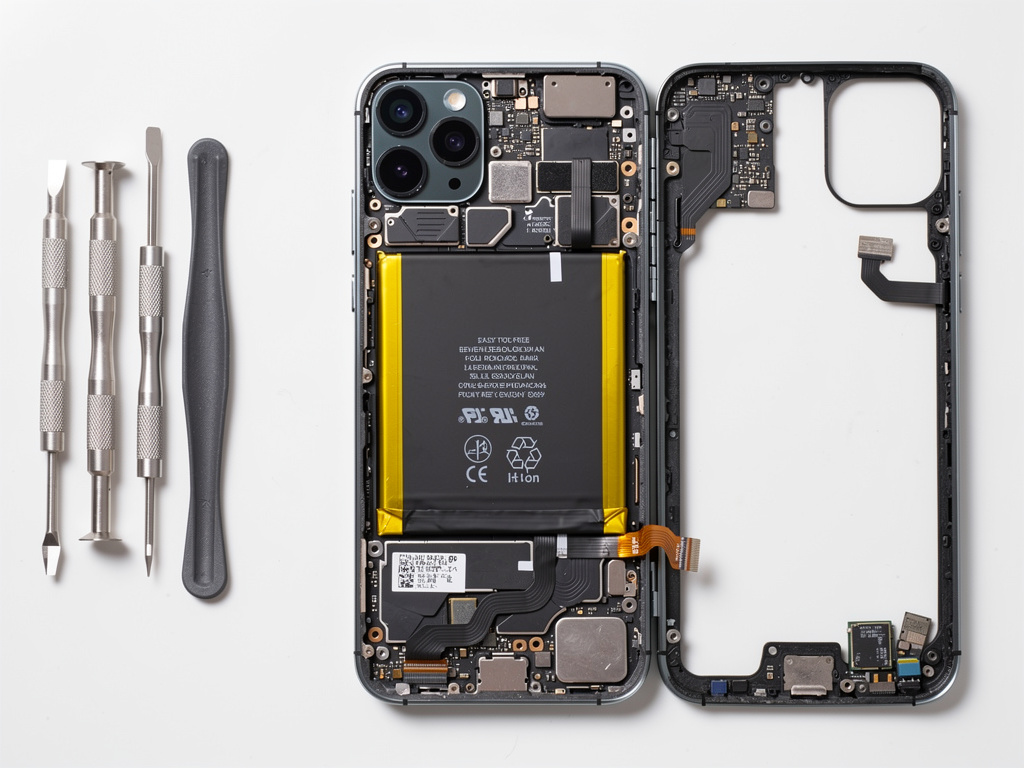
Samsung’s latest flagship phone has barely hit the market, and someone has already torn it apart. The verdict from the first teardown of the Galaxy S26 Ultra is a study in contradictions: a phone that’s become significantly easier to repair in one specific way while remaining stubbornly locked down in almost every other.
PBKreviews, a YouTube channel known for disassembling new devices almost the moment they become available, posted a full teardown of the Galaxy S26 Ultra that reveals a device designed with battery replacement firmly in mind — and precious little else when it comes to user serviceability. As Android Central reported, the phone’s battery can be swapped out with relative ease thanks to pull-tab adhesive strips, a welcome change that aligns with incoming European Union regulations requiring manufacturers to make batteries user-replaceable by 2027.
But here’s the catch. Nearly everything else inside the Galaxy S26 Ultra remains glued, soldered, or otherwise attached in ways that make independent repair difficult at best and destructive at worst.
The teardown shows Samsung has adopted a design philosophy that treats the battery as the one component consumers or third-party repair shops should be able to access without specialized equipment. The pull-tab adhesive — similar to the stretch-release strips Command uses in its picture-hanging products — allows the 5,000mAh battery to be lifted free without applying heat or prying with tools that risk puncturing the cell. That’s a genuine improvement. Samsung had already begun moving in this direction with the Galaxy S25 Ultra, which also featured pull-tab battery adhesive, but the S26 Ultra refines the approach further. The battery itself sits in a more accessible position within the phone’s internal layout, reducing the number of components that need to be disconnected before reaching it.
The EU’s battery regulation, formally adopted in 2023, is the obvious catalyst here. The rule mandates that by February 2027, portable batteries in consumer electronics must be removable and replaceable by end users or independent service providers using commercially available tools. Samsung, like Apple and every other major phone manufacturer selling into the European market, has no choice but to comply. And rather than designing separate hardware for different regions, Samsung appears to be applying the battery-friendly design globally.
So the battery story is good news. Everything else? Less so.
According to the teardown footage from PBKreviews, the Galaxy S26 Ultra’s display remains adhered to the frame with strong adhesive that requires significant heat application to remove. Cracked screens are among the most common smartphone repairs, and Samsung hasn’t made that process any friendlier. The motherboard, cameras, charging port, and other internal modules are secured with a combination of screws and adhesive, following a layout broadly similar to last year’s model. Flex cables connect various components in ways that demand careful handling with specialized tools — spudgers, suction cups, heat guns — the full kit that repair professionals know well but average consumers don’t own.
This matters because the right-to-repair movement has pushed for far more than just battery access. Advocates want phones where screens, charging ports, and cameras can all be replaced without sending the device back to the manufacturer. Apple’s partnership with iFixit and its Self Service Repair program set a benchmark, even if an imperfect one. Samsung offers its own repair program through iFixit as well, but the physical design of the S26 Ultra suggests the company isn’t yet willing to engineer for broad component-level repairability beyond what regulations strictly require.
The internal layout of the S26 Ultra does reveal a few other details worth mentioning. Samsung is using a vapor chamber cooling system that spans a large portion of the phone’s interior, designed to manage heat from the Snapdragon 8 Elite chipset that powers the device. The arrangement of antenna lines and the 5G modem integration appear refined compared to the S25 Ultra, though the teardown doesn’t provide performance data — just physical observation. The phone’s titanium frame, which Samsung has marketed as a durability feature, does make the device feel premium in hand but adds complexity to disassembly since titanium is harder to work with than aluminum.
Samsung’s approach mirrors a broader industry pattern. Manufacturers are responding to repair legislation with the minimum viable compliance. Batteries get pull tabs. Everything else stays locked down. Apple did the same thing when it introduced pull-tab battery adhesive in the iPhone 16 lineup last year, earning praise for that specific change while the rest of the phone’s internals remained just as difficult to service as previous generations. Google’s Pixel phones have followed a similar trajectory — incrementally easier to open, but not fundamentally designed for repair.
The financial incentives explain why. Smartphone makers generate significant revenue from official repair services and authorized service networks. A phone that’s truly easy to repair at home or at an independent shop erodes that revenue stream. There’s also the engineering argument: making every component modular and easily swappable requires design compromises that can affect water resistance, structural rigidity, and the thin form factors consumers demand. Samsung’s engineers clearly prioritized the slim profile and IP68 water resistance rating of the S26 Ultra over broad serviceability.
Still, the trajectory is pointing in one direction. Five years ago, replacing a battery in a flagship Samsung phone required a heat gun, patience, and a willingness to risk cracking the back glass. Now it requires removing a few screws and pulling some adhesive strips. That’s real progress, even if it’s driven more by regulatory pressure than corporate goodwill.
The Galaxy S26 Ultra launched alongside the standard S26 and S26+, with Samsung emphasizing AI features, camera improvements, and the new chipset as primary selling points. Repairability didn’t make the keynote stage. It rarely does. But the teardown tells a story the marketing materials won’t: Samsung is building phones that acknowledge, however reluctantly, that consumers should be able to keep their devices running longer without paying a premium for official service.
Whether Samsung will extend this philosophy beyond the battery in future models remains an open question. The EU is already considering expanded repair requirements that could cover displays and other components. If those regulations materialize, expect the Galaxy S28 or S29 to feature modular screens with pull-tab adhesive of their own. Until then, the S26 Ultra is what regulatory compliance looks like in smartphone form — one easy repair surrounded by a fortress of glue.


 WebProNews is an iEntry Publication