
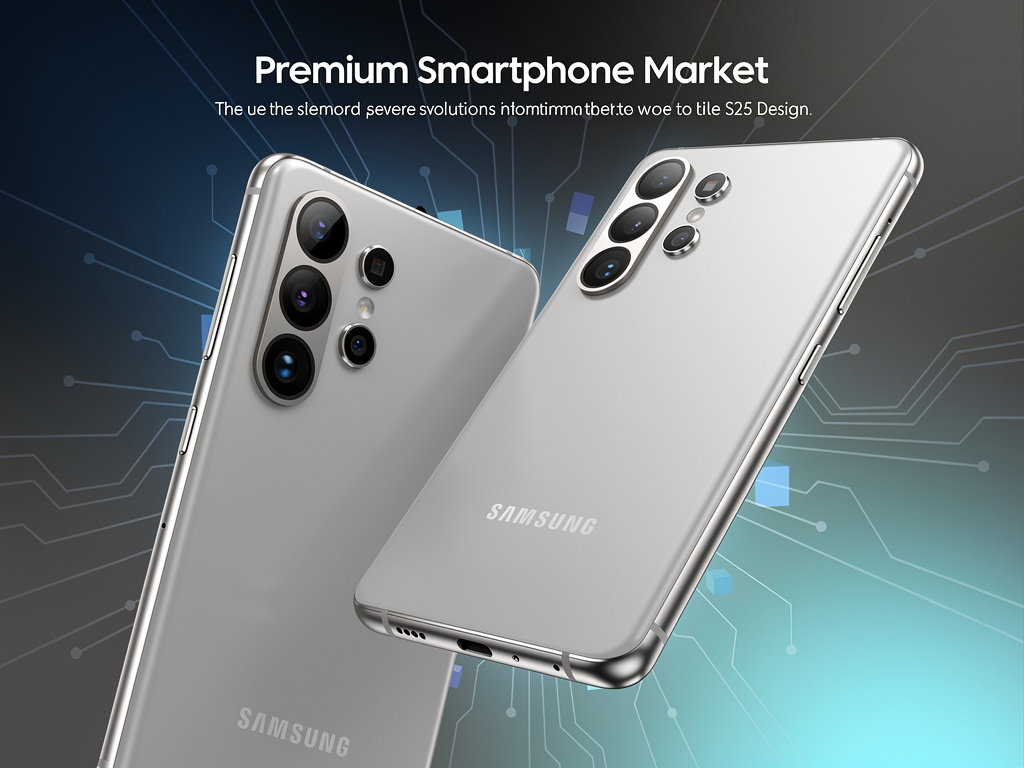
Samsung’s forthcoming Galaxy S26 Ultra has emerged from the shadows of speculation, revealing a design philosophy that marks a decisive departure from the angular aesthetics that have defined the company’s flagship devices for years. According to Android Authority, leaked official renders showcase a device that embraces softer contours and refined proportions, signaling what industry analysts are calling Samsung’s most significant design evolution since the Galaxy S6 edge introduced curved displays nearly a decade ago.
The leaked imagery, which Android Authority reports as coming from official Samsung sources, depicts a smartphone that abandons the sharp-edged aesthetic of its predecessors in favor of rounded corners and gentler curves throughout the chassis. This transformation extends beyond mere cosmetic adjustments, representing a fundamental reconsideration of how premium smartphones should feel in users’ hands and integrate into daily life. The shift comes at a critical juncture for Samsung, as the South Korean technology giant faces intensifying competition from Chinese manufacturers and renewed pressure from Apple’s iPhone lineup.
The Anatomy of Samsung’s Design Transformation
The Galaxy S26 Ultra’s visual departure centers on its corner radius and edge treatment, elements that have become battlegrounds in the premium smartphone market. Where previous Ultra models featured corners approaching 90-degree angles, the S26 Ultra adopts a significantly more rounded profile that echoes design languages seen in competing devices while maintaining Samsung’s distinctive identity. The camera module, long a defining feature of the Ultra series, appears more integrated into the rear panel, suggesting Samsung’s designers have prioritized visual cohesion over the dramatic protrusion that characterized earlier generations.
Industry sources familiar with Samsung’s design process indicate this evolution reflects extensive ergonomic research and user feedback gathered over multiple product cycles. The company’s internal testing reportedly revealed that while the angular design communicated premium positioning and technical prowess, it created practical challenges for extended one-handed use and pocket comfort. These findings align with broader industry trends toward devices that balance visual impact with practical considerations, a shift that has gained momentum as smartphone dimensions have expanded to accommodate larger displays and more sophisticated camera systems.
Market Positioning in an Increasingly Competitive Arena
The timing of Samsung’s design pivot carries strategic significance that extends beyond aesthetics. The premium smartphone segment, which generates disproportionate profit margins for manufacturers, has witnessed consolidation and intensified competition. Chinese manufacturers including Xiaomi, OPPO, and Vivo have elevated their flagship offerings with sophisticated designs and competitive pricing, while Apple continues to command premium positioning through ecosystem integration and brand loyalty. Samsung’s response through the S26 Ultra suggests a company recalibrating its approach to differentiation in a market where technical specifications have reached a plateau of diminishing returns for most consumers.
The design modifications visible in the leaked renders indicate Samsung is pursuing what industry observers characterize as “approachable premium” positioning. This strategy attempts to maintain the Ultra series’ status as Samsung’s technological flagship while broadening its appeal beyond the hardcore enthusiast segment that has traditionally gravitated toward devices with aggressive, technical aesthetics. The softer design language may prove particularly significant in markets where Samsung faces pressure from both premium competitors and ascending mid-range alternatives that increasingly offer flagship-caliber experiences at lower price points.
Technical Specifications and the Design-Function Balance
While the leaked renders focus primarily on external design, they offer glimpses of technical decisions that inform the S26 Ultra’s overall proposition. The camera array, though more integrated than previous generations, maintains the multi-lens configuration that has become synonymous with Ultra-branded devices. This suggests Samsung continues prioritizing photographic capability as a key differentiator, even as the physical expression of that capability becomes less prominent. The arrangement visible in the renders indicates retention of the periscope telephoto lens that has distinguished Ultra models from standard Galaxy S series devices.
The display bezels appear marginally reduced compared to the S25 Ultra, continuing the industry’s gradual march toward higher screen-to-body ratios. However, the bezels remain sufficiently substantial to accommodate the sophisticated antenna systems and structural reinforcement required for flagship devices. This balance reflects the complex engineering trade-offs inherent in premium smartphone design, where aesthetic ideals must accommodate practical requirements for durability, thermal management, and wireless connectivity. Samsung’s approach suggests a company that has learned from the industry’s collective experience with overly aggressive bezel reduction, which has sometimes compromised structural integrity and repairability.
Manufacturing and Supply Chain Implications
The design changes evident in the S26 Ultra renders carry significant implications for Samsung’s manufacturing processes and supply chain relationships. Transitioning from angular to rounded designs requires retooling of precision machining operations, adjustments to assembly line configurations, and modifications to quality control protocols. These changes represent substantial capital investments, particularly for a company operating at Samsung’s scale, where production volumes measure in millions of units. The decision to implement such changes signals confidence in the design direction and suggests extensive validation through focus groups and market research.
Industry analysts note that Samsung’s vertical integration provides advantages in executing design transitions of this magnitude. The company’s control over display production, semiconductor manufacturing, and component sourcing enables tighter coordination than competitors relying on third-party suppliers might achieve. This integration may prove particularly valuable as smartphone manufacturers increasingly differentiate through subtle refinements rather than revolutionary changes, requiring precise execution across multiple production stages to achieve intended results.
Software Integration and User Experience Considerations
The physical design transformation visible in the leaked renders will necessarily influence software design and user interface decisions. Samsung’s One UI, the company’s Android customization layer, will require optimization to complement the new form factor. Edge-based gestures, notification systems, and multitasking interfaces that evolved alongside angular device designs may need refinement to feel natural on a device with softer contours. These software considerations, while less immediately visible than hardware changes, significantly impact the cohesive experience that distinguishes premium devices from mid-range alternatives.
The S26 Ultra’s design evolution also reflects broader industry conversations about smartphone maturity and the diminishing returns of aggressive differentiation. As devices have converged toward similar form factors, screen sizes, and technical capabilities, manufacturers increasingly compete on refinement and integration rather than revolutionary features. Samsung’s approach with the S26 Ultra suggests acceptance of this reality, prioritizing polish and user comfort over dramatic visual statements. This maturation mirrors patterns observed in other consumer technology categories, where initial periods of rapid innovation eventually give way to incremental refinement focused on user experience optimization.
Competitive Response and Industry Trajectory
Samsung’s design direction with the S26 Ultra will likely influence competitor strategies and broader industry trends. As the world’s largest smartphone manufacturer by volume and a leading player in the premium segment, Samsung’s design decisions carry weight that extends beyond its own product lineup. Competitors monitor Samsung’s moves closely, both to identify opportunities for differentiation and to gauge market receptivity to design trends. The shift toward softer, more ergonomic forms may accelerate similar transitions among Android manufacturers, particularly those competing directly in the premium segment.
The leaked renders arrive as the smartphone industry navigates a period of modest growth and shifting consumer priorities. Upgrade cycles have lengthened as devices have become more durable and incremental improvements have diminished in perceived value. In this environment, design becomes increasingly important as a catalyst for upgrades, potentially motivating consumers whose current devices remain functionally adequate but feel dated aesthetically. Samsung’s timing with the S26 Ultra suggests strategic awareness of these dynamics, positioning the device to capitalize on pent-up demand from users seeking meaningful differentiation from devices purchased during the pandemic-era surge.
The Broader Context of Premium Smartphone Evolution
The Galaxy S26 Ultra’s design transformation occurs against a backdrop of fundamental questions about the smartphone category’s future trajectory. With foldable devices establishing themselves as viable alternatives and artificial intelligence features increasingly driving differentiation, traditional flagship smartphones face pressure to justify premium pricing through tangible improvements. Samsung’s response through refined design and ergonomics suggests belief that physical experience remains central to premium positioning, even as software and services grow in importance.
The leaked renders indicate Samsung is betting that thoughtful evolution rather than revolutionary change represents the appropriate strategy for mature product categories. This approach contrasts with the company’s more experimental efforts in foldables and other form factors, suggesting a portfolio strategy that balances conservative refinement in established categories with bold experimentation in emerging ones. The S26 Ultra, as Samsung’s mainstream flagship, bears responsibility for sustaining the company’s premium market position while more adventurous products explore alternative futures. The design visible in the leaked imagery reflects this balancing act, offering sufficient novelty to feel fresh while maintaining the fundamental characteristics that have made the Ultra series successful.
As Samsung prepares for the S26 Ultra’s anticipated launch in early 2026, the leaked renders provide industry insiders with valuable insight into the company’s strategic thinking and design priorities. The shift toward softer, more approachable aesthetics while maintaining technical sophistication signals a company adapting to market realities while staying true to core brand values. Whether this approach resonates with consumers and successfully navigates the competitive pressures facing premium smartphones will become clear in the months following launch, but the design direction evident in these early glimpses suggests Samsung is approaching the challenge with characteristic thoroughness and strategic clarity.


 WebProNews is an iEntry Publication