
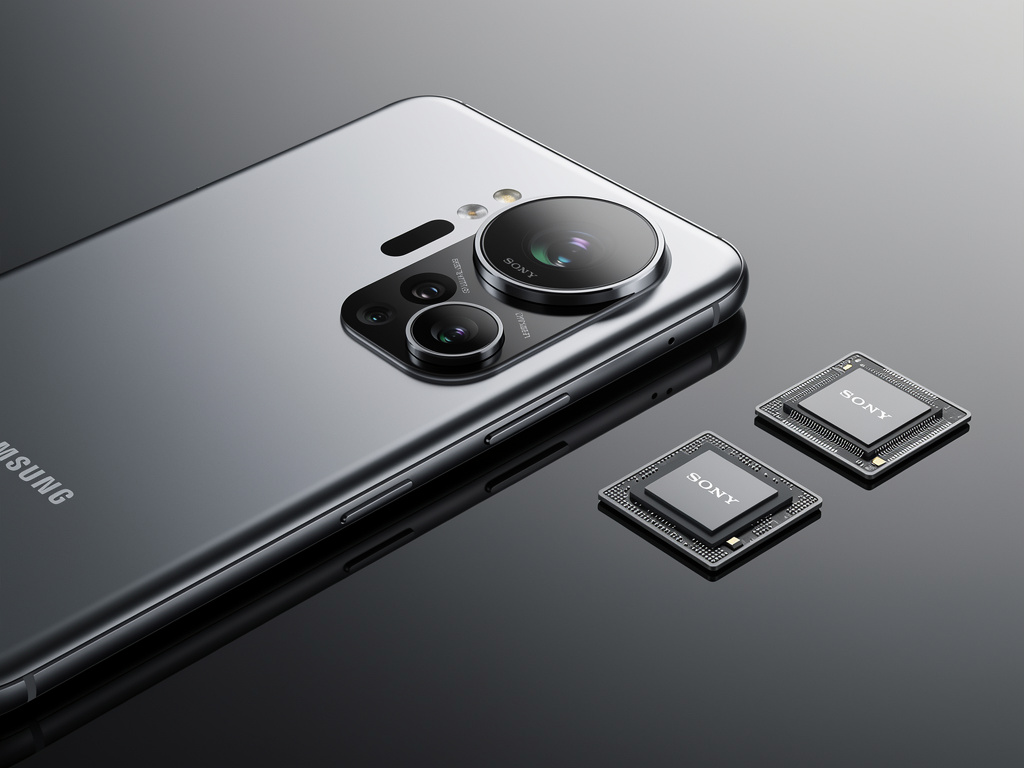
Samsung Electronics is preparing to make its most significant camera hardware pivot in years with the upcoming Galaxy S26 series, signaling a dramatic departure from its long-standing reliance on proprietary imaging sensors. According to recent industry reports, the South Korean technology giant plans to incorporate Sony’s cutting-edge image sensors across multiple camera modules in its 2026 flagship lineup, a move that could fundamentally reshape the competitive dynamics of premium smartphone photography.
The decision represents a notable strategic shift for Samsung, which has traditionally equipped its Galaxy S flagship devices with internally developed ISOCELL sensors. Android Central reports that the Galaxy S26 series will feature Sony sensors for both its ultrawide and telephoto camera systems, marking the first time Samsung has outsourced these critical imaging components to its Japanese rival in recent flagship generations. This transition suggests Samsung’s internal assessment has concluded that Sony’s sensor technology currently offers superior performance characteristics that align more closely with the company’s ambitious imaging goals.
Industry analysts have long recognized Sony as the dominant force in smartphone camera sensor manufacturing, with the company commanding approximately 40-50% of the global market share for mobile imaging sensors. Sony’s reputation stems from its advanced semiconductor fabrication capabilities and continuous innovation in pixel architecture, including pioneering technologies like stacked CMOS sensors and dual-layer transistor designs that maximize light-gathering efficiency while minimizing noise in challenging lighting conditions.
The Technical Advantages Driving Samsung’s Sensor Strategy
The technical specifications underlying this strategic shift reveal Samsung’s priorities for the Galaxy S26’s photographic capabilities. Sony’s latest generation of mobile image sensors incorporates several architectural improvements that address persistent challenges in smartphone photography, particularly in low-light performance and dynamic range capture. The company’s recent sensor designs feature enhanced photodiode structures that improve quantum efficiency—the measure of how effectively a sensor converts incoming photons into electrical signals—by as much as 20% compared to previous generations.
Samsung’s decision to adopt Sony sensors for the ultrawide camera module addresses one of the most technically demanding aspects of smartphone photography. Ultrawide lenses, which typically feature focal lengths equivalent to 12-16mm in full-frame terms, present unique optical challenges including edge distortion, chromatic aberration, and light falloff toward the frame periphery. Sony’s sensor technology includes on-chip lens correction algorithms and improved microlens designs that help mitigate these optical compromises, potentially delivering sharper corner-to-corner performance than Samsung’s current ISOCELL solutions.
Telephoto Imaging and the Pursuit of Optical Excellence
The telephoto camera system represents the other critical area where Samsung will implement Sony’s sensor technology in the Galaxy S26. Modern smartphone telephoto modules have evolved into sophisticated periscope designs that fold the optical path horizontally within the device chassis, enabling longer focal lengths without increasing device thickness. These periscope telephoto systems demand sensors with exceptional pixel-level performance, as any degradation in sensor quality becomes magnified when capturing distant subjects.
Sony’s advantage in telephoto sensor design stems partly from its extensive experience supplying imaging components to professional camera manufacturers, including its own Alpha series mirrorless cameras. This cross-pollination of technology allows Sony to implement advanced features like phase-detection autofocus pixels distributed across the entire sensor area, enabling faster and more accurate focus acquisition—a critical capability for telephoto photography where even minor focusing errors result in noticeably soft images.
Market Implications and Competitive Positioning
Samsung’s embrace of Sony sensors carries significant implications for the broader smartphone market, particularly in the premium segment where camera performance has become a primary differentiating factor. Apple has long relied on Sony sensors for its iPhone camera systems, and Google similarly sources Sony components for its Pixel devices. Samsung’s decision to join this trend effectively validates Sony’s position as the industry’s premier sensor supplier while raising questions about the competitive viability of Samsung’s own ISOCELL division.
The move also reflects the increasing specialization occurring within the smartphone supply chain. Even as Samsung remains one of the world’s most vertically integrated technology companies—manufacturing everything from displays to processors to memory chips—the company appears willing to prioritize best-in-class components over internal sourcing when performance demands dictate. This pragmatic approach mirrors similar decisions in other product categories, such as Samsung’s adoption of Qualcomm Snapdragon processors for certain regional variants of its flagship phones despite producing its own Exynos chipsets.
The ISOCELL Division’s Evolving Role
Samsung’s ISOCELL sensor division, despite losing flagship camera slots to Sony, continues to serve a crucial role in the company’s broader imaging strategy. The division supplies sensors to numerous other smartphone manufacturers and maintains a significant presence in mid-range and budget device segments where cost considerations often outweigh marginal performance advantages. Samsung has also invested heavily in developing specialized sensor technologies, including its ISOCELL HP series sensors with 200-megapixel resolution, which target specific market niches and use cases.
The strategic calculus behind Samsung’s sensor decisions likely involves complex considerations beyond pure image quality metrics. Manufacturing capacity, supply chain resilience, component costs, and long-term technology roadmaps all factor into these decisions. By maintaining its ISOCELL operations while selectively incorporating Sony sensors in flagship devices, Samsung preserves optionality and negotiating leverage while ensuring access to cutting-edge imaging technology for its most important product lines.
Software Integration and Computational Photography
While hardware sensors provide the foundation for smartphone photography, the increasing importance of computational photography means that sensor selection represents only one element of the overall imaging system. Samsung has invested substantially in developing sophisticated image processing algorithms, including multi-frame HDR techniques, AI-powered scene optimization, and advanced noise reduction algorithms that operate across multiple exposures. The company’s challenge with the Galaxy S26 will involve optimizing these software systems to extract maximum performance from Sony’s sensor hardware.
This software-hardware integration process requires extensive calibration and testing to ensure that the image processing pipeline properly accounts for each sensor’s specific characteristics, including its spectral response, noise profile, and dynamic range behavior. Samsung’s imaging engineers will need to develop new processing profiles that leverage Sony sensors’ strengths while maintaining the distinctive image rendering characteristics that Galaxy users have come to expect, including color science, contrast curves, and sharpening algorithms.
Looking Toward the Future of Mobile Imaging
The Galaxy S26’s camera configuration foreshadows broader trends in smartphone imaging technology as manufacturers pursue incremental improvements in an increasingly mature market. With fundamental constraints on sensor size imposed by device thickness and lens aperture limited by optical physics, future advances will likely emerge from novel sensor architectures, advanced computational techniques, and potentially new imaging modalities beyond traditional visible-light photography.
Samsung’s willingness to adopt external sensor technology for its flagship devices demonstrates the company’s commitment to maintaining its position among the smartphone photography elite, even when that requires setting aside internal pride of authorship. As the Galaxy S26 launch approaches in early 2026, the industry will be watching closely to see whether Sony’s sensors deliver the meaningful imaging improvements that Samsung is clearly expecting—and whether this strategic shift represents a temporary tactical move or a more permanent realignment in Samsung’s component sourcing strategy.
For consumers, the technical details of sensor provenance matter far less than the practical results visible in their photographs. If Samsung’s bet on Sony sensors pays off with noticeably better image quality, particularly in challenging shooting conditions, the Galaxy S26 could establish new benchmarks for smartphone photography and intensify the competitive pressure on rivals to match or exceed its imaging capabilities. The coming months will reveal whether this strategic gamble positions Samsung for continued leadership in the premium smartphone market or simply represents catching up to competitors who adopted Sony sensors years earlier.


 WebProNews is an iEntry Publication