
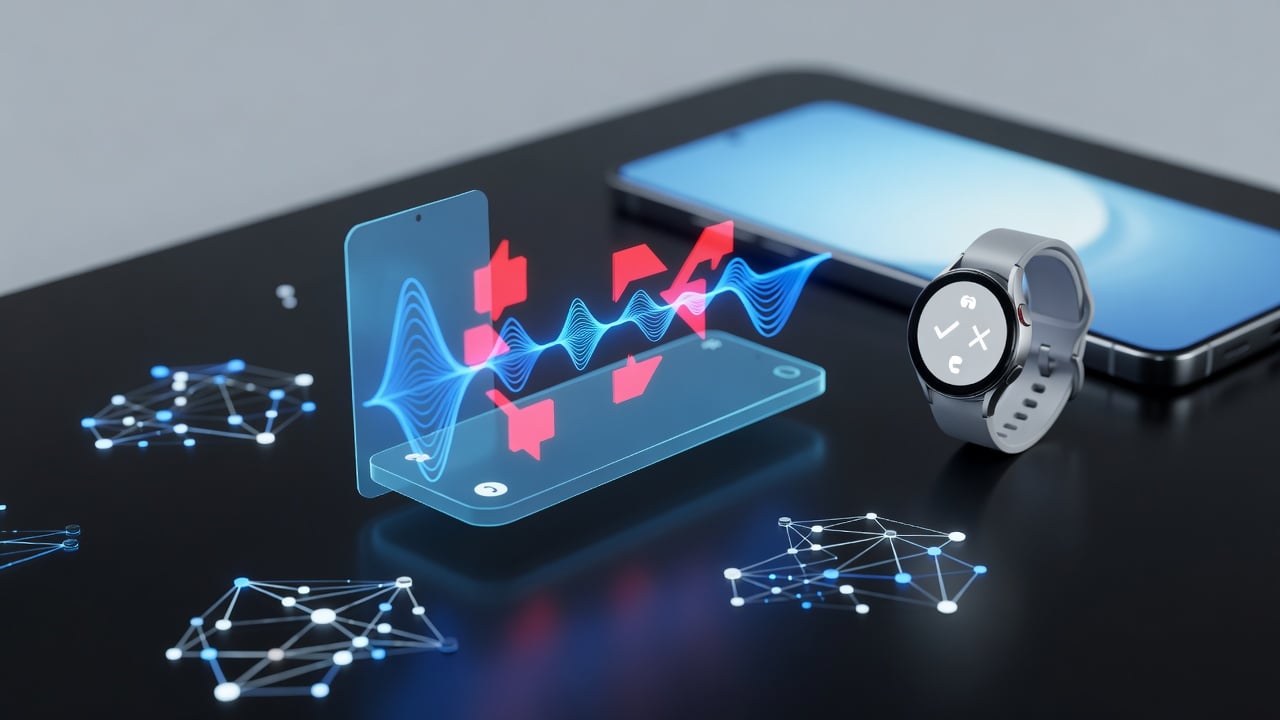
Spam calls plague millions daily. Banks that never lent money. Warranties on cars never owned. Offers too good to be true. But a new Galaxy AI feature changes that equation. It answers for you. It transcribes in real time. And the results often prove entertaining.
Sagar Naresh tried it on his Galaxy S25 Ultra right after the One UI 8.5 update landed in May. A persistent robocall pitched a pre-approved loan. The phone picked up. Galaxy AI asked questions. The caller stumbled. Then hung up. Naresh skimmed the transcript in seconds. MakeUseOf detailed the exchange. No more guessing. No more awkward hellos.
This isn’t entirely new. Samsung introduced Bixby Text Call years earlier. It turned voice into chat-like text. Callers spoke. The screen showed words. Users typed replies. Bixby read them aloud. Yet the latest version under Call Assist feels sharper. It integrates deeper with Galaxy AI. Transcripts arrive faster. The AI probes more intelligently.
Setup takes moments. Open the Phone app. Tap the three dots. Head to Settings. Find Call Assist. Toggle Call Screening on. Enable auto screen for unknown numbers. Pick a language. Adjust voice speed. That’s it. Samsung’s official support page walks through every step. Samsung Support.
Once active, unknown calls trigger a new option. Call Assist. Tap it. Then Call Screening. The phone greets the caller. “This is an automated assistant. How can I help?” The transcript scrolls live. Users watch. They decide. Jump in with voice. Send a text reply. Or let it end. The feature even suggests quick responses.
But here’s the surprise. The transcripts deliver value beyond filtering. One call claimed the user owned a specific car. The AI pressed for details. The pitch fell apart under questions. Another time, insurance offers poured out. The AI kept clarifying until the caller quit. Naresh called the transcripts “gold.” They reveal tactics. They expose persistence. They turn frustration into data.
From Early Experiments to Polished Tool
Samsung first tested the concept in 2023. Bixby Text Call launched with One UI 5.1. It worked on almost any Galaxy phone. Calvin Wankhede tested it for a month on a Galaxy S21 FE. Callers often hung up after the greeting. “I let Bixby answer all of my calls, even if it came at the expense of disgruntled friends and family,” he wrote. The voice sounded unnatural. The name Bixby confused people. Transcripts excelled in English and Korean but failed elsewhere. Android Authority.
Samsung Research defended the approach. The team trained models on real conversations. Banking. Insurance. Telecom. On-device processing kept data private. No cloud uploads. It supported more languages over time. French, German, Italian, Spanish. The company claimed it outperformed Google’s Call Screen in internal tests. “Bixby Text Call is an innovative solution,” their researchers stated. They positioned it as broader than pure spam defense. Good for concerts. Good for meetings. Good when you simply don’t want to speak. Samsung Research.
Google took a different path. Its Call Screen feature asks callers to state their business. It offers protection levels. Maximum for unknown numbers. Transcripts appear. Some versions save audio. The Verge compared both systems in late 2024. Samsung’s version sits inside the native dialer. Google’s works through its Phone app. Both reduce the mental load of unknown callers. Yet Samsung’s latest update narrows the gap on accuracy and speed. The Verge.
Older protections still matter. Samsung’s Smart Call, powered by Hiya, flags suspected spam before ringing. It lets users block or report with one tap. Combine that with Call Screening. High-risk calls die silently. Suspicious ones get screened. The rest ring normally. WSJ highlighted such tools years ago as vital for older adults facing fraud. The Wall Street Journal.
Today the problem grows worse. Robocalls persist despite blocks. Scammers spoof numbers. Regulations lag. Enter third-party solutions. Equal AI raised $30 million in June. The Indian startup built an app that screens calls, summarizes intent, and offers quick replies. Over one million monthly users. Three hundred thousand daily. It records full calls. It supports code-mixing across languages. Founder Keshav Reddy sees stickiness in solving one painful task. “We think that if an app does well in a few use cases, it can quickly become popular in its niche,” he told TechCrunch. The company plans iOS support and subscriptions. TechCrunch.
Samsung’s approach differs. No extra app. No subscription. Baked into the phone. Available on older flagships once updated to One UI 8.5. S24 Ultra owners get it. So do many midrange models. Storage space matters, though. Full memory can cause glitches. Standard carrier charges still apply during screened calls. And it doesn’t stop the phone from ringing entirely. The AI simply handles the conversation if you choose.
Privacy questions linger. Transcripts stay on device. Yet AI listens. Samsung promises on-device processing for many tasks. Users must still review terms during setup. The New York Times covered similar screeners last fall. Apple, Google, and now Samsung push automated defenses. The goal stays consistent. Give people control without constant interruption. The New York Times.
Early adopters report mixed but mostly positive results. Friends and family sometimes react oddly to the AI voice. Spammers hang up quickly once questioned. Legitimate businesses state their case clearly. Transcripts provide receipts. One user saved a transcript proving a warranty scam. Another spotted a pattern in loan offers tied to public records. The data accumulates. Patterns emerge.
So the feature evolves. What began as a convenience for noisy environments or quiet meetings now attacks a daily annoyance. It won’t end spam calls. Carriers and regulators must do more. But it shifts power back to the recipient. Read first. Decide later. And sometimes, laugh at the absurdity captured in plain text.
Industry watchers expect further refinements. Better voice naturalness. Wider language support. Integration with spam databases that learn from transcripts. Samsung updates its Phone app regularly. One UI 8.5 marked a step. Future versions could auto-categorize calls. Offer summaries instead of full logs. Block repeat offenders more aggressively.
For now, the transcripts stand out. They turn invisible annoyances visible. They expose scripts. They confirm suspicions. And for heavy spam targets, they restore peace. Unknown numbers no longer demand immediate attention. The phone handles the introduction. The user reads the script. Then acts. Or doesn’t.
That shift matters. In a world of constant connection, selective silence becomes a feature. Samsung delivered it inside an app millions already use. No downloads. No ads. Just AI doing the talking so you don’t have to.


 WebProNews is an iEntry Publication