
Samsung Electronics is preparing to unveil what industry insiders are calling its most significant display innovation in years with the Galaxy S26 series, scheduled for early 2025. According to multiple reports from supply chain sources and display technology analysts, the South Korean tech giant is implementing a fundamental shift in its screen technology that could set new benchmarks for the premium smartphone segment and potentially influence the entire industry’s direction for the next half-decade.
The centerpiece of this transformation involves Samsung’s adoption of what the company internally refers to as M14 OLED material sets, representing a generational leap from the M13 technology currently deployed in the Galaxy S25 lineup. According to Android Central, this new material composition promises substantial improvements in power efficiency, brightness capabilities, and panel longevity—three critical factors that have increasingly defined the competitive battleground among flagship smartphones as devices push toward more demanding applications like extended reality experiences and AI-powered features that require sustained high-brightness operation.
What makes this development particularly noteworthy is the timing and strategic implications. Samsung Display, the company’s panel manufacturing division, has been facing intensifying competition from Chinese display makers including BOE Technology Group and Tianma Microelectronics, both of which have made significant inroads into the premium OLED market previously dominated by Korean manufacturers. The M14 material set represents Samsung’s technological counterpunch, designed to maintain its position as the supplier of choice for premium devices not only for its own Galaxy lineup but also for competitors including Apple, which relies heavily on Samsung Display for iPhone OLED panels.
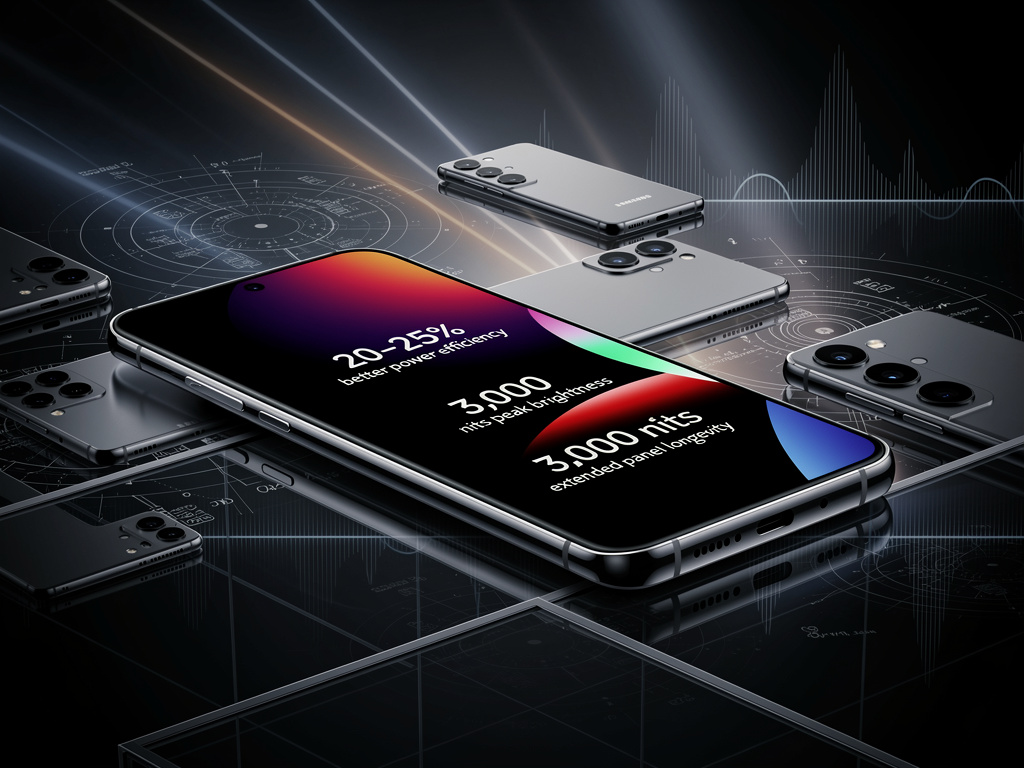
Industry analysts suggest the improvements could be substantial. The M14 technology is expected to deliver approximately 20-25% better power efficiency compared to current-generation panels, a critical enhancement as smartphone manufacturers grapple with the energy demands of increasingly powerful processors and AI accelerators. This efficiency gain translates directly into extended battery life—a feature that consistently ranks among consumers’ top priorities in purchasing decisions, according to market research from multiple consumer electronics surveys.
Engineering the Next Generation of Mobile Displays
The technical architecture underlying the M14 material set involves fundamental changes to the organic compounds used in OLED pixel construction. Unlike previous incremental updates, Samsung Display has reportedly redesigned the emission layer stack, incorporating new blue light-emitting materials that have historically been the weakest link in OLED longevity. Blue OLED subpixels degrade faster than their red and green counterparts, leading to color shift and reduced brightness over time—a phenomenon that has plagued OLED technology since its commercial introduction.
Samsung’s engineering teams have focused on addressing this Achilles heel through molecular-level innovations in the blue emitter compounds. The new materials are designed to maintain luminous efficiency while significantly extending operational lifespan, potentially reducing the burn-in concerns that have occasionally surfaced in long-term OLED usage scenarios. For enterprise customers and power users who rely on their devices for extended periods, this improvement could prove transformative, extending the practical usable life of premium smartphones from the typical two-to-three-year replacement cycle to four years or beyond.
The brightness improvements are equally significant. Peak brightness levels for the Galaxy S26 series are expected to reach approximately 2,500 to 3,000 nits in HDR mode, according to supply chain reports. This represents a substantial increase from the Galaxy S25’s already impressive specifications and positions Samsung’s flagship displays to compete directly with the brightest panels in the industry. Such brightness levels are particularly relevant for outdoor visibility and HDR content consumption, two areas where smartphone manufacturers have been engaged in an escalating specifications race.
Beyond raw numbers, the M14 technology reportedly enables more granular brightness control across different zones of the display, improving the effectiveness of Samsung’s adaptive brightness algorithms. This capability becomes increasingly important as smartphones serve dual purposes as both productivity tools requiring accurate color representation and entertainment devices optimized for immersive content consumption. The ability to dynamically adjust brightness and color temperature based on ambient conditions and content type represents a sophisticated approach to display management that goes well beyond simple brightness adjustments.
Supply Chain Dynamics and Manufacturing Challenges
The transition to M14 material sets is not without complications. Samsung Display has been ramping production at its manufacturing facilities in South Korea, but yield rates for new OLED technologies typically start lower than mature production lines, potentially creating supply constraints during the initial launch period. Industry sources familiar with the production timeline suggest that Samsung has been conducting trial production runs since late 2024, working to optimize the manufacturing process before full-scale commercial production begins in the first quarter of 2025.
These manufacturing challenges have strategic implications beyond Samsung’s own product launches. Apple, which has historically secured priority access to Samsung Display’s most advanced panel technologies for iPhone production, is reportedly evaluating the M14 material set for future iPhone models. The competitive dynamics between Samsung’s dual roles—as both a component supplier to competitors and a smartphone manufacturer competing directly with those same companies—create complex strategic calculations around technology deployment timing and capacity allocation.
The financial stakes are substantial. The global OLED display market for smartphones is projected to exceed $35 billion annually, with premium displays commanding significant price premiums. Samsung Display’s ability to maintain technological leadership directly impacts both its component business revenue and Samsung Electronics’ ability to differentiate its Galaxy lineup in an increasingly commoditized smartphone market where processor performance and camera capabilities have reached a level of parity that makes differentiation challenging.
Component costs for advanced OLED panels represent one of the largest single expenses in flagship smartphone bills of materials, typically accounting for 15-20% of total manufacturing costs. The M14 technology’s improved efficiency could potentially offset some of the increased manufacturing complexity, though initial production costs are likely to be higher than mature M13 panels. How Samsung manages this cost structure will significantly influence the Galaxy S26’s pricing strategy and profit margins in a market where consumers have shown increasing price sensitivity.
Competitive Implications and Market Positioning
Samsung’s display innovations arrive at a critical juncture for the premium smartphone market. Global smartphone shipments have plateaued, with growth increasingly dependent on convincing existing users to upgrade rather than capturing new users entering the smartphone ecosystem for the first time. In this environment, meaningful hardware innovations that deliver tangible user benefits become essential differentiation factors, particularly as software features and AI capabilities become increasingly similar across competing platforms.
The Galaxy S26’s display improvements could provide Samsung with a compelling upgrade narrative, particularly for users holding Galaxy S23 or earlier models. The combination of improved efficiency, enhanced brightness, and extended longevity addresses practical concerns that resonate with consumers beyond mere specification sheet comparisons. For Samsung’s marketing organization, the challenge will be communicating these technical improvements in ways that connect with mainstream consumers who may not fully understand the nuances of OLED material science but care deeply about battery life and screen quality.
Competitors are unlikely to remain static. Chinese manufacturers including Xiaomi, OPPO, and Vivo have demonstrated increasing sophistication in display technology implementation, often working with multiple panel suppliers to optimize cost and performance. BOE Technology Group, in particular, has been aggressively developing its own advanced OLED technologies and has secured design wins with major smartphone manufacturers. The competitive pressure from Chinese suppliers has been a significant factor driving Samsung Display’s investment in next-generation technologies like the M14 material set.
Apple’s response will be particularly significant to watch. The iPhone maker has historically been conservative in display technology adoption, preferring to implement mature technologies with proven reliability rather than pushing the absolute cutting edge. However, Apple has also shown willingness to invest heavily in custom display technologies when they deliver meaningful user experience improvements, as evidenced by the ProMotion adaptive refresh rate technology and the recent adoption of always-on display functionality. Whether Apple adopts M14 technology for upcoming iPhone models could significantly influence the broader industry’s perception of the technology’s maturity and value proposition.
Looking Ahead: Display Technology as Strategic Differentiator
The Galaxy S26’s display innovations represent more than incremental improvements—they signal Samsung’s strategic bet that screen technology remains a viable differentiation vector in the smartphone industry’s next chapter. As artificial intelligence features, computational photography, and extended reality applications become standard expectations rather than premium features, the display serves as the critical interface between these capabilities and user experience. A superior screen can elevate good software into excellent user experiences, while display limitations can undermine even the most sophisticated underlying technology.
For Samsung, maintaining display leadership serves multiple strategic objectives simultaneously. It strengthens the Galaxy brand’s premium positioning, supports Samsung Display’s component business, and creates technological moats that are difficult for competitors to quickly replicate. The substantial capital investment required for advanced OLED manufacturing facilities—often exceeding several billion dollars—creates natural barriers to entry that protect Samsung’s position even as Chinese competitors increase their capabilities.
The broader industry implications extend beyond smartphones. OLED technology continues expanding into laptops, tablets, automotive displays, and emerging form factors including foldable devices. Innovations developed for smartphone displays often migrate to these adjacent categories, creating technology spillover effects that amplify the strategic value of display R&D investments. Samsung’s leadership in flexible OLED technology, demonstrated through its Galaxy Z Fold and Flip series, builds directly on the material science and manufacturing expertise developed for conventional smartphone displays.
As the Galaxy S26 launch approaches, the industry will be watching closely to see whether Samsung’s display gambit delivers the competitive advantages the company is betting on. Early reviews and user reception will provide critical signals about whether display improvements can still move the needle in consumer purchasing decisions, or whether the smartphone market has reached a level of maturity where screen quality improvements yield diminishing returns in terms of market impact. For an industry constantly searching for the next meaningful innovation, Samsung’s M14 display technology represents a significant test case for whether traditional hardware improvements retain their power to drive upgrade cycles and command premium pricing in an increasingly sophisticated and competitive market.


 WebProNews is an iEntry Publication