
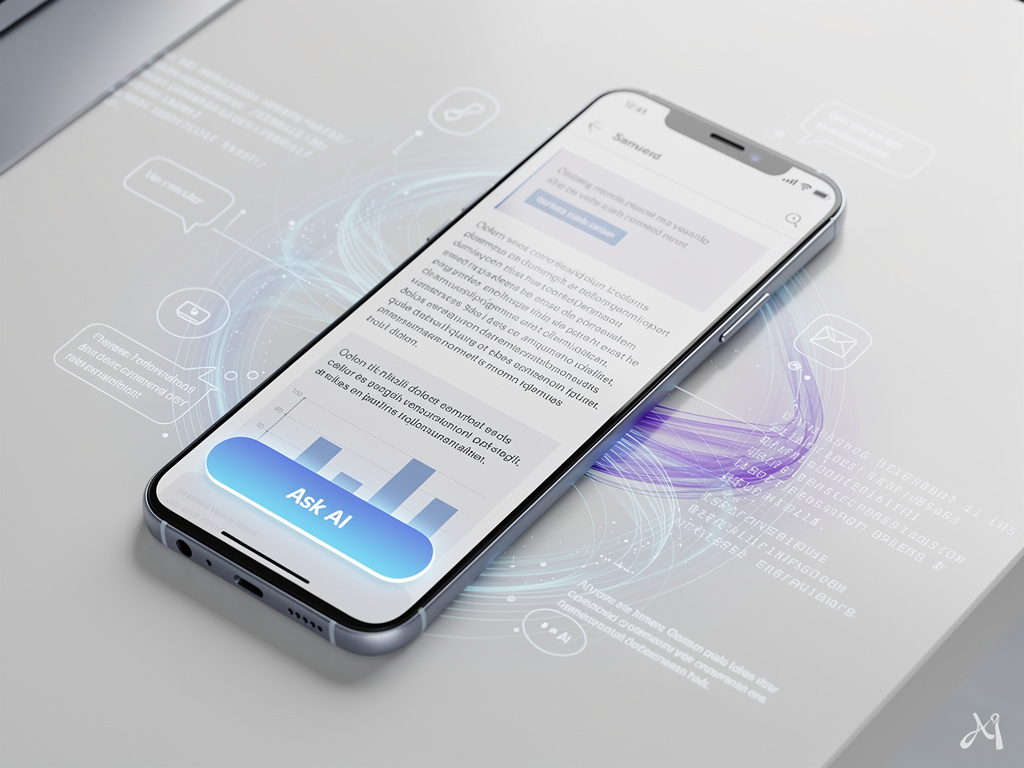
Samsung appears to be preparing a significant artificial intelligence integration for its native mobile browser, with code discovered in a recent update pointing to an “Ask AI” feature that would allow users to query AI models directly from the Samsung Internet app. The move signals Samsung’s broader ambition to embed generative AI into every corner of its software ecosystem — and raises fresh questions about how browser-based AI tools will compete with standalone chatbots and search engines alike.
The discovery, first reported by Android Authority through an APK teardown of Samsung Internet version 27.0.3.1, reveals strings of code referencing an “Ask AI” button that would appear in the browser’s toolbar or overflow menu. The teardown, conducted by the publication’s staff, uncovered multiple references to AI-powered assistance, including prompts that suggest users will be able to highlight text on a webpage and ask an AI assistant to explain, summarize, or elaborate on the selected content. While APK teardowns reveal features that are in development, there is no guarantee that every discovered feature will ship to end users — a caveat that Android Authority noted in its reporting.
What the Code Reveals About Samsung’s AI Browser Plans
According to the teardown findings published by Android Authority, the “Ask AI” feature appears designed to function as a contextual AI assistant embedded within the browsing experience. Strings found in the code suggest that users will be able to interact with AI in multiple ways: through a dedicated toolbar button, through a context menu that appears when text is selected, and potentially through a sidebar or overlay panel that keeps the AI conversation visible alongside the webpage being browsed.
The code also hints at integration with Samsung’s existing Galaxy AI infrastructure, which the company has been aggressively building out since the launch of the Galaxy S24 series in January 2024. Samsung has already embedded AI features like Circle to Search, Chat Assist, and browsing assistance tools into its One UI software layer. The addition of a native AI assistant within Samsung Internet would represent a natural extension of that strategy, bringing generative AI capabilities directly into the workflow of the hundreds of millions of users who rely on Samsung’s default browser.
The Competitive Pressure Driving Browser AI Integration
Samsung’s move does not exist in a vacuum. The race to embed AI directly into web browsers has accelerated dramatically over the past 18 months, with virtually every major browser maker staking out territory. Google has been integrating Gemini AI capabilities into Chrome, including features that summarize pages, help users compose text, and organize tabs using machine learning. Microsoft’s Edge browser was among the first to gain a built-in AI copilot, leveraging its deep partnership with OpenAI to offer a sidebar chatbot that can answer questions about page content, generate text, and perform research tasks without leaving the browser window.
Opera has introduced its own AI assistant called Aria, while Brave has launched Leo, an AI chatbot accessible from the browser’s address bar. Even Mozilla, long the standard-bearer for privacy-focused browsing, has begun experimenting with AI features in Firefox. For Samsung, which commands a significant share of the global mobile browser market thanks to its position as the world’s largest smartphone manufacturer by volume, the pressure to match or exceed these capabilities is immense. Samsung Internet consistently ranks among the top five mobile browsers globally, with hundreds of millions of active installations across Galaxy phones and tablets.
Galaxy AI’s Expanding Reach Across Samsung’s Ecosystem
The “Ask AI” feature in Samsung Internet should be understood as part of a much larger strategic initiative. Since unveiling Galaxy AI at its Unpacked event in January 2024, Samsung has made artificial intelligence the centerpiece of its consumer electronics pitch. The Galaxy S24 series launched with a suite of on-device and cloud-based AI features, including real-time phone call translation, AI-generated photo edits, note summarization, and the aforementioned Circle to Search — a feature developed in partnership with Google that allows users to circle any element on their screen to trigger a visual search.
Samsung expanded these capabilities further with the Galaxy S25 series and the One UI 7 update, which brought deeper AI integration across system apps. The company has also extended Galaxy AI to its tablet and foldable lineups, positioning AI as a cross-device experience rather than a phone-only gimmick. Embedding an AI assistant into Samsung Internet fits this pattern precisely: it ensures that users who stay within Samsung’s default app ecosystem encounter AI at every touchpoint, reducing the incentive to switch to Chrome, Edge, or a third-party AI chatbot app.
How ‘Ask AI’ Could Change the Mobile Browsing Experience
If the feature ships as the code suggests, “Ask AI” could meaningfully alter how Samsung Internet users interact with web content. The ability to highlight a passage of text and instantly receive an AI-generated explanation or summary would be particularly valuable for users reading technical articles, academic papers, or news stories in a second language. Samsung already offers a translation feature within its browser; an AI layer could extend this to contextual comprehension, going beyond word-for-word translation to provide nuanced explanations of complex topics.
There are also implications for e-commerce and product research, two areas where mobile browsing activity is heavily concentrated. An AI assistant that can compare product specifications, summarize user reviews, or flag potential concerns about a product listing could add genuine utility to the shopping experience. Samsung has historically used its browser as a vehicle for value-added features — including built-in ad blocking, a secret mode with biometric authentication, and video assistant tools — so an AI integration would be consistent with the app’s identity as a feature-rich alternative to Chrome on Android.
Privacy and Data Handling Questions Loom Large
Any AI feature that processes webpage content raises important questions about data privacy and handling. Samsung has generally taken a hybrid approach with Galaxy AI, performing some tasks on-device using models optimized for mobile hardware and routing more complex queries to cloud-based servers. The company has stated that it does not use personal data processed through Galaxy AI features for training purposes, though it has been less specific about data retention policies for cloud-processed queries.
For a browser-based AI tool, the stakes are arguably higher. Web browsing data is among the most sensitive information a device handles, encompassing everything from health research queries to financial transactions. Samsung will need to clearly communicate how “Ask AI” processes the content users share with it, whether that content is sent to external servers, and what safeguards are in place to prevent the AI from inadvertently exposing private information. The company’s track record with Samsung Internet’s privacy features — which include tracker blocking and a privacy dashboard — suggests it is aware of these concerns, but execution will matter more than intent.
Timing and the Road to a Public Release
The timing of this discovery is noteworthy. Samsung typically uses the second half of the year to refine software features ahead of its January flagship launches, and the Galaxy S26 series is expected to debut in early 2026 with further AI enhancements. It is plausible that “Ask AI” in Samsung Internet could be part of a broader One UI update that accompanies that launch, though Samsung could also choose to roll it out earlier as a standalone browser update through the Galaxy Store or Google Play Store.
Samsung Internet updates are distributed independently of major One UI releases, which gives the company flexibility to ship new features on its own timeline. The browser has a dedicated beta program that Samsung uses to test experimental features with enthusiast users before wider rollout, and it would not be surprising to see “Ask AI” appear in a beta build in the coming weeks or months. As Android Authority cautioned, features found in APK teardowns do not always reach production, but the depth and specificity of the code strings discovered suggest that this is more than a casual experiment.
What This Means for the Future of Mobile Browsers
The broader significance of Samsung’s move lies in what it reveals about the future of mobile browsing itself. The traditional browser — a passive window for rendering web pages — is rapidly evolving into an active assistant that interprets, summarizes, and augments the content users consume. As AI capabilities become table stakes for browser apps, differentiation will increasingly depend not just on the quality of the underlying AI model, but on how seamlessly it integrates into the browsing workflow and how transparently it handles user data.
For Samsung, the opportunity is substantial. With its massive installed base of Galaxy devices and its ability to set Samsung Internet as the default browser on those devices, the company has a distribution advantage that few competitors can match. If “Ask AI” delivers genuine utility without compromising user trust, it could reinforce Samsung Internet’s position as a credible alternative to Chrome on Android — and further entrench Galaxy AI as the connective tissue binding Samsung’s hardware and software ecosystem together.


 WebProNews is an iEntry Publication