
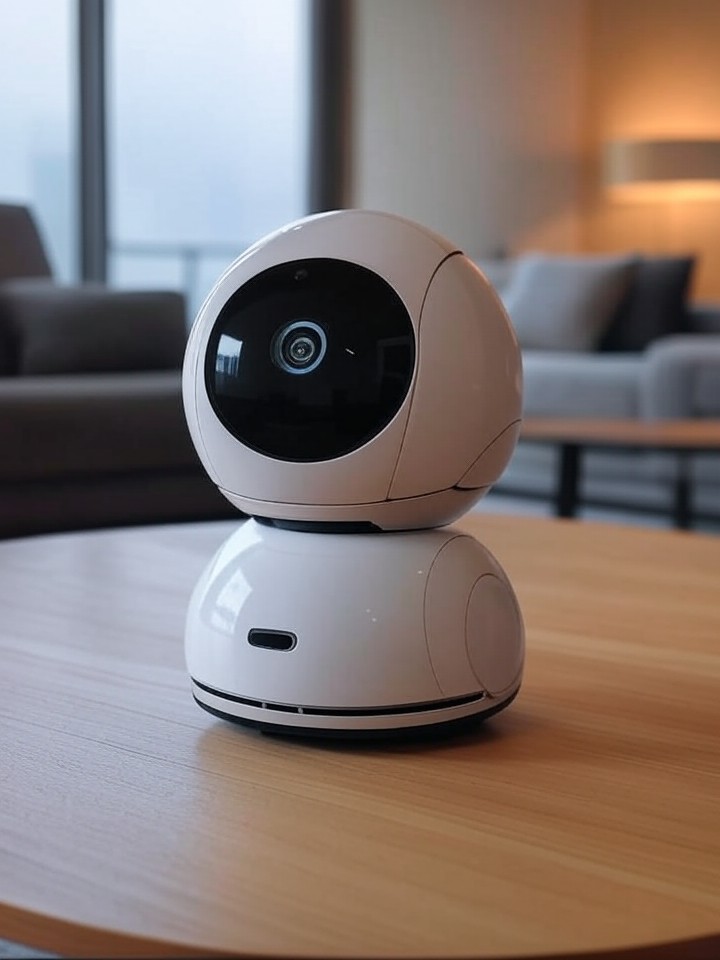
In the ever-evolving world of consumer robotics, few projects have captured imaginations quite like Samsung’s Ballie, a spherical AI companion first unveiled with much fanfare at CES 2020. Billed as a rolling home assistant that could patrol living spaces, project videos, and even interact with pets, Ballie promised to blend cuteness with cutting-edge technology. Yet, after years of teasers, prototypes, and repeated delays, the dream appears to have deflated. Recent reports indicate that Samsung has quietly shifted Ballie from a consumer product to an internal research tool, effectively squashing hopes of a public release.
This pivot comes amid a broader pattern of ambitious tech unveilings that fail to materialize, raising questions about the feasibility of multifunctional home robots in today’s market. Ballie was reintroduced in an updated form at CES 2024, complete with a built-in projector and enhanced AI capabilities, with Samsung hinting at a 2024 launch. But as deadlines slipped—first to mid-2025, then beyond—enthusiasts and analysts grew skeptical. The latest blow arrived just as CES 2026 kicked off, with Samsung notably absent from showcasing the device.
According to a detailed account from Ars Technica, Samsung has demoted Ballie to “internal use,” focusing on its underlying AI platform rather than a standalone gadget. This move underscores the challenges plaguing the robotics sector, from technical hurdles to privacy concerns. Insiders suggest that navigation issues, such as handling uneven floors or avoiding obstacles like toys and pets, proved more daunting than anticipated.
The Long Road of Promises and Postponements
Ballie’s journey began six years ago when Samsung positioned it as a “human-centric” robot, capable of understanding user needs, providing fitness reminders, and controlling smart home devices. Early demos showed the yellow orb rolling around homes, projecting workout videos onto walls or even greeting users at the door. Social media buzzed with comparisons to sci-fi icons like BB-8 from Star Wars or WALL-E, fueling excitement. Posts on X (formerly Twitter) from users like tech influencers highlighted its potential as a “smart buddy,” with one viral thread amassing over 100,000 views praising its adorable design.
However, the path to commercialization was fraught with setbacks. By 2023, Samsung had yet to provide concrete release details, leading to speculation in outlets like Engadget about whether Ballie would ever see the light of day. The company updated the concept in 2024, adding features like video calling and pet monitoring, and even opened pre-registrations on its global website. But as 2025 progressed, reports from SamMobile detailed yet another delay, pushing the timeline into uncertainty.
Industry observers point to a combination of factors: supply chain disruptions, escalating development costs, and the rapid advancement of competing AI technologies. Samsung’s own statements, as captured in various news pieces, evolved from optimistic projections to vague assurances. For instance, a December 2025 update from 9to5Google noted that the company had missed its mid-2025 window, attributing it to refinement needs for Ballie’s AI integration.
Technical Challenges in the Spotlight
Delving deeper into the engineering side, Ballie’s ambitious design—a compact, rolling sphere equipped with cameras, microphones, and a projector—presented unique obstacles. Navigation in real-world homes, with their rugs, thresholds, and clutter, required sophisticated AI to prevent mishaps. Sources familiar with the project, as reported in WebProNews, highlighted persistent issues with sensor accuracy and battery life, which limited the robot’s autonomy.
Privacy emerged as another thorny issue. With always-on cameras roaming freely, concerns about data security loomed large, especially in an era of heightened scrutiny over smart home devices. X posts from tech enthusiasts in late 2025 echoed these worries, with some users questioning how Samsung would address potential hacking risks or unauthorized surveillance. This sentiment aligns with broader industry trends, where regulators in the U.S. and Europe have tightened rules on AI-driven devices.
Moreover, Ballie’s multifunctional aspirations—serving as a projector, assistant, and companion—may have overcomplicated its development. Competitors like Amazon’s Astro robot faced similar hurdles, with limited adoption due to high costs and niche appeal. Samsung’s decision to repurpose Ballie internally, as detailed in Ars Technica’s coverage, suggests a strategic retreat, allowing the company to leverage its tech for other products without the risks of a consumer launch.
Market Dynamics and Competitive Pressures
The home robotics arena has grown increasingly crowded, with players like iRobot (now under Amazon) and newer entrants like LG pushing boundaries. Samsung’s hesitation with Ballie reflects a cautious approach amid economic headwinds and shifting consumer priorities. A Bloomberg report from early 2026 emphasized how market challenges, including inflation and supply shortages, contributed to the shelving. Analysts quoted in the piece estimate that developing a viable home robot could cost upwards of $100 million, with uncertain returns.
Public sentiment, gauged from recent X discussions, shows a mix of disappointment and resignation. Posts circulating during CES 2026 lamented Ballie’s absence, with some users sharing memes of the robot “ghosting” fans. This echoes earlier hype, such as Samsung’s own CES 2020 tweet that garnered thousands of likes, promising a revolutionary companion. Yet, as The Verge noted in its CES 2026 coverage, the lack of any mention at the event signals a probable cancellation.
Samsung’s broader ecosystem strategy may also play a role. The company has invested heavily in AI, integrating it into appliances and smartphones. Repositioning Ballie as an “active innovation platform,” per Bloomberg’s insights, could mean its tech informs future devices, like enhanced smart fridges or voice assistants, without the standalone risks.
Implications for Samsung’s Innovation Strategy
This development raises broader questions about Samsung’s track record with concept products. From foldable phones that succeeded to ventures like the Galaxy Home smart speaker that fizzled, the company has a history of bold bets with mixed outcomes. Insiders, speaking anonymously to outlets like SamMobile, suggest internal debates over resource allocation, especially as rivals like Google and Apple advance in AI.
For the robotics industry, Ballie’s fate highlights persistent barriers to mass adoption. High prices—Ballie was rumored to cost around $1,000—coupled with limited practical utility, deter widespread interest. A Gizmochina analysis from CES 2026 points to growing competition from specialized robots, like those focused solely on vacuuming or security, which have carved out niches.
Looking ahead, Samsung might pivot Ballie’s AI toward enterprise applications, such as warehouse automation or healthcare aids. X posts from industry watchers speculate on this, with one thread suggesting collaborations with robotics firms to salvage the tech. This aligns with Samsung’s statements in Ars Technica, emphasizing internal innovation over consumer gadgets.
Lessons from a Spherical Setback
The story of Ballie serves as a cautionary tale for tech giants chasing futuristic visions. While the robot’s endearing design sparked joy—evident in viral videos from CES demos—the gap between prototype and product proved insurmountable. Reports from Engadget and others chronicle how repeated delays eroded consumer trust, turning excitement into skepticism.
Economically, the decision to shelve Ballie could free up resources for more promising areas, like Samsung’s Galaxy AI suite. Analysts in Bloomberg’s piece predict that by focusing on software platforms, Samsung might integrate Ballie’s learnings into existing products, potentially yielding better returns.
Ultimately, Ballie’s demotion underscores the delicate balance between innovation and execution in consumer tech. As the industry moves forward, with AI companions evolving in forms like chatbots or wearables, the rolling robot’s legacy may lie in the lessons it imparts rather than the homes it never entered. Samsung’s silence at CES 2026, as covered across multiple sources, leaves room for speculation, but the writing seems clear: Ballie, once a beacon of robotic whimsy, has rolled into the archives.
In reflecting on this saga, it’s worth noting how public perception shifted. Early X enthusiasm, with posts likening Ballie to beloved fictional robots, gave way to frustration in 2026 threads. This evolution mirrors the tech sector’s broader challenges, where hype must meet reality. For industry insiders, Ballie’s pivot signals a maturing approach to R&D, prioritizing viable tech over flashy unveils. As Samsung navigates this, the echoes of Ballie’s unfulfilled promise will likely influence future projects, ensuring that ambition is tempered with pragmatism.


 WebProNews is an iEntry Publication