
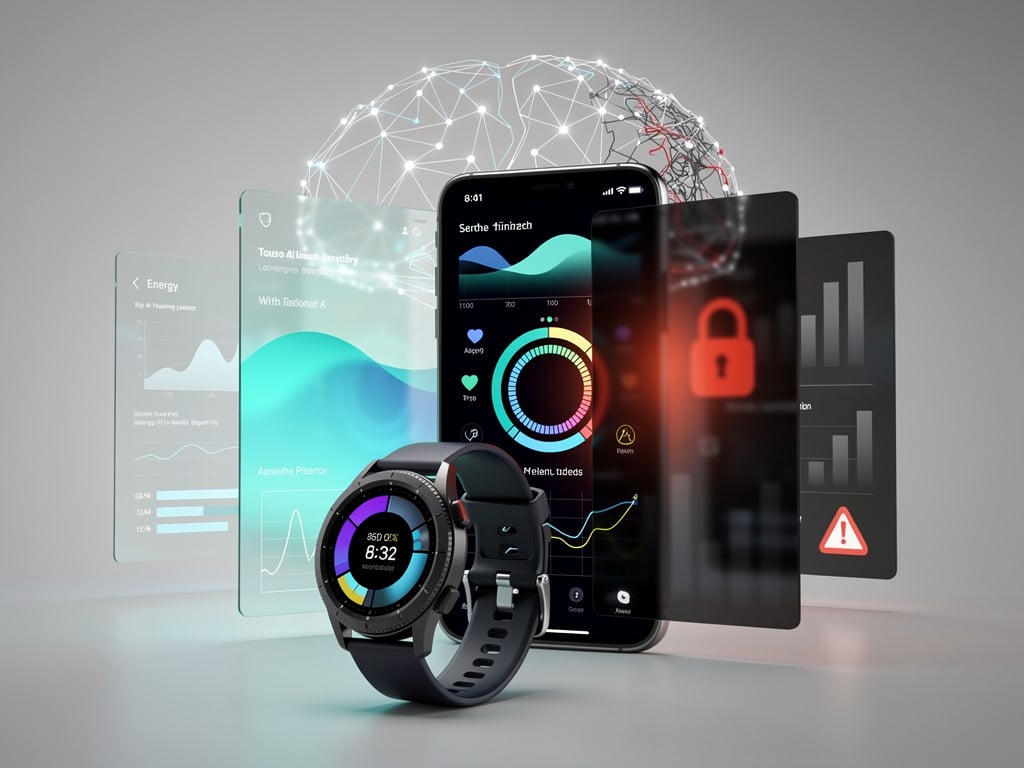
Samsung just announced a sweeping update to its Samsung Health app. The changes arrive starting June 8. They turn the Galaxy Watch from a passive data collector into something far more opinionated.
Complex biometric readings now feed directly into AI-generated guidance. Sleep patterns, heart rate variability, activity levels — all get distilled into simple daily recommendations. The company calls it proactive health management. Some users already call it something else.
The Redesign Arrives Whether Users Want It or Not
The new layout organizes everything around five core areas: Activity, Mindfulness, Nutrition, Sleep, and Vitals. Daily wellness tips appear prominently. An AI-powered Energy Score sits front and center. It draws from overnight sleep data, blood oxygen levels, snoring duration, skin temperature, and heart rate to rate physical and mental readiness.
Hon Pak, Senior Vice President and Head of the Digital Health Team at Samsung Electronics, described the shift in a statement. “Samsung Health is evolving to connect health data measured by Galaxy Watch with AI-based insights, enabling users to understand their physical and mental condition more easily and intuitively.” (Samsung Newsroom)
The features debut first with the upcoming Galaxy Watch models. Yet existing Galaxy Watch owners will see the revamped app on their phones soon enough. The update showcases capabilities planned for newer hardware. Translation? Current users get a taste — ready or not.
And here’s the rub. Samsung positions this as helpful personalization. The app no longer waits for you to open it and dig through graphs. It offers actionable advice. Morning readiness scores. Suggested workout adjustments. Recovery recommendations based on last night’s rest. The vision sounds logical on paper.
But recent history offers a warning. Google tried something similar with Fitbit users. The results weren’t pretty.
The migration to the Google Health app replaced the familiar Fitbit interface with an AI-heavy experience. Users encountered verbose summaries, cluttered layouts, and forced AI coaching they couldn’t easily disable. Review bombing followed. Reddit threads filled with frustration over missing data views, inaccurate interpretations, and “AI slop” dominating the home screen. (9to5Google)
One user described endless paragraphs of generated text before reaching actual activity data. Another reported the AI misreading weight entries, altering workout logs, and failing basic unit conversions. Bugs piled up. Features moved or disappeared. The backlash grew loud enough that Google published a public roadmap of fixes.
Complaints centered on lost simplicity. Longtime Fitbit owners valued clean data presentation over interpretive narration. The new app pushed stories and suggestions instead of raw numbers. Many felt talked at rather than informed.
Samsung now walks a parallel path. Its update streamlines the interface while injecting AI insights everywhere. The Energy Score aims to synthesize multiple signals into one actionable number. Workout comparisons, sleep coaching, and personalized tips follow similar logic. The company promises these tools will help users “stay ahead of their health.”
Yet the parallels to Google’s experience raise obvious questions. Will Galaxy Watch users welcome the interpretations? Or will they resent the shift away from straightforward tracking? Early reactions on X show a mix. Some praise the proactive approach. Others worry about accuracy and over-reliance on generated advice.
Technical details matter here. The AI runs on-device where possible, according to Samsung’s earlier statements on Galaxy AI. That limits data sharing but doesn’t eliminate concerns about opaque decision-making. How exactly does the model weigh snoring against heart rate variability? What assumptions does it make about a user’s lifestyle or goals?
Samsung hasn’t released the full algorithm. It rarely does. Users must trust the output. For casual fitness enthusiasts, that might suffice. For data-driven athletes or those managing specific conditions, the black box presents problems. A single misleading Energy Score could push someone to overtrain. Or discourage activity on a day when movement would help.
The redesign also reflects broader industry pressure. Apple, Google, and now Samsung all race toward AI-powered health platforms. Each promises to make sense of the growing flood of wearable data. Each bets that users want guidance more than they want control over the raw information.
But user behavior tells a different story. Fitbit’s dedicated community formed around its no-nonsense approach. People built habits around specific screens and metrics. When those changed without easy opt-outs, loyalty eroded. Some switched to Garmin. Others simply stopped engaging with the app.
Samsung’s installed base differs. Many Galaxy Watch owners already live in the broader Samsung ecosystem. They use Galaxy phones, tablets, and Buds. The health app forms one piece of that connected experience. Switching costs run higher. Still, frustration spreads quickly in tech communities. A poorly received redesign can damage perception of the entire wearable line.
Rollout timing adds another layer. The update begins June 8, just as summer training seasons hit full stride. Runners preparing for races will test the new coaching features immediately. Samsung has promoted personalized training tools for events like marathons in past announcements. The AI now extends that promise across more health domains.
Success depends on execution. If the insights prove accurate and the interface remains navigable, users may adapt. The five-pillar structure could organize information better than previous versions. Daily tips might motivate rather than annoy.
But if the AI feels generic, if scores seem arbitrary, or if raw data becomes harder to find, backlash will follow the Fitbit pattern. Users don’t mind helpful suggestions. They resent when suggestions replace the tools they actually use.
Samsung claims this marks a milestone toward an AI-powered health platform. The language echoes every major tech company’s recent health announcements. The difference lies in delivery. Does the system augment human decision-making? Or does it insert itself as the primary interpreter?
Early signs suggest the latter. The press release emphasizes translation of “complex biometric data into simple, actionable guidance.” That simplicity comes at the cost of transparency. Users see conclusions more than evidence.
Industry watchers note the pattern. Wearable companies collect more sensors than ever. Heart rate, SpO2, temperature, ECG, sleep staging — the data deluge overwhelms traditional dashboards. AI offers a solution. It also creates new dependencies.
For Samsung, the bet looks calculated. Galaxy Watch sales benefit from health differentiation. AI features provide marketing headlines. Integration with upcoming models ensures upgrade cycles continue. The question remains whether current users feel served or sidelined.
TechRadar first highlighted the tension. The publication noted that Galaxy Watch users face a redesigned AI-first app “whether they like it or not.” The Fitbit example, it argued, shows how such transitions can falter. (TechRadar)
That caution feels prescient now. Samsung’s announcement arrived today with fanfare. The features sound impressive in isolation. Energy scores. Proactive guidance. Personalized insights. Yet the forced nature of the change echoes Google’s missteps too closely to ignore.
Users will decide in the coming weeks. Some will embrace the new intelligence on their wrists. Others will push back against the app that now tells them how they feel. The data will tell its own story. Samsung just hopes its AI tells it better.


 WebProNews is an iEntry Publication