
For years, the smartphone industry has been on a steady march toward consolidating every pocket-essential into a single device. Wallets gave way to mobile payment apps. Boarding passes went digital. Car keys migrated to phone screens. Now Samsung is taking aim at one of the last physical holdouts in the daily carry: the front door key.
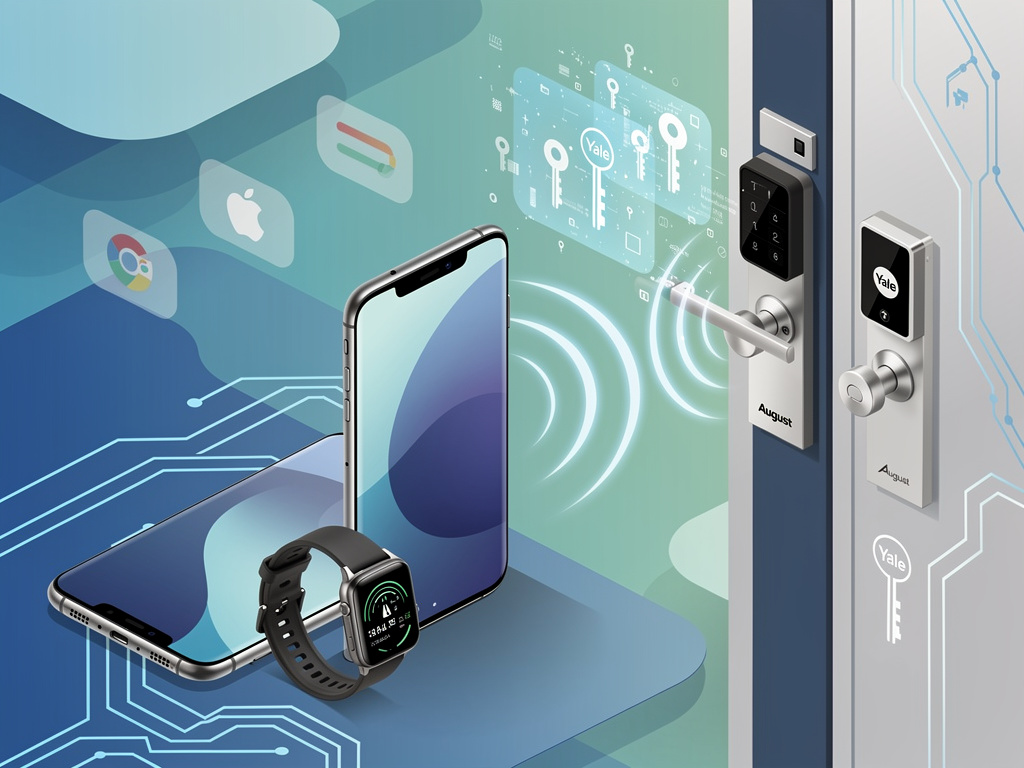
Samsung Wallet has added support for digital home keys through a new partnership with Assa Abloy, the Swedish lock giant that owns smart lock brands including Yale and August. The integration, first reported by Digital Trends, allows Galaxy smartphone owners to store a digital version of their home lock credentials directly in Samsung Wallet and use their phone — or Galaxy Watch — to unlock compatible smart locks with a simple tap.
How the Samsung Wallet Home Key Feature Works
The new capability relies on NFC (Near Field Communication) technology, the same short-range wireless protocol that powers contactless payments at retail terminals. When a user holds their Galaxy device near a compatible smart lock, the phone transmits a secure digital credential that authenticates the user and triggers the lock to open. Samsung says the feature works even when the phone’s battery is critically low, a design choice that addresses one of the most common anxieties around going fully digital with home access.
Setting up the feature requires a compatible Assa Abloy smart lock — specifically models from the Yale or August product lines that support NFC-based digital keys. Once a lock is paired, the digital key lives inside Samsung Wallet alongside credit cards, transit passes, boarding passes, and other credentials. Users can also share digital keys with family members or trusted guests, offering a level of convenience that traditional metal keys simply cannot match. Revoking access is similarly straightforward: a few taps in the app, and a shared key is deactivated.
Why Assa Abloy Is the Right Partner for This Push
The choice of Assa Abloy as Samsung’s launch partner is significant. The company is the world’s largest lock manufacturer, with operations in more than 70 countries and a portfolio that includes some of the most recognized names in residential and commercial security. Yale, one of its flagship brands, has been making locks since 1840. August, which Assa Abloy acquired in 2017, helped pioneer the modern smart lock category and remains a top seller in the U.S. market.
By partnering with Assa Abloy rather than a smaller smart home startup, Samsung is signaling that it views digital home keys as a mainstream feature, not a niche experiment. The breadth of Assa Abloy’s product line also means that the addressable market for this integration is substantial from day one, with millions of compatible locks already installed in homes around the world. According to Digital Trends, the partnership is expected to expand over time to include additional lock manufacturers and models.
Samsung’s Broader Ambitions in the Digital Wallet Space
The home key addition is the latest in a series of moves by Samsung to transform its Wallet app from a simple payment tool into a comprehensive digital credential hub. Over the past two years, Samsung Wallet has added support for digital IDs, student IDs, car keys for select BMW and Genesis vehicles, hotel room keys, and event tickets. The company has also integrated loyalty cards and membership passes, positioning the app as a one-stop repository for virtually everything a person might carry in a physical wallet — and beyond.
This strategy puts Samsung in direct competition with Apple, which has been building similar capabilities into Apple Wallet since introducing digital car keys in 2020 and home keys compatible with select smart locks in 2021. Apple’s home key feature works with locks that support the Home Key specification within Apple’s HomeKit framework, and it has partnerships with brands including Schlage and Aqara. Google, meanwhile, has been expanding Google Wallet’s capabilities on Android but has been slower to add home key support specifically.
The Security Question That Looms Over Digital Keys
Any conversation about replacing physical house keys with digital alternatives inevitably raises questions about security. Samsung says that digital home keys stored in Samsung Wallet are protected by the Samsung Knox security platform, the company’s hardware-backed security architecture that isolates sensitive data in a secure enclave on the device’s processor. This means that even if a phone is compromised by malware, the digital key credentials should remain protected.
The NFC-based approach also offers inherent security advantages over Bluetooth or Wi-Fi alternatives. NFC requires the device to be within a few centimeters of the lock to communicate, making remote interception or relay attacks significantly more difficult. That said, the security of any digital key system is only as strong as its weakest link. If a user’s Samsung account is compromised, or if the key-sharing feature is used carelessly, vulnerabilities could emerge. Security researchers have repeatedly warned that the convenience of digital credentials must be balanced against rigorous authentication protocols, including biometric verification before a key can be used.
What This Means for the Smart Home Industry
The integration of home keys into Samsung Wallet reflects a broader industry trend toward what analysts call “credential convergence” — the idea that smartphones will eventually replace not just wallets but keychains, badge holders, and even physical identification documents. The smart lock market has been growing steadily, with research firm Mordor Intelligence projecting the global market will reach $4.4 billion by 2028, driven by rising consumer demand for connected home devices and the proliferation of smartphone-based access control.
For smart lock manufacturers, partnerships with phone makers like Samsung and Apple represent a powerful distribution channel. Consumers who might not have considered a smart lock purchase could be motivated by the appeal of using a device they already own — their phone — as their primary means of home entry. The elimination of physical keys also removes a common pain point: the need to hide spare keys, coordinate key copies for family members, or deal with lockouts.
Compatibility and Availability: What Galaxy Owners Need to Know
As of the announcement, the Samsung Wallet home key feature is available on Galaxy smartphones running One UI 5 or later, which covers most devices from the Galaxy S21 series onward. Galaxy Watch models running Wear OS 4 or later are also supported, giving users an alternative access method when their phone is not immediately at hand. The feature is launching first in the United States and select European markets, with broader global availability expected in the coming months.
Users will need to ensure their smart lock firmware is up to date and that their lock model is on the compatibility list maintained by Samsung and Assa Abloy. As reported by Digital Trends, not every Yale or August lock will support the feature at launch — only models equipped with NFC hardware will be eligible. Consumers shopping for a new smart lock with this feature in mind should look for explicit Samsung Wallet compatibility in the product specifications.
The Race to Make the Phone the Only Thing You Carry
Samsung’s move underscores a competitive dynamic that has intensified over the past several years: the race among major technology companies to make the smartphone the sole essential item a person needs when leaving the house. Apple, Samsung, and Google are all investing heavily in digital wallet and credential technologies, each seeking to lock users more deeply into their respective platforms. For consumers, the benefits are tangible — fewer things to carry, easier access management, and the elimination of single-point-of-failure physical objects like keys that can be lost or stolen.
But there are trade-offs. Dependence on a single device for home access, payments, identification, and transportation raises the stakes of a lost or stolen phone considerably. It also increases the leverage that phone manufacturers hold over consumers, who may find it increasingly difficult to switch platforms when their digital life — including access to their own home — is tied to a particular brand. As Samsung and its competitors continue to expand what their wallets can do, consumers will need to weigh the undeniable convenience against the growing centrality of a single device in their daily lives.


 WebProNews is an iEntry Publication