
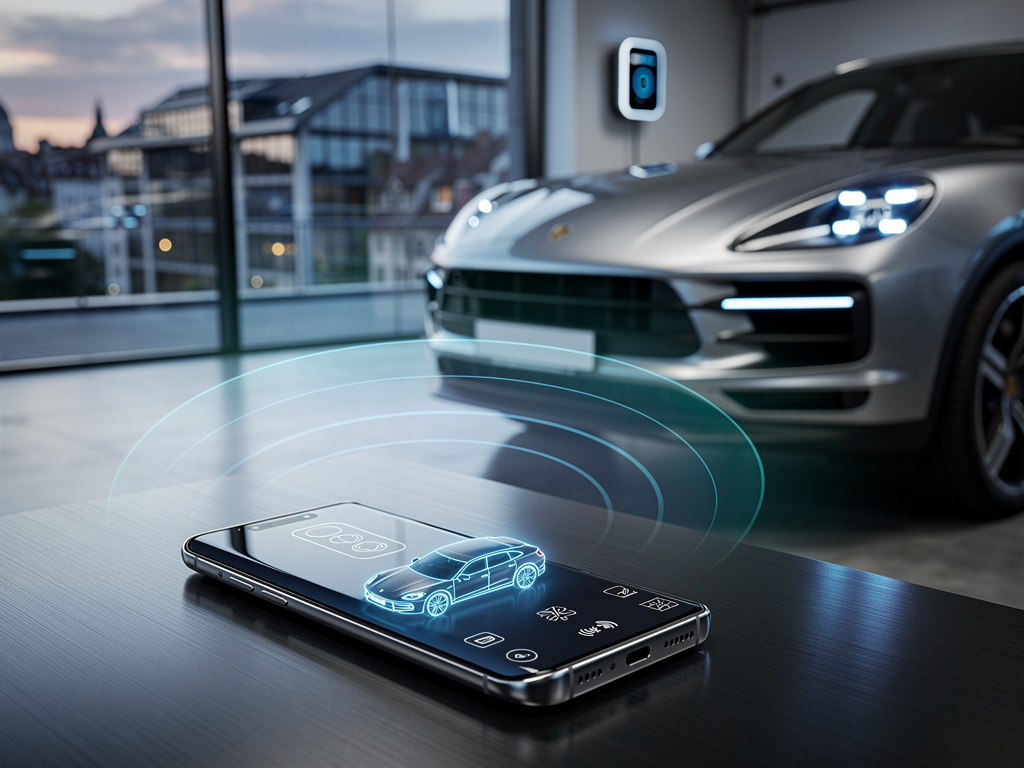
Samsung’s latest move to integrate digital keys for Porsche vehicles into its Wallet app marks a significant step in the evolution of smartphone-car connectivity, blending luxury automotive engineering with everyday mobile technology. This development, announced recently, allows Galaxy phone users to unlock and start select Porsche models using their devices, eliminating the need for physical keys. The feature debuts with the Porsche Macan in Europe, with plans to expand to other models like the Cayenne Electric, signaling a broader push toward seamless, keyless experiences in high-end vehicles.
At its core, this integration leverages ultra-wideband (UWB) and near-field communication (NFC) technologies, enabling users to perform actions such as locking, unlocking, and even starting the engine directly from their Samsung Galaxy smartphones. According to details from Samsung’s official announcement, the digital key will be stored securely within the Samsung Wallet app, which already handles payments, IDs, and other credentials. This isn’t just a convenience feature; it’s built on robust security protocols to prevent unauthorized access, ensuring that only authenticated devices can interact with the vehicle.
The rollout begins with the 2026 model year Porsche Macan, initially available in Europe, but Samsung has indicated intentions for wider geographic availability. Porsche owners with compatible Galaxy devices—such as the latest S-series or Fold models—can add the digital key through a simple setup process involving the vehicle’s infotainment system and the app. This partnership builds on Samsung’s existing collaborations with other automakers, positioning the company as a key player in the digital key ecosystem.
Expanding Horizons in Automotive Tech Integration
Industry experts see this as part of a larger trend where smartphones are becoming central hubs for vehicle control. For Porsche, known for its performance-driven lineup, adopting digital keys enhances the ownership experience without compromising on security or luxury. The technology uses encrypted communication channels, making it resistant to relay attacks that plague traditional keyless entry systems. Users can also share digital keys with family members or trusted contacts via the app, adding a layer of flexibility for multi-user households.
Samsung’s Wallet app has been evolving rapidly, incorporating features like digital IDs and boarding passes, but vehicle keys represent a high-stakes addition due to the safety implications. In a press release from Samsung Global Newsroom, the company emphasized how this integration “enhances vehicle connectivity” by providing “seamless digital key access” for models like the new Porsche Cayenne Electric and Macan. This move comes at a time when electric vehicles are surging in popularity, and Porsche’s electric variants are prime candidates for such tech-forward features.
Comparisons to competitors are inevitable. Apple has long offered similar functionality through its Wallet app for select vehicles, including some BMW models, while Google’s ecosystem supports digital keys on Pixel devices. Samsung’s entry with Porsche differentiates itself by focusing on premium, performance-oriented cars, potentially appealing to a niche but affluent market segment. Early adopters in Europe will likely provide feedback that shapes future updates, including possible expansions to North America and Asia.
Security Measures and User Adoption Challenges
Security remains paramount in digital key systems. Samsung employs hardware-based secure elements in its devices to store key data, isolated from the main operating system to thwart hacking attempts. This is complemented by biometric authentication options like fingerprint or facial recognition, adding an extra barrier against theft. Porsche, for its part, has integrated these keys with its own vehicle security architecture, ensuring compatibility without vulnerabilities.
However, adoption isn’t without hurdles. Not all Galaxy phones support the necessary UWB technology; older models may rely solely on NFC, which requires closer proximity to the vehicle. This could limit accessibility for some users, prompting Samsung to recommend upgrades to newer devices. Additionally, regulatory differences across regions might delay rollouts— for instance, data privacy laws in the EU could influence how key sharing is implemented compared to the U.S.
Posts on X (formerly Twitter) from tech enthusiasts highlight excitement around this feature, with users noting how it builds on Samsung’s previous partnerships with brands like BMW and Genesis. One post from Samsung’s official account echoed the announcement, garnering thousands of views and signaling strong consumer interest in merging luxury cars with mobile tech. Such social buzz underscores the feature’s potential to drive sales for both Samsung devices and Porsche vehicles.
Competitive Dynamics in Digital Key Ecosystems
Looking deeper, this collaboration reflects intensifying competition among tech giants to dominate the connected car space. Samsung’s Wallet now joins a roster that includes support for BMW, Genesis, and now Porsche, as detailed in a report from SamMobile. The app’s versatility allows it to store multiple keys, making it ideal for owners of diverse vehicle fleets. Porsche’s choice of Samsung as a partner likely stems from the latter’s strong presence in the Android market, where a significant portion of luxury car buyers reside.
In contrast, Apple’s ecosystem has been more aggressive in partnerships, recently adding Rivian vehicles to its digital key support, as covered in recent news from MacRumors. Rivian’s update enables iPhone users to use Wallet for locking and unlocking, complete with ultra-wideband precision for hands-free operation. This parallel development highlights how automakers are courting both iOS and Android platforms to maximize market reach, avoiding exclusivity that could alienate potential customers.
Samsung’s strategy also involves backward compatibility where possible. For instance, even if a phone lacks UWB, NFC fallback ensures basic functionality, though it misses out on advanced features like passive entry—where the car unlocks as you approach. This tiered approach, as explained in Samsung’s support documentation on their Canadian site, helps broaden appeal while encouraging hardware upgrades.
Future Implications for Luxury Vehicle Ownership
As digital keys gain traction, they could redefine vehicle ownership models. Imagine rental services where keys are shared digitally via apps, streamlining processes for companies like Hertz or Turo partnering with Porsche. This integration might also pave the way for more advanced features, such as remote preconditioning—starting the AC or heating from your phone—or geofencing to restrict vehicle use.
Porsche’s electric push aligns perfectly with this tech. The Macan Electric, set for 2025 models as per SammyGuru, already boasts cutting-edge infotainment, making digital key support a natural fit. Owners benefit from over-the-air updates that could enhance key functionality without dealership visits, a boon for tech-savvy drivers.
Yet, challenges like battery dependency loom. If your phone dies, you’re locked out unless the vehicle supports a backup method, such as a hidden physical key slot. Samsung addresses this by allowing key use even on low battery via NFC, but it’s not foolproof. Industry insiders speculate that future iterations might include wearable integration, like smartwatches, to mitigate such risks.
Broader Industry Shifts and Innovations
The partnership’s timing is noteworthy amid a surge in electric vehicle adoption. Porsche aims to electrify much of its lineup by 2030, and digital keys could become a standard feature, enhancing appeal to younger, digitally native buyers. Data from recent web searches shows similar integrations boosting sales for competitors; for example, BMW’s digital key rollout, announced on X by the automaker in 2023, expanded to Samsung and Google devices, democratizing access.
Samsung’s Wallet enhancements aren’t isolated. A piece from Sammy Fans notes the feature’s availability for the new Macan and upcoming Cayenne Electric, with potential for more models. This could pressure other luxury brands like Mercedes or Audi—already partnered with Samsung in some capacities—to accelerate their digital key offerings.
Moreover, the tech’s evolution draws from earlier announcements. Back in 2021, The Verge reported on X about Samsung’s initial forays into digital keys with brands like Audi and BMW, setting the stage for today’s expansions. Such historical context shows a deliberate build-up, with Samsung refining the technology over years to ensure reliability.
Strategic Partnerships and Market Positioning
For Porsche, this isn’t just about convenience; it’s a strategic alignment with a tech leader to future-proof its vehicles. The Cayenne Electric, slated for next year, will likely showcase even more integrated features, perhaps tying into Samsung’s ecosystem for navigation or entertainment syncing. This could create a “sticky” user experience, where owning a Galaxy phone enhances the Porsche driving pleasure.
Competitively, Samsung gains an edge in the premium segment. While Google Wallet supports digital keys for select cars, as mentioned in a BGR post on X, Samsung’s app offers a more comprehensive suite, including loyalty cards and crypto wallets, making it a one-stop digital hub. Porsche owners, often affluent and tech-oriented, represent an ideal demographic for cross-selling Samsung products.
Looking ahead, interoperability standards like those from the Car Connectivity Consortium could standardize digital keys across brands, reducing fragmentation. Samsung’s involvement in such groups ensures its tech remains at the forefront, potentially leading to universal key support in the future.
Evolving User Experiences and Feedback Loops
User feedback will be crucial. Early adopters on platforms like X express enthusiasm, with posts praising the seamless integration for daily commutes. One viral thread from tech influencer Anthony highlighted Samsung’s security standards in past integrations, like with Mercedes, which bodes well for Porsche.
Potential drawbacks include setup complexities; pairing requires both the app and vehicle to be online, which might frustrate less tech-savvy users. Samsung mitigates this with guided tutorials, but real-world testing will reveal pain points.
In the grand scheme, this feature exemplifies how mobile tech is infiltrating automotive design, blurring lines between gadgets and cars. As more manufacturers adopt it, expect innovations like AI-driven key management or integration with home automation systems.
Pioneering the Next Wave of Connectivity
Porsche’s collaboration with Samsung could inspire similar deals, perhaps with Tesla or Volkswagen Group siblings. The Macan’s digital key support, as per Gagadget, positions it as a trailblazer in electric luxury SUVs.
Economically, this might boost accessory sales, like phone mounts or cases optimized for UWB. For Samsung, it’s a marketing win, associating its brand with Porsche’s prestige.
Ultimately, as digital keys mature, they promise a future where your phone is the ultimate key to mobility, secured and convenient. With ongoing updates, this partnership is just the beginning of a more connected driving era.


 WebProNews is an iEntry Publication