
From Pocket Memories to Grand Displays: Samsung’s Google Photos Gamble Redefines Home Entertainment
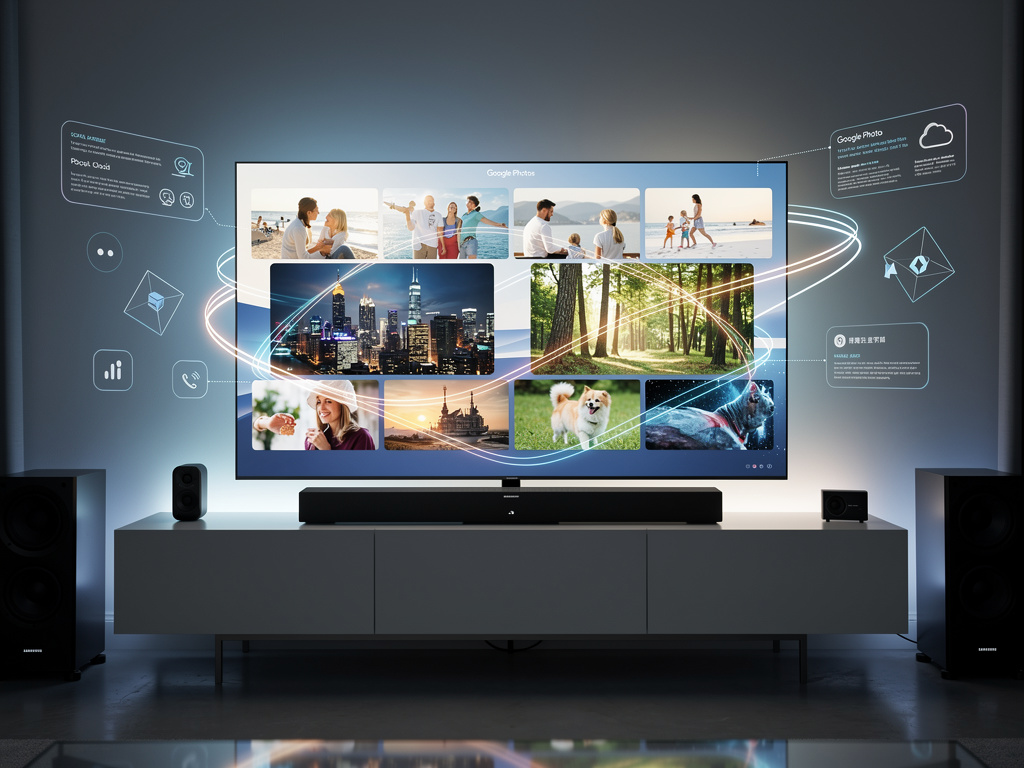
Samsung Electronics is poised to transform how consumers interact with their personal photo libraries, announcing a groundbreaking integration of Google Photos into its television lineup starting in early 2026. This move, revealed just days ago, aims to bring cloud-stored images and videos from smartphones directly to the living room’s largest screen, potentially reshaping family viewing habits and boosting Samsung’s position in the smart home ecosystem. The partnership with Google underscores a growing trend where tech giants collaborate to enhance user experiences across devices, blending personal media with advanced display technology.
At its core, the integration will allow users to access their Google Photos accounts on Samsung TVs, organizing content by moments, people, and places for a more immersive browsing experience. This isn’t merely about displaying photos; it’s about curating memories in a cinematic format, complete with AI-driven features that could turn static images into dynamic stories. Samsung’s announcement highlights how this feature will debut on new 2026 models, with software updates rolling out to select older TVs, signaling a commitment to backward compatibility that could extend the lifecycle of existing devices.
Industry observers note that this development comes at a time when consumers are increasingly seeking seamless connectivity between their mobile devices and home entertainment systems. By leveraging Google Photos’ vast user base—over a billion people worldwide—the integration could drive more traffic to Samsung’s Tizen operating system, potentially increasing user engagement and loyalty. Early details suggest features like automated memory compilations and personalized results, which will roll out in phases throughout 2026.
Evolving Ecosystems and Strategic Alliances
The collaboration builds on years of partnerships between Samsung and Google, from Android integrations in smartphones to smart home protocols. According to a report from Samsung Global Newsroom, the feature will initially focus on “Memories,” allowing users to relive curated photo stories on the big screen, with advanced AI capabilities following later in the year. This phased approach mirrors strategies seen in software updates for other devices, ensuring stability while building anticipation.
Beyond basic viewing, the integration introduces creative tools powered by Google’s Gemini Nano Banana AI model. Users will be able to generate images, remix photos with artistic styles, and even convert stills into short videos directly from their TVs. This addition positions Samsung TVs not just as passive displays but as active creation hubs, potentially appealing to a younger demographic interested in content generation. As noted in coverage by SamMobile, these AI features are slated for release in the second half of 2026, exclusive to Samsung for an initial period.
Market implications are significant. Samsung, already a leader in the global TV market with a substantial share, could use this to differentiate its products from competitors like LG and Sony, who have their own smart TV platforms. The exclusivity of certain AI templates on Samsung devices, as detailed in reports, might create a moat against rivals, encouraging consumers to choose Samsung for a more integrated Google experience.
Technical Underpinnings and User-Centric Design
Diving deeper into the technology, the integration relies on Samsung’s AI TV platform, which incorporates vision AI companions to surface key memories on ambient screens like Daily+ and Daily Board. This means photos could appear as personalized wallpapers or screensavers, turning idle TVs into digital photo frames. A piece from Digital Trends explains how this seamless blending enhances the overall user interface, making TVs more interactive even when not in use for traditional viewing.
Availability is key to adoption. The feature will require a Google Account and backed-up media, with support starting from Samsung’s Crystal UHD U8000 series and above for 2026 models. For older sets, updates are planned based on OS schedules, potentially covering models from recent years. This strategy, as outlined in The Mobile Indian, ensures broad accessibility while managing rollout complexities.
Privacy considerations are paramount in such integrations. Samsung emphasizes that photos remain private, accessible only when logged into the user’s account, with no sharing across multiple profiles on the same TV. This approach addresses potential concerns in multi-user households, aligning with Google’s data protection standards and helping to build trust in the ecosystem.
Market Reactions and Consumer Sentiment
Reactions from the tech community have been largely positive, with social media buzzing about the potential for easier family photo sharing. Posts on X highlight excitement over ditching cumbersome casting methods, echoing frustrations voiced in past discussions about device compatibility. For instance, users have long complained about limitations in mirroring content from phones to TVs, and this integration promises a more fluid alternative without relying on protocols like Chromecast or Miracast.
Analysts predict this could boost Samsung’s TV sales, especially as consumers prioritize smart features in their purchases. In a competitive arena where streaming services dominate, adding personal media integration differentiates Samsung from pure content-focused platforms. Coverage in iNews points out how AI-driven personalization, such as themed templates, could extend to creating custom content for events or holidays, further embedding the TV in daily life.
However, challenges remain. Not all regions will see immediate availability, with features like Create with AI and Personalized Results delayed in some markets, including Australia. This staggered rollout, as reported, might frustrate international users and highlights the complexities of global software deployment.
Historical Context and Future Trajectories
Looking back, Google Photos has evolved from a simple backup service to a sophisticated memory management tool since its 2015 launch. Integrations with other Google services, like Google TV’s screensavers, have paved the way for this TV expansion. Samsung’s history of innovation in displays, from QLED to AI-enhanced upscaling, positions it well to capitalize on this partnership.
For industry insiders, the real intrigue lies in the data dynamics. By funneling more user interactions through its TVs, Samsung gains insights into viewing habits, potentially informing future product developments. Google, in turn, extends its photo ecosystem’s reach, collecting more usage data to refine AI models like Gemini Nano Banana.
Competitors are watching closely. LG’s webOS and Sony’s Google TV integrations might respond with similar features, sparking a wave of enhancements across the sector. As one X post from a tech enthusiast noted, this could finally resolve longstanding pain points in cross-device media sharing, pushing the industry toward more unified experiences.
Innovation at the Intersection of Media and AI
The “Create with AI” feature deserves special attention, as it introduces generative capabilities to a non-traditional device. Users can apply art styles, animate stills, or generate new images based on prompts, all from the comfort of their couch. This, per details in Android Police, eliminates the need for separate apps or devices, streamlining creativity.
Samsung executives, including Kevin Lee from the Visual Display Business, have emphasized how this brings people together through shared memories. Quotes from Google’s Shimrit Ben-Yair reinforce the mutual excitement, framing the integration as a way to “reconnect with memories in new ways.”
Potential expansions could include voice controls via Bixby or Google Assistant, or even social sharing features for virtual family gatherings. While not yet confirmed, such additions would align with trends in connected homes, where TVs serve as central hubs.
Broader Implications for Tech Giants
This partnership reflects broader shifts in how companies like Samsung and Google navigate alliances amid regulatory scrutiny. By focusing on user benefits like enhanced organization and creation tools, they sidestep antitrust concerns while strengthening their ecosystems.
For consumers, the integration means less friction in accessing personal content. No more fumbling with cables or apps; a simple login brings libraries to life on high-resolution screens. As t2ONLINE describes, it’s about making the TV a portal to one’s life story.
Looking ahead, success will hinge on execution. If the features deliver on promises of simplicity and innovation, Samsung could set a new standard for smart TVs. Early adopters, particularly those invested in the Google ecosystem, will likely drive initial feedback, shaping refinements.
Navigating Challenges and Opportunities
Critics might argue that adding more AI to TVs risks overwhelming users with complexity. Ensuring intuitive interfaces will be crucial, as will addressing any performance impacts on older models receiving updates.
On the opportunity side, this could open doors for third-party developers to create apps that build on the integration, fostering a richer app ecosystem on Tizen.
Ultimately, Samsung’s move with Google Photos integration represents a calculated step toward making TVs indispensable in digital lives, blending nostalgia with cutting-edge tech to captivate users anew. As the 2026 rollout approaches, the industry awaits to see if this gamble pays off in redefining home media consumption.


 WebProNews is an iEntry Publication