
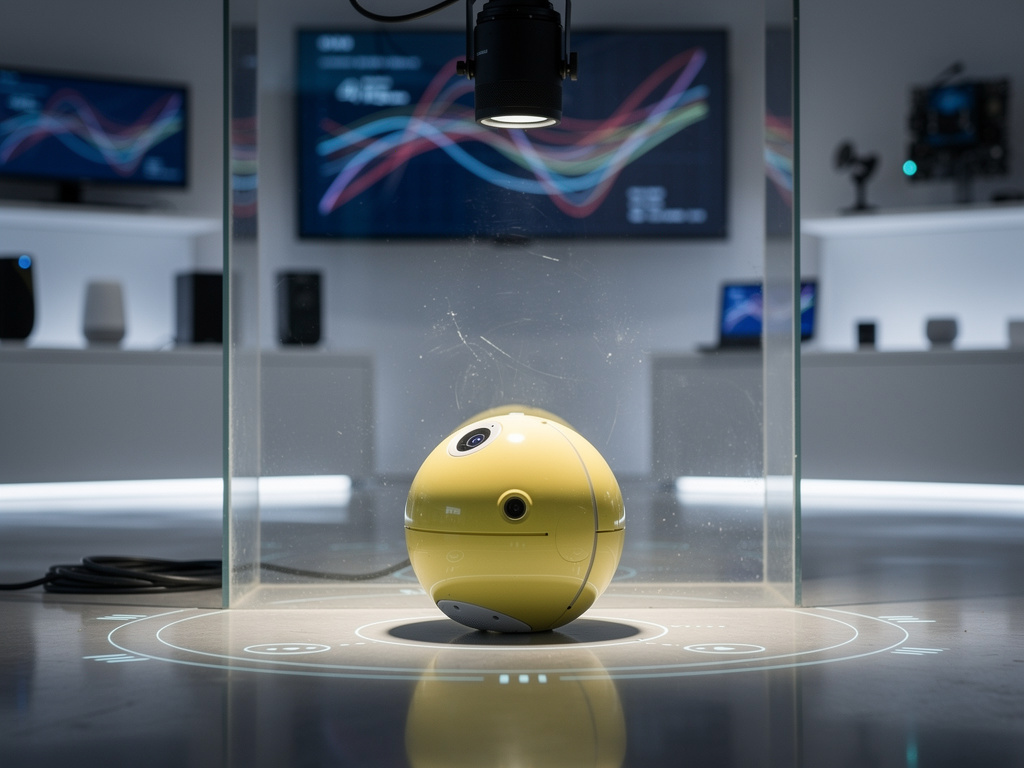
The Spherical Dream Deferred: Inside Samsung’s Ballie Robot Saga and Its Sudden Stall
Samsung’s ambitious foray into home robotics took a dramatic turn this week at CES 2026, where the company’s much-hyped Ballie robot was conspicuously absent from the show floor. First unveiled in 2020 as a rolling, AI-powered companion designed to assist with daily tasks, Ballie has tantalized tech enthusiasts with promises of seamless smart home integration, from projecting videos to monitoring pets. Yet, after years of prototypes and announcements, Samsung has quietly shelved the project indefinitely, according to recent reports.
The decision comes amid a backdrop of repeated delays and shifting priorities in the consumer electronics giant’s innovation pipeline. Ballie was reintroduced with fanfare at CES 2024, complete with enhanced features like a built-in projector and voice assistant capabilities, only to miss its projected retail launch in 2025. Insiders suggest that technical hurdles, including navigation challenges in real-world home environments and privacy concerns over its always-on cameras, played a significant role in the setback.
This development raises broader questions about the viability of multifunctional home robots in an era dominated by specialized devices like smart speakers and vacuums. As Samsung pivots toward what it calls an “active innovation platform,” the shelving of Ballie underscores the challenges of bringing conceptual gadgets to market, even for a company with Samsung’s resources.
The Genesis of a Rolling Companion
Ballie’s story began at CES 2020, where Samsung positioned it as a “human-centric” robot that could understand user needs, provide support, and react intuitively. Resembling a tennis ball on wheels, the device was equipped with cameras, microphones, and AI to navigate homes, control smart appliances, and even serve as a fitness coach. Early demonstrations showed it following users, projecting workout videos onto walls, and interacting with pets—evoking comparisons to fictional robots like BB-8 from Star Wars.
Over the years, Ballie made recurring appearances at CES, each time with incremental updates. By 2024, Samsung had added a projector capable of beaming content onto various surfaces, along with integration into its SmartThings ecosystem. The company teased a consumer release, pricing it competitively and highlighting its role in an AI-driven home. However, as reported by The Verge, the robot’s absence at CES 2026 signals a potential end to these aspirations.
Industry observers note that Ballie’s development mirrored Samsung’s broader push into AI and robotics, aligning with trends seen in competitors like Amazon’s Astro and LG’s own smart home bots. Yet, the project’s repeated postponements highlight the gap between prototype dazzle and practical deployment, a common pitfall in consumer tech.
Delays and Technical Roadblocks
Sources close to the matter indicate that Ballie’s indefinite shelving stems from persistent engineering challenges. Navigation in cluttered homes proved problematic; the robot struggled with rugs, thresholds, and obstacles like toys or pets, leading to safety concerns. Privacy issues also loomed large, as the device’s cameras and microphones raised questions about data security in an age of heightened consumer awareness.
In a statement to Bloomberg, Samsung described Ballie as an “active innovation platform” that continues to inform designs in smart home intelligence and ambient AI, rather than confirming a product launch. This language shift suggests the company is repurposing Ballie’s technology for other applications, such as enhancing its Bixby assistant or integrating features into appliances.
Further insights from TechRadar reveal that Samsung has been “continuing to refine and perfect the technology” for better customer experiences, but internal delays pushed back what was once slated for a summer 2025 release. These setbacks are not isolated; they reflect broader industry hurdles in robotics, where balancing functionality, cost, and user trust remains elusive.
Market Dynamics and Competitor Shadows
The home robotics sector has seen mixed fortunes, with devices like iRobot’s Roomba succeeding in niche tasks while more ambitious all-in-one bots falter. Samsung’s decision to sideline Ballie may stem from market saturation, where consumers prefer affordable, single-purpose gadgets over premium, multifaceted ones. Analysts point to the high development costs—estimated in the hundreds of millions—and uncertain demand as key factors.
Posts on X (formerly Twitter) from tech influencers and journalists echo this sentiment, with users expressing disappointment over Ballie’s no-show at CES 2026. One prominent post likened the situation to vaporware, highlighting the hype cycle that often plagues CES announcements. Meanwhile, competitors like Amazon have faced their own robotic stumbles; Astro, introduced in 2021, has seen limited adoption due to similar privacy and utility concerns.
Samsung’s official CES 2026 showcase, as detailed on its newsroom site, focused on AI companions for everyday life, emphasizing software-driven experiences over hardware like Ballie. This pivot could indicate a strategic retreat to software ecosystems, where Samsung can leverage its strengths in displays and appliances without the risks of robotic hardware.
Industry Implications and Insider Perspectives
For industry insiders, Ballie’s shelving serves as a cautionary tale about the perils of overpromising in emerging tech fields. Executives familiar with Samsung’s operations suggest that internal resource allocation favored more immediate revenue drivers, such as foldable phones and AI-enhanced TVs, over speculative projects like Ballie. This aligns with broader trends where companies like Google have axed experimental divisions to focus on core products.
Drawing from The Verge’s CES 2026 coverage, the event highlighted incremental improvements in existing categories, such as advanced routers and health tech, rather than revolutionary robots. Samsung’s statement to Bloomberg reinforces this, positioning Ballie as a learning tool rather than a failed product, potentially seeding future innovations in areas like privacy-by-design AI.
Conversations on X amplify the buzz, with tech accounts speculating on whether Ballie’s tech will resurface in other forms, perhaps integrated into Samsung’s Galaxy ecosystem. Such discussions underscore the fluid nature of innovation, where shelved projects often inform successful ones down the line.
The Broader Horizon for Home AI
Looking ahead, the fate of Ballie prompts reflection on the future of domestic robotics. While Samsung steps back, other players like Boston Dynamics and SoftBank continue advancing humanoid and service robots, albeit in commercial rather than consumer spaces. The consumer market may evolve toward hybrid solutions, blending robotics with augmented reality or voice interfaces to mitigate hardware limitations.
Insiders speculate that regulatory pressures, particularly around data privacy in the EU and US, contributed to Ballie’s delays. Samsung’s emphasis on “privacy-by-design” in its statements hints at ongoing efforts to address these, possibly through encrypted edge computing that keeps data local.
Moreover, economic factors play a role; with inflation and supply chain disruptions post-pandemic, investing in unproven tech like Ballie became riskier. As reported in SamMobile, the robot’s absence has led to questions about whether Samsung is deliberately downplaying the hype to manage expectations.
Lessons from a Spherical Setback
Ultimately, Ballie’s journey illustrates the high-stakes game of tech innovation, where bold visions must contend with practical realities. Samsung’s track record of successful products, from smartphones to semiconductors, shows resilience, but Ballie joins a list of concepts that didn’t make it to shelves, much like Google’s Project Ara modular phone.
Industry veterans argue that such “failures” are essential for progress, providing valuable data on user preferences and technical feasibility. For instance, Ballie’s projector feature could inspire enhancements in portable devices, while its AI navigation algorithms might bolster autonomous features in vacuums or cars.
As CES 2026 wraps up, the spotlight shifts to more grounded advancements, but Ballie’s legacy endures as a symbol of ambitious dreaming in consumer tech. Whether it rolls back into the picture remains uncertain, but its indefinite pause marks a pivotal moment in Samsung’s robotic ambitions.
Echoes of Innovation in Limbo
Reflecting on similar cases, LG’s CLOi robots faced comparable fates after CES unveilings, shelved due to market unreadiness. This pattern suggests that while CES excels at generating excitement, translating demos into products demands sustained investment and consumer buy-in.
On X, sentiment ranges from nostalgia for Ballie’s cute design to skepticism about Samsung’s follow-through, with some users drawing parallels to vaporware like the Duke Nukem Forever of gadgets. These reactions highlight the emotional investment consumers place in futuristic promises.
In the end, Samsung’s handling of Ballie could influence how other firms approach robotics, emphasizing iterative development over splashy reveals. As the company continues to explore AI companions, the lessons from this spherical dream may pave the way for more viable innovations in the years ahead.


 WebProNews is an iEntry Publication