
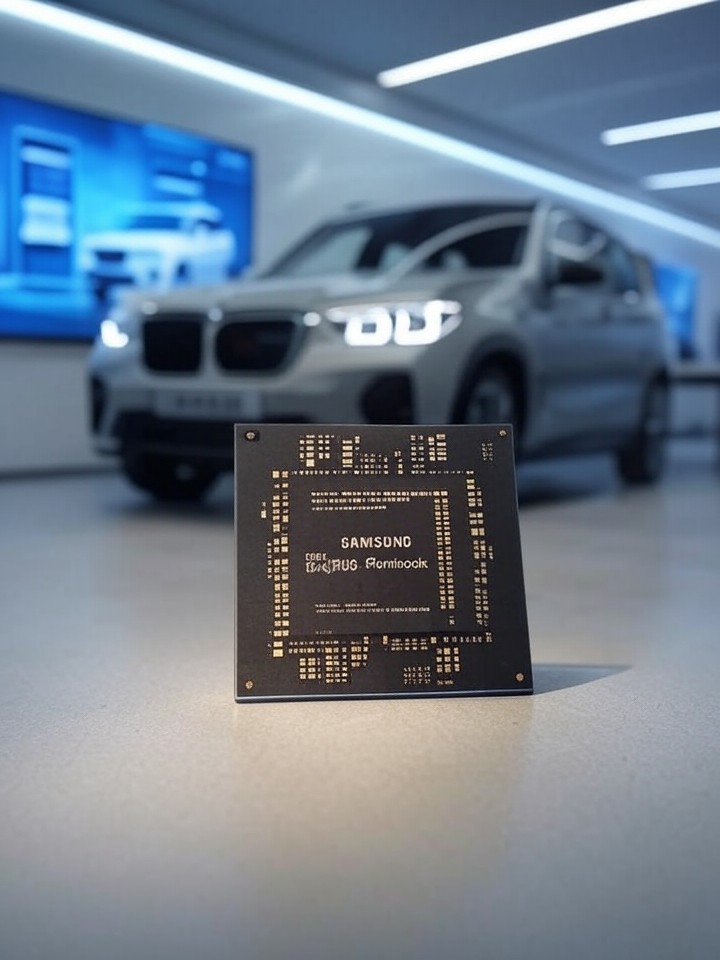
Samsung’s Semiconductor Surge into Electric Mobility
In the rapidly evolving world of electric vehicles, Samsung Electronics has made a bold move by securing a pivotal supply agreement with BMW for its next-generation iX3 SUV. This partnership underscores Samsung’s ambitions to expand beyond its traditional strengths in memory chips into the lucrative realm of automotive semiconductors. According to reports from ETAuto, the deal involves Samsung providing the Exynos Auto V720 chip, which powers the infotainment and autonomous driving features of the iX3. This chip represents a significant leap for Samsung, as it integrates advanced logic design and foundry services tailored for the demands of modern EVs.
The iX3, BMW’s medium-sized electric SUV, is the first mass-produced model to incorporate the German automaker’s Neue Klasse platform, a new electric architecture designed to enhance efficiency and performance. As detailed in a Webindia123 article, the vehicle was unveiled in Germany and is slated for sales in South Korea in the latter half of 2026. Samsung’s involvement here is not just about supplying hardware; it’s about embedding its technology at the core of BMW’s digital ecosystem, enabling high-resolution displays, seamless multimedia integration, and even gaming capabilities within the vehicle.
This collaboration builds on Samsung’s prior engagements with other European automakers like Audi and Volkswagen, where similar Exynos chips have been deployed. Industry insiders note that this deal could be a game-changer for Samsung, which has been seeking to diversify its semiconductor portfolio amid fluctuating demand in consumer electronics. The Exynos Auto V720 is engineered to handle complex tasks such as real-time data processing for navigation and entertainment, making it a cornerstone for the user experience in premium EVs.
Technological Edge in Automotive Chips
Delving deeper into the technology, the Exynos Auto V720 stands out for its multi-core architecture and support for advanced AI functionalities. Sources from The Tribune highlight how this chip enhances autonomous driving capabilities by processing vast amounts of sensor data efficiently. For BMW, integrating such a processor aligns with its push toward more intelligent vehicles, where infotainment systems are not mere add-ons but integral to the driving experience.
The partnership also reflects broader shifts in the automotive supply chain. With EVs requiring more sophisticated electronics than traditional cars, chipmakers like Samsung are positioning themselves as essential partners. A report in ANI News emphasizes that this move allows Samsung to grow its non-memory business, which has been a strategic focus amid competition from rivals like TSMC and Intel. By securing this deal, Samsung gains a foothold in the premium EV segment, potentially opening doors to further contracts with luxury brands.
Moreover, the iX3’s adoption of Samsung’s chip comes at a time when automakers are increasingly prioritizing in-house control over software and hardware. BMW’s Neue Klasse platform is built to be modular, allowing for easier updates and integrations. Insiders suggest that Samsung’s foundry expertise played a key role in customizing the chip to meet BMW’s stringent safety and performance standards, which are critical in the automotive sector where reliability can make or break a model’s reputation.
Market Implications and Competitive Dynamics
From a market perspective, this agreement is timely as the global EV sector continues to expand. According to data referenced in KED Global, Samsung’s supply of infotainment processors positions it at the heart of BMW’s electrification strategy. The iX3 is expected to compete with models from Tesla, Mercedes-Benz, and Audi, all of which rely on cutting-edge semiconductors for differentiation. Samsung’s entry here could pressure competitors like Qualcomm and Nvidia, who dominate the automotive chip space.
Recent posts on X, formerly known as Twitter, indicate growing industry buzz around such partnerships. For instance, discussions highlight Samsung’s parallel deals in the EV space, including battery supplies to other manufacturers, signaling a comprehensive push into mobility tech. While these social media sentiments are not definitive, they reflect optimism among investors about Samsung’s diversification efforts, especially as EV adoption accelerates in key markets like Europe and Asia.
Furthermore, the deal’s financial implications are substantial. Although exact figures remain undisclosed, analysts estimate it could contribute significantly to Samsung’s revenue stream. As noted in ETAuto coverage, this partnership marks a strategic expansion for Samsung, leveraging its semiconductor prowess to tap into the projected growth of the automotive chip market, which is forecasted to reach hundreds of billions in value over the next decade.
Broader Industry Trends and Innovations
Looking beyond the immediate deal, Samsung’s collaboration with BMW exemplifies how tech giants are infiltrating the auto industry. The Exynos Auto V720 supports features like AI-driven voice assistants and over-the-air updates, which are becoming standard in new EVs. A recent article from HT Auto details how this chip enables high-quality video playback and gaming on in-car screens, appealing to younger consumers who view vehicles as extensions of their digital lives.
In addition, BMW’s rollout of the iX3 includes advanced AI-powered in-car systems, as showcased at CES 2026. According to EV Magazine, the vehicle incorporates an Intelligent Personal Assistant with Alexa+ technology, set to expand to 40 models by 2027. Samsung’s chip is integral to this, providing the processing power needed for seamless integration of such features, which could set new benchmarks for user interaction in EVs.
Challenges remain, however. Supply chain disruptions, geopolitical tensions, and the high costs of R&D in automotive semiconductors pose risks. Samsung must navigate these while ensuring its chips meet evolving regulatory standards for safety and emissions. Industry experts point out that BMW’s choice of Samsung over established players like Bosch or Continental signals confidence in the Korean firm’s capabilities, but it also raises the stakes for flawless execution.
Strategic Expansions and Future Prospects
Samsung’s automotive ambitions extend beyond this single deal. The company has been investing heavily in its foundry business, with facilities in South Korea and the U.S. geared toward advanced nodes like 2nm processes. Posts on X have noted Samsung’s recent contracts with other EV players, including multi-billion-dollar agreements for AI chips, underscoring a pattern of aggressive expansion. This diversification is crucial as memory chip markets fluctuate, and automotive demand offers more stability.
For BMW, partnering with Samsung diversifies its supplier base, reducing reliance on a few dominant chip providers. The iX3’s launch is pivotal for BMW’s electrification goals, with the Neue Klasse platform promising up to 30% more range and faster charging. As reported in Webindia123, the SUV’s debut in South Korea could boost adoption in Asia, where Samsung’s brand strength provides an additional marketing edge.
Looking ahead, this alliance could pave the way for deeper collaborations, such as joint R&D on next-gen chips for fully autonomous vehicles. Insiders speculate that Samsung might supply chips for other Neue Klasse models, expanding its footprint. The partnership also aligns with global sustainability efforts, as efficient semiconductors contribute to lower energy consumption in EVs.
Ecosystem Integration and Global Reach
The integration of Samsung’s technology into BMW’s ecosystem highlights the convergence of consumer electronics and automotive design. The Exynos Auto V720’s ability to handle multiple displays and high-fidelity audio transforms the cabin into a mobile entertainment hub. Coverage from The Tribune notes that this enhances BMW’s competitive positioning against tech-forward rivals like Tesla, whose vehicles emphasize software integration.
On the global stage, this deal strengthens South Korea’s role in the EV supply chain. Samsung’s expansion into logic chips, as per ANI News, positions it as a key player alongside Taiwan’s TSMC. Recent X posts about Samsung’s battery deals with Tesla illustrate a broader strategy, where the company supplies not just chips but also energy storage solutions, creating a holistic offering for EV manufacturers.
Regulatory and ethical considerations are also at play. As EVs incorporate more AI, data privacy and cybersecurity become paramount. Samsung and BMW must ensure their systems comply with standards like Europe’s GDPR and emerging automotive cyber regulations. This partnership could set precedents for how tech and auto firms collaborate on these fronts.
Innovation Drivers and Long-Term Vision
Driving innovation, Samsung’s R&D investments in automotive tech total billions annually. The Exynos line’s evolution from smartphones to vehicles demonstrates adaptable engineering. KED Global reports that securing the BMW contract validates these efforts, potentially attracting more clients.
For industry insiders, the real value lies in the data insights gained. Chips like the V720 collect usage data that can inform future designs, creating a feedback loop for continuous improvement. HT Auto suggests this could lead to personalized driving experiences, where AI anticipates user needs.
Ultimately, as the EV market matures, partnerships like this will define winners. Samsung’s push, backed by its manufacturing scale, positions it well for sustained growth. With the iX3’s rollout approaching, all eyes are on how this collaboration performs in real-world conditions, potentially reshaping automotive electronics for years to come.


 WebProNews is an iEntry Publication