
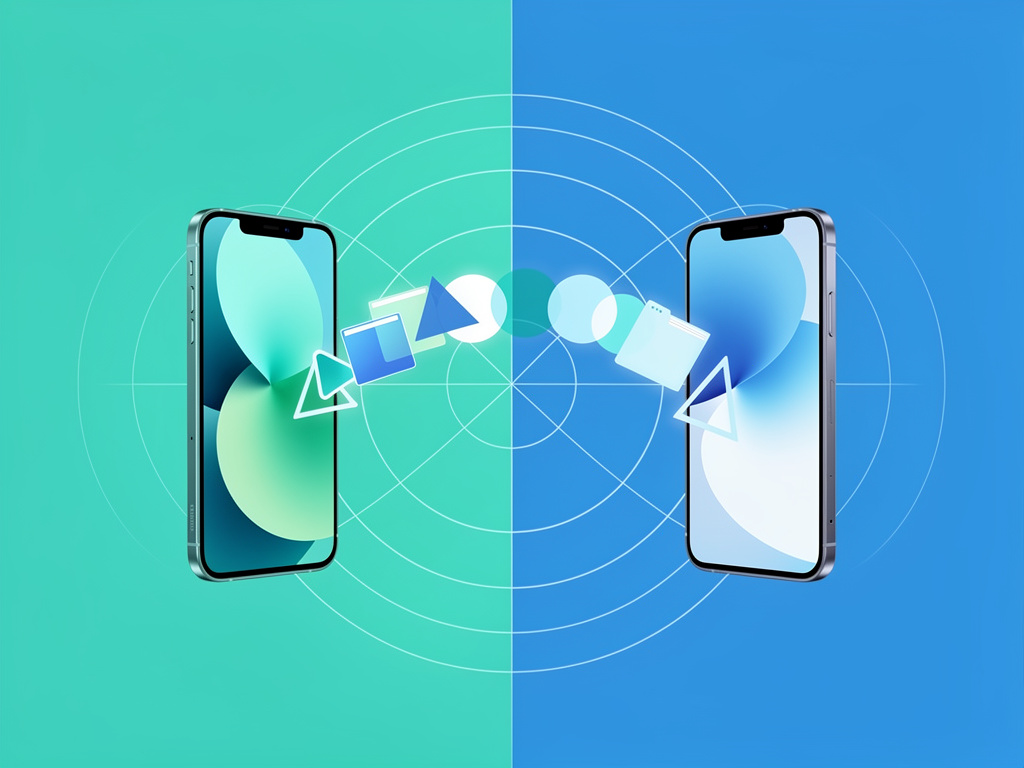
For more than a decade, the invisible wall between iPhone and Android users has been most painfully felt in one specific moment: trying to send a file to someone standing three feet away. AirDrop works beautifully — if both people own Apple devices. Samsung’s Quick Share works well — if both people own Galaxy phones. Cross that line, and you’re back to emailing yourself like it’s 2009.
That’s about to change.
Samsung has confirmed that the Galaxy S26 series, expected to arrive in early 2026, will ship with a version of Quick Share capable of sending files directly to Apple devices via AirDrop. The feature was demonstrated in a hands-on session covered by Android Central, which described the cross-platform transfer as surprisingly smooth and fast. It marks the first time a major Android manufacturer has built native interoperability with Apple’s proprietary file-sharing protocol into its own software — without requiring a third-party app, a cloud workaround, or any action on the iPhone user’s end beyond accepting the incoming transfer.
The implications go well beyond convenience. This is Samsung drawing a line in the sand about where it believes the smartphone industry needs to go: toward open interoperability between platforms, even when one of those platforms — Apple’s — has historically been the most closed.
According to the hands-on report from Android Central, the feature operates through a combination of Bluetooth Low Energy for device discovery and a Wi-Fi Direct connection for the actual data transfer. When a Galaxy S26 user initiates a Quick Share, nearby iPhones with AirDrop enabled appear alongside other Galaxy and Android devices in the share sheet. The user taps the iPhone recipient, and the file shows up on the Apple device as a standard AirDrop request. No pairing. No QR codes. No apps to download. The iPhone user sees the same prompt they’d see if the file came from another iPhone.
That last detail matters enormously. Samsung hasn’t simply built a bridge; it’s built one that looks and feels native on both ends. The iPhone recipient has no reason to even know the file originated from an Android phone. From their perspective, it’s just AirDrop doing what AirDrop does.
So how did Samsung pull this off? The company hasn’t disclosed the full technical architecture, but several details have emerged. Samsung appears to have reverse-engineered portions of Apple’s AirDrop protocol — specifically the AWDL (Apple Wireless Direct Link) layer that underpins device discovery and peer-to-peer Wi-Fi connectivity. Security researchers and open-source developers have previously documented AWDL’s behavior in academic papers and projects like OWL (Open Wireless Link), which demonstrated that non-Apple hardware could, in theory, participate in AirDrop exchanges. Samsung seems to have taken that theoretical possibility and turned it into a production-ready feature.
There’s a legal dimension here that can’t be ignored. Apple has patents covering various aspects of AirDrop, and the company has historically been aggressive about protecting its intellectual property. Whether Samsung secured a licensing agreement, found a clean-room implementation path, or is relying on interoperability exceptions in patent law remains unclear. Neither company has commented publicly on the legal framework. But the fact that Samsung is willing to ship this feature suggests its legal team has done the math and likes the odds.
The timing isn’t accidental. Regulatory pressure on Apple to open its platforms has been intensifying on multiple fronts. The European Union’s Digital Markets Act has already forced Apple to allow third-party app stores on the iPhone and open its NFC chip to competing payment services. The U.S. Department of Justice’s ongoing antitrust case against Apple, filed in March 2024, specifically cited the company’s restrictions on cross-platform messaging and file sharing as evidence of anticompetitive behavior. Samsung building AirDrop compatibility into Quick Share could be read as a competitive move, a regulatory signal, or both.
And Samsung isn’t the only company paying attention to these dynamics. Google has been pushing its Nearby Share protocol (now also branded as Quick Share after a partnership with Samsung) as an Android-wide standard, and there have been persistent rumors that Google is exploring its own AirDrop interoperability layer for a future version of Android. If Samsung proves it can be done at scale — and done well — the pressure on Google to follow will be significant. The pressure on Apple to respond will be even greater.
Apple’s likely response is the most interesting variable in this equation. The company could do nothing, quietly allowing Samsung’s implementation to work while declining to officially support or endorse it. It could attempt to block the feature through software updates that modify AirDrop’s handshake protocol. Or — and this would be the most consequential outcome — it could embrace interoperability and open AirDrop to third-party devices voluntarily, perhaps ahead of being forced to do so by regulators.
History suggests Apple will choose the path that preserves the most control for the longest time. But history also shows that Apple eventually capitulates when the regulatory and competitive pressure reaches a critical threshold. USB-C on the iPhone. RCS messaging support. Third-party app stores in Europe. Each of these concessions came only after Apple had exhausted every alternative. AirDrop interoperability could follow the same arc.
For enterprise IT departments, this development is immediately practical. Cross-platform file sharing has been a persistent headache in mixed-device workplaces. Current solutions — email attachments, cloud links, third-party apps like Snapdrop or LANDrop — all introduce friction, and some raise security concerns. A native, encrypted, peer-to-peer transfer between Galaxy and iPhone devices could simplify workflows considerably, particularly in industries like healthcare, legal services, and field operations where large files need to move quickly between devices without touching a cloud server.
The security model deserves scrutiny. AirDrop has had its own security vulnerabilities over the years, including a 2021 discovery by researchers at Germany’s Technical University of Darmstadt that the protocol could leak phone numbers and email addresses during the discovery phase. Apple addressed some but not all of these concerns in subsequent updates. Samsung’s implementation will need to demonstrate that it doesn’t introduce new attack surfaces or degrade the security of the existing AirDrop protocol. The hands-on demo at Android Central didn’t surface any obvious issues, but a controlled demo environment is a far cry from real-world deployment at scale.
There’s also the question of reciprocity. Right now, the feature appears to be one-directional in initiation: Galaxy S26 users can send files to iPhones via AirDrop, but iPhone users can’t send files to Galaxy devices through the same mechanism. For true interoperability, iPhone users would need to see Galaxy devices in their AirDrop share sheet — something that would require Apple to update iOS. Samsung can build half the bridge. Only Apple can build the other half.
That asymmetry could become a marketing weapon. Samsung has never been shy about poking Apple in its advertising. The company’s “Next Big Thing” campaign from the early 2010s made a sport of mocking iPhone users waiting in line for incremental upgrades. A campaign built around “We can share with everyone — can they?” practically writes itself. And it would resonate. The frustration of not being able to AirDrop between platforms is one of those everyday annoyances that people immediately understand.
Samsung’s broader strategy with the Galaxy S26 appears focused on positioning the device as the most interoperable flagship phone on the market. Beyond Quick Share’s AirDrop support, the company has reportedly been working on improved compatibility with Windows PCs, deeper integration with smart home standards like Matter and Thread, and expanded support for RCS messaging — all aimed at reducing the friction that comes with choosing a non-Apple device in a world where many people’s friends, family, and coworkers carry iPhones.
This is a bet that openness is a selling point. Not just for tech enthusiasts who care about protocols and standards, but for regular consumers who just want their stuff to work with their spouse’s phone or their colleague’s tablet. Samsung is gambling that the walled garden’s walls are becoming liabilities rather than features — that people are starting to resent, rather than accept, the limitations that come with platform lock-in.
Whether that bet pays off depends on execution. A feature that works flawlessly in a demo room but drops connections in a crowded coffee shop won’t move the needle. Speed matters. Reliability matters. And the range of supported file types and sizes will determine whether this is a genuine tool or a tech demo dressed up as a product feature.
But the signal Samsung is sending is unmistakable. The era of file sharing as a platform-exclusive feature is ending. Not because the companies involved have suddenly become altruistic, but because regulators are demanding it, consumers are expecting it, and the competitive advantage now lies in being the company that plays well with others — not the company that doesn’t.
Samsung just threw down the gauntlet. Now we wait to see if Apple picks it up.


 WebProNews is an iEntry Publication