
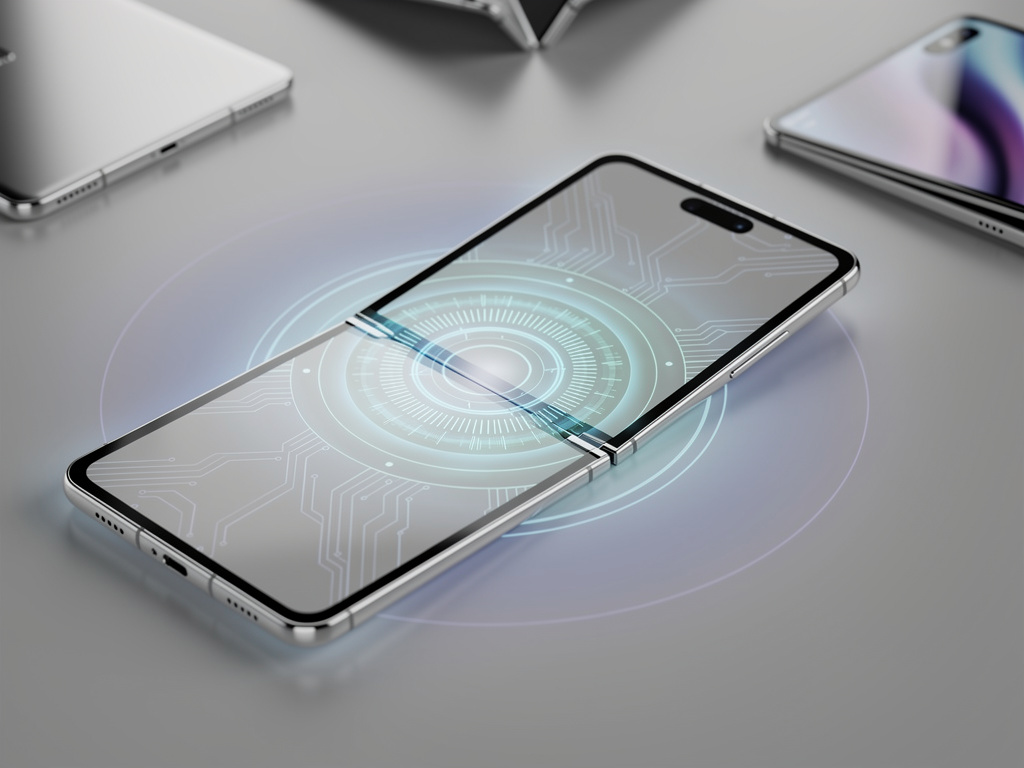
Unfolding Power: Inside the Galaxy Z TriFold’s Custom Wireless Charging Revolution
Samsung’s latest foray into foldable devices has pushed the boundaries of mobile engineering, particularly with the Galaxy Z TriFold, a smartphone that unfolds twice to offer an expansive screen. At the heart of this innovation lies a specialized wireless charging module, designed to accommodate the device’s ultra-slim profile without sacrificing functionality. This component, developed in collaboration with supplier Witz, represents a significant engineering feat, enabling 15W induction charging in a form factor that measures just 3.9mm thick when unfolded.
The TriFold’s design prioritizes thinness and portability, folding into a compact 12.9mm when closed, yet expanding to a 10-inch display for immersive experiences. This tri-fold mechanism, powered by a Snapdragon 8 Elite chipset and a robust 5600mAh battery, demands creative solutions for everyday features like wireless charging. Traditional coils would add unwanted bulk, so Samsung opted for a bespoke module that integrates seamlessly into the device’s layered structure.
Industry experts note that this approach not only maintains the phone’s sleek aesthetics but also ensures compatibility with emerging standards. The module supports Qi2, the latest wireless charging protocol, which promises improved efficiency and positioning flexibility over previous iterations.
Engineering Challenges in Slim Foldables
Creating a wireless charging system for a tri-fold phone involves navigating a maze of technical hurdles. The multiple hinges and folding points complicate the placement of internal components, requiring the charging coil to be flexible yet durable. According to reports from Android Authority, Samsung’s solution involves a custom coil that delivers 15W power, a respectable speed given the constraints, though it falls short of the faster wired options available on competing devices.
This 15W capability stems from the need to balance power delivery with heat management in such a thin chassis. Excessive heat could warp the delicate folding mechanisms or degrade battery life, so engineers calibrated the module to operate within safe thermal limits. Posts on X from tech enthusiasts highlight user excitement about this feature, with many praising the innovation despite the moderate speed, as it allows for convenient charging without cables in a device that’s already a marvel of portability.
Furthermore, the module’s design necessitates a special case for full Qi2 accessory compatibility, such as magnetic mounts or wallets. This requirement, while adding a layer of complexity for users, underscores Samsung’s commitment to pushing hardware limits, ensuring the TriFold remains competitive in a market demanding ever-thinner profiles.
The collaboration with Witz, a specialist in wireless power solutions, was crucial. As detailed in coverage from NotebookCheck.net, Witz engineered a module that’s Qi2-ready, meaning it can leverage magnetic alignment for more efficient energy transfer. This partnership reflects a broader trend in the industry where device makers team up with component specialists to overcome form-factor challenges.
In the context of foldables, wireless charging has often been an afterthought, with earlier models like the Galaxy Z Fold series offering similar 15W speeds but without the tri-fold complexity. The TriFold’s module builds on this foundation, incorporating advancements in coil miniaturization that could influence future designs across Samsung’s lineup.
Recent news updates emphasize how this technology enables the phone’s slim 3.9mm unfolded thickness, a statistic that’s been buzzing on social platforms. Users on X have shared hands-on impressions, noting the seamless integration that doesn’t compromise the device’s premium feel, made possible by the aluminum frame and titanium hinges.
Market Implications and User Adoption
For industry insiders, the TriFold’s wireless charging setup signals Samsung’s strategy to dominate the premium foldable segment. By achieving 15W in such a compact form, the company sets a benchmark that rivals like Huawei, with its Mate XT, must now contend with. Huawei’s tri-fold offering also supports wireless charging, but Samsung’s implementation, as reported by SamMobile, uses a newer module tailored for thinness, potentially giving it an edge in user convenience.
Adoption rates could hinge on how well this feature integrates into daily life. The requirement for a special case might deter some, but it also opens avenues for accessory ecosystems. Samsung has hinted at proprietary cases that enhance Qi2 functionality, allowing users to attach magnetic chargers or stands without alignment issues.
On X, influencers and reviewers have discussed the practical benefits, with posts from figures like Marques Brownlee detailing the 10-inch screen’s synergy with wireless power, enabling prolonged use in unfolded mode without battery anxiety. This buzz contributes to the device’s hype, positioning it as a productivity powerhouse for professionals who need a mobile workspace.
Looking deeper, the module’s 15W speed, while not groundbreaking, aligns with Samsung’s ecosystem play. It pairs well with the company’s wireless chargers and Galaxy ecosystem, encouraging brand loyalty. As per insights from Android Headlines, this custom approach surfaced in recent reports, highlighting how Samsung prioritized slimness over raw power, a decision that resonates in markets valuing portability over speed.
Competitive pressures are mounting, with other manufacturers exploring similar tri-fold concepts. The TriFold’s charging innovation could influence standards, pushing for slimmer coils industry-wide. Insiders speculate that future iterations might boost speeds to 25W or more, but for now, 15W represents a pragmatic compromise.
User feedback on platforms like X underscores this, with posts praising the device’s overall engineering, including its IP48 rating and 200MP camera system, which complement the charging capabilities for a holistic premium experience.
Technical Breakdown and Future Prospects
Diving into the technical specifics, the Witz module employs advanced induction technology, optimizing energy transfer through precise coil winding. This allows for efficient charging even when the phone is folded, a feat not easily achieved in multi-hinge designs. Coverage from Gadget Hacks explains how the module packs engineering prowess into a compact form, potentially leaving power users wanting more but satisfying the average consumer.
Heat dissipation remains a key focus, with the module incorporating materials that wick away warmth without adding thickness. This is vital for a device with a 5600mAh battery, ensuring longevity during wireless sessions. Industry analyses suggest this could extend to reverse wireless charging, allowing the TriFold to power accessories, though at reduced efficiency.
From a manufacturing standpoint, producing these custom modules at scale poses challenges. Samsung’s supply chain, bolstered by partners like Witz, must ramp up to meet demand, especially with the TriFold’s planned Q1 2026 US launch. Posts on X from Samsung affiliates tease this rollout, building anticipation among tech circles.
The broader implications extend to sustainability. Wireless charging reduces reliance on ports, potentially minimizing e-waste from damaged cables. However, the 15W limit means longer charge times compared to wired 45W options on the TriFold, a trade-off detailed in Android Central, which notes it’s the fastest among current Galaxy foldables for wireless.
As the market evolves, Samsung’s innovation here could pave the way for hybrid charging solutions, blending wireless and wired for optimal performance. Insiders predict that by integrating AI-driven power management, future modules might dynamically adjust speeds based on usage patterns.
Echoing sentiments on X, where users like Alvin have shared specs including the 309-gram weight, the charging module enhances the device’s appeal as a lightweight yet powerful tool.
Innovation’s Ripple Effects Across the Industry
Samsung’s push with the TriFold isn’t isolated; it reflects a concerted effort to redefine mobile form factors. The wireless charging module, as featured in SammyGuru, enables 15W Qi in a triple-fold design, setting a precedent for competitors. This could accelerate adoption of Qi2 across the board, benefiting consumers with standardized accessories.
For developers and accessory makers, this opens new opportunities. Custom cases that support the module might include built-in batteries or enhanced magnets, expanding the ecosystem. Recent X posts from Android Authority echo this, discussing why the TriFold settles for 15W and its implications for user experience.
Moreover, the technology’s scalability suggests applications beyond smartphones, perhaps in tablets or wearables with folding elements. Samsung’s history of iterating on foldables, from the original Z Fold to this tri-fold, shows a pattern of refining features like charging to match ambitious designs.
In terms of global rollout, the TriFold’s features, including its charging prowess, are generating international interest. Reports indicate launches in select markets soon, with X users in regions like Dubai sharing early impressions of the device’s seamless functionality.
The module’s role in maintaining the phone’s 3.9mm thinness when unfolded cannot be overstated. It exemplifies how component-level innovations drive overall device appeal, a point reinforced by Wall Street Journal coverage of the US market entry, noting its potential to attract users seeking cinematic viewing on the go.
As Samsung continues to refine this technology, the TriFold stands as a testament to balancing form and function, with its wireless charging module at the core of this equilibrium. Industry watchers will be keen to see how user data influences future enhancements, potentially leading to even slimmer, more efficient designs.


 WebProNews is an iEntry Publication