
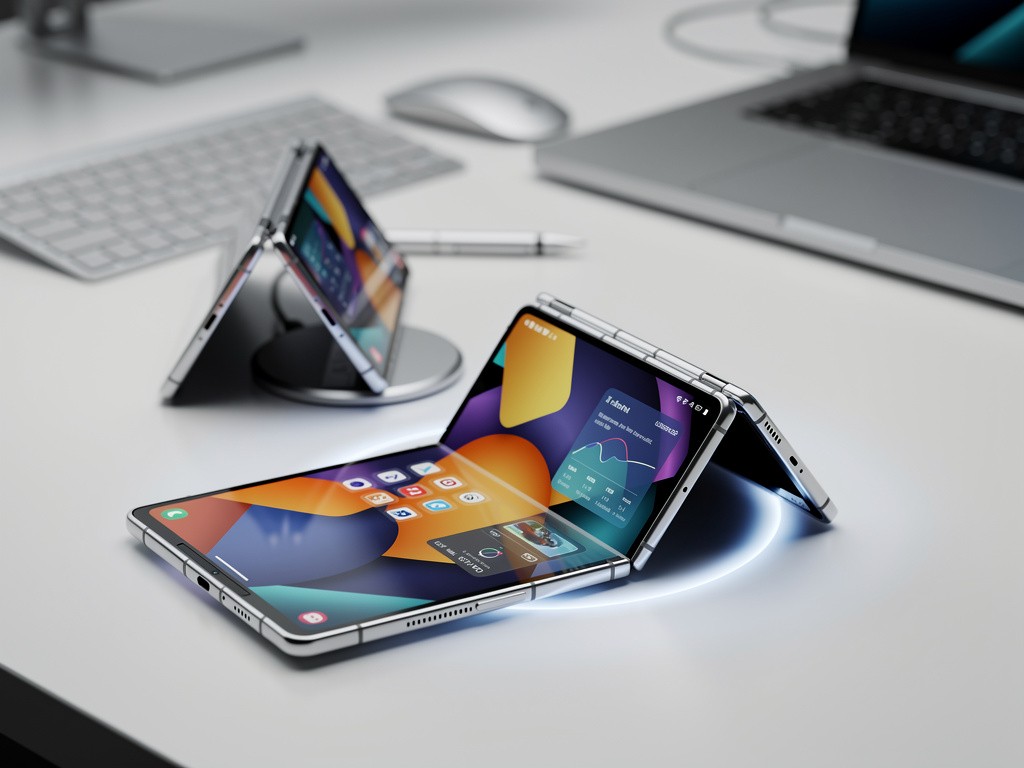
In the rapidly evolving world of foldable smartphones, Samsung’s latest entry, the Galaxy Z Trifold, has sparked intense curiosity among tech enthusiasts and professionals alike. This device, which unfolds into a massive 10-inch display, represents a bold step forward in mobile design, blending phone, tablet, and productivity tool into one. But amid its impressive specifications, one question looms large for users who prioritize convenience: Does it support wireless charging? According to a recent analysis by Android Central, the answer is a resounding yes, with the Trifold incorporating Qi-compatible wireless charging capabilities that align with Samsung’s premium foldable lineup. This feature allows users to juice up the device without fumbling for cables, a boon for on-the-go professionals who rely on seamless integration with wireless pads and stands.
Delving deeper, the Galaxy Z Trifold’s wireless charging isn’t just a checkbox; it’s optimized for its unique tri-fold form factor. The phone boasts a 5,600mAh battery—split across three cells to accommodate the folding mechanism—which supports up to 15W wireless charging speeds, as confirmed in hands-on reviews. This is consistent with Samsung’s approach in devices like the Galaxy Z Fold series, where wireless power delivery emphasizes reliability over blistering speed to prevent overheating in thin, multi-layered builds. Industry insiders note that this setup enables reverse wireless charging as well, turning the Trifold into a portable power bank for accessories like earbuds or smartwatches, enhancing its utility in professional settings.
Beyond the basics, Samsung has engineered the Trifold’s wireless charging to work efficiently even when the device is partially folded, a feat that addresses common pain points in foldables. Sources from Samsung’s official announcements highlight how the phone’s aluminum frame and titanium hinge don’t interfere with magnetic alignment, ensuring stable connections with MagSafe-like accessories, though it’s not officially MagSafe-certified. This integration reflects broader trends in the mobile sector, where convenience features like wireless charging are becoming table stakes for high-end devices aiming to compete in a market dominated by power users.
Unpacking the Battery and Power Ecosystem
The Trifold’s battery architecture is a marvel of engineering, designed to support its expansive screen real estate without compromising portability. With a rated capacity of 5,437mAh (though marketed as 5,600mAh typical), it outperforms many competitors in endurance, lasting through intensive multitasking sessions. Posts on X from tech analysts, including detailed breakdowns of specs, emphasize that while wired charging hits 45W for rapid top-ups—achieving 0-100% in about an hour—the wireless option provides a more flexible alternative for desk-bound workflows. This dual approach caters to diverse user needs, from quick wired boosts during travel to effortless wireless sessions at home or office.
Comparisons with rivals like Huawei’s Mate XT Ultimate, which also features tri-fold design but lags in global availability, reveal Samsung’s edge in charging versatility. A report from CNET notes that the Trifold’s wireless system benefits from Samsung’s ecosystem, seamlessly pairing with Galaxy Watches and Buds for shared charging. This interconnectedness is particularly appealing to enterprise users who invest in full Samsung suites, reducing dependency on multiple chargers and streamlining IT deployments.
Moreover, recent updates from Samsung indicate software optimizations that enhance wireless charging efficiency. Firmware patches, rolled out shortly after the device’s South Korean launch, improve coil detection and heat management, preventing throttling during extended sessions. As per insights shared on X by verified tech accounts, these tweaks have been praised for making the Trifold more reliable in real-world scenarios, such as charging while streaming video on its 10-inch unfolded display.
Market Reception and Launch Dynamics
The Galaxy Z Trifold’s debut has been nothing short of explosive, with reports of sell-outs in minutes across South Korean stores. A piece from SamMobile details how the device, priced at around 3.3 million won (approximately $2,400 USD), flew off shelves at 20 select outlets and online, underscoring strong demand despite its premium tag. This frenzy extends to wireless charging discussions, where users on social platforms express enthusiasm for how it integrates with existing Qi ecosystems, potentially driving accessory sales.
Globally, the rollout is staggered, with a U.S. arrival slated for 2026, as per CNET’s coverage. This delay allows Samsung to refine features like wireless charging based on early feedback from markets like Korea. Industry observers point out that such strategies help mitigate risks in a competitive field crowded with foldables from Google, OnePlus, and emerging Chinese brands, where charging innovations can sway buyer decisions.
Hands-on experiences further illuminate the Trifold’s strengths. An in-depth preview by Android Central describes interacting with the device at events like Dubai Mall, where its 3.9mm unfolded thickness didn’t hinder wireless charging performance. Testers noted consistent 15W speeds even in folded states, a testament to Samsung’s R&D focus on user-centric design.
Technical Specifications Under the Hood
At the core of the Trifold’s power management is the Snapdragon 8 Elite chipset, tailored for Galaxy devices, which efficiently handles charging protocols. Specifications compiled from sources like Nanoreview reveal 16GB RAM and up to 1TB storage, paired with a camera array including a 200MP main sensor, all demanding robust battery support. Wireless charging here isn’t an afterthought; it’s calibrated to maintain performance during high-drain activities like 120Hz refresh rate usage on the 10-inch Dynamic AMOLED screen.
X posts from influencers highlight the Trifold’s IP48 rating, which ensures dust and water resistance doesn’t compromise charging ports or coils. This durability is crucial for professionals in demanding environments, where a reliable wireless option means less wear on physical connectors over time.
Samsung’s official unveilings, such as those on Samsung Newsroom, emphasize how the Trifold’s three-panel design enhances productivity, with wireless charging fitting into this narrative by enabling uninterrupted workflows. For instance, users can prop the device in tent mode on a charging pad while video conferencing, leveraging the 6.5-inch cover display for quick glances.
Competitive Edges and Challenges Ahead
When stacked against the Galaxy Z Fold 7, the Trifold stands out with its larger battery and faster wired speeds, but wireless charging remains on par at 15W, as detailed in a versus article from Android Central. This parity suggests Samsung is standardizing features across its foldable portfolio to simplify manufacturing and software support, a move that resonates with supply chain experts monitoring component costs.
Challenges persist, however. Some early users on X report minor alignment issues with third-party wireless chargers, attributed to the Trifold’s unconventional shape. Samsung has addressed this through app updates that guide optimal placement, but it underscores the need for ecosystem-wide standards in wireless tech.
Looking ahead, the Trifold’s wireless capabilities could evolve with future iterations. Industry speculation, fueled by leaks and patents, hints at potential 25W wireless speeds in upcoming models, aligning with advancements in GaN technology for more efficient power transfer.
Innovation in Foldable Power Management
Samsung’s investment in the Trifold extends to its unboxing experience, which includes a 45W charger and protective case, as noted in Android Central’s breakdown of the package contents. This premium touch reinforces the device’s positioning as a high-end tool, where wireless charging complements the included wired option for versatile use cases.
Broader implications for the sector include how devices like the Trifold push boundaries in power efficiency. With a peak brightness of 2,600 nits on the cover screen and 1,600 nits internally, energy demands are high, making intelligent charging systems essential. Samsung’s approach, blending hardware and software, sets a benchmark that competitors must match.
User reviews on platforms like Nanoreview praise the Trifold’s overall battery life, crediting wireless charging for extending usability without constant plugging in. This feedback loop is vital for Samsung, informing iterative improvements that keep the brand at the forefront of foldable innovation.
Strategic Positioning in Global Markets
The Trifold’s limited initial release in Korea, with rapid sell-outs reported by SamMobile, signals strong consumer interest in advanced charging features. As it expands, pricing strategies will play a key role; at its current level, it targets affluent users who value wireless convenience over cost.
Comparisons with predecessors reveal evolutionary progress. Unlike earlier foldables that skimped on battery size, the Trifold’s 5,600mAh capacity supports longer wireless sessions, ideal for creative professionals editing on the go.
Finally, as Samsung navigates regulatory hurdles for wider launches, the emphasis on reliable wireless charging could differentiate it in markets where infrastructure for such tech is maturing. This positions the Trifold not just as a gadget, but as a harbinger of future mobile power dynamics, where convenience reigns supreme in an increasingly connected world.


 WebProNews is an iEntry Publication