
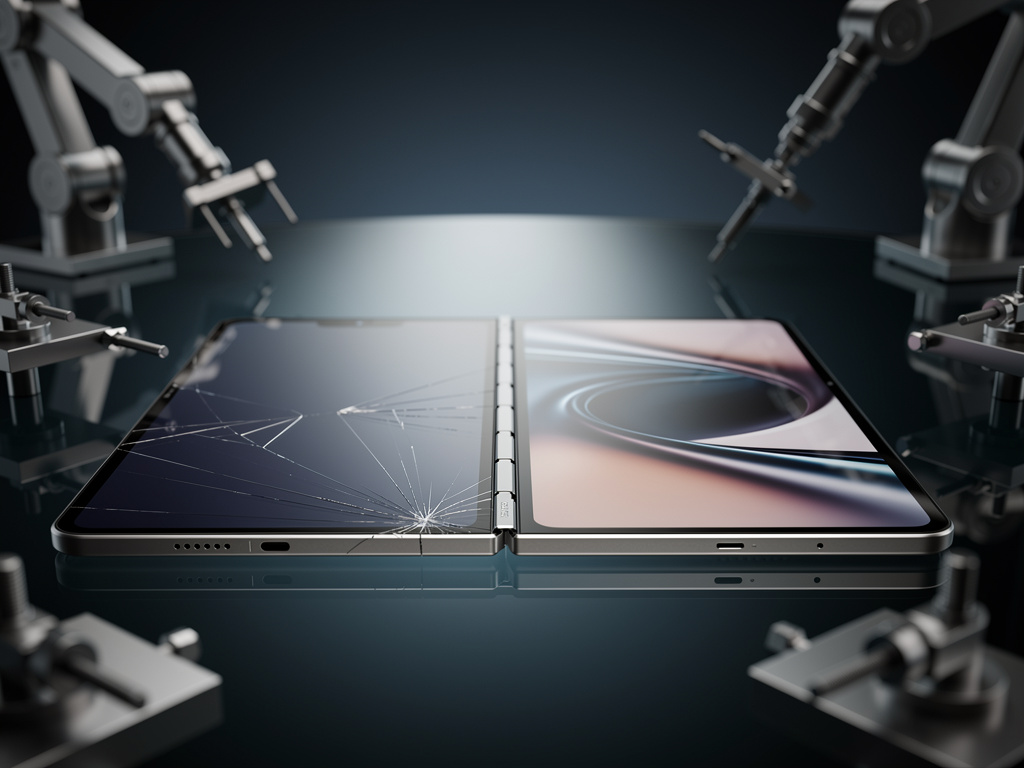
Folding Under Pressure: The Galaxy Z Trifold’s Durability Debacle
Samsung’s latest foray into multi-fold smartphones, the Galaxy Z Trifold, promised to redefine mobile productivity with its innovative triple-fold design. Unveiled earlier this month, the device boasts a 10-inch immersive screen when fully expanded, powered by the Snapdragon 8 Elite chipset and a robust 5600mAh battery. However, recent durability tests have cast a shadow over this ambitious gadget, revealing vulnerabilities that could deter even the most enthusiastic early adopters. Industry watchers are now questioning whether the pursuit of thinner, more versatile form factors is compromising essential reliability in foldable technology.
The Galaxy Z Trifold’s design allows it to unfold twice, creating a tablet-like experience in a pocketable package. According to Samsung’s official announcement, this model aims to deliver “ultimate productivity on a mobile workspace with cinematic viewing,” as detailed in their press release on Samsung Newsroom. Yet, the complexity of two hinges and multiple screens introduces new points of failure, a concern that has been amplified by independent testing. Tech enthusiasts and reviewers have been quick to put the device through rigorous evaluations, often simulating extreme real-world abuse to gauge its resilience.
One prominent test, conducted by the popular YouTube channel JerryRigEverything, subjected the Trifold to a series of challenges including scratches, burns, and bends. The results were disheartening: the device failed spectacularly during the bend test, snapping under pressure when folded backward. This outcome marks a notable setback for Samsung, as previous foldables like the Galaxy Z Fold series have generally withstood similar trials.
Hinges and Screens: Weak Links Exposed
Delving deeper into the test footage, the Trifold’s outer screen showed susceptibility to scratches at level 6 on the Mohs hardness scale, with deeper grooves at level 7—consistent with many foldable displays but still a point of criticism for a premium device. The inner screens, protected by ultra-thin glass, fared no better, succumbing easily to everyday objects like keys or coins. As reported by TechRadar, this vulnerability highlights ongoing challenges in balancing flexibility with durability in foldable tech.
The hinge mechanism, touted by Samsung as a titanium-reinforced component, endured approximately 150,000 folds in automated testing, according to a separate evaluation covered in 9to5Google. While this figure suggests longevity under normal use—equating to years of daily folding—it faltered dramatically in manual bend tests. When pressure was applied in unconventional directions, the hinges gave way, leading to structural failure. This isn’t just a minor flaw; it raises questions about the device’s ability to handle accidental drops or twists in real-life scenarios.
Social media platforms like X have buzzed with user sentiments echoing these concerns. Posts from tech influencers highlight worries about screen softness and easy scratching, with one noting that the Trifold’s display “scratches too easily” despite its high price tag. These anecdotal reports align with historical issues in Samsung’s foldable lineup, such as bubbling screen protectors on older models like the Z Fold 3, underscoring a pattern of durability hurdles that the company has yet to fully overcome.
Industry Implications for Foldable Advancements
Samsung isn’t alone in pushing the boundaries of foldable designs. Competitors like Huawei introduced tri-fold concepts years ago, setting a precedent that Samsung has now followed. However, the Trifold’s test failures suggest that while aesthetics and functionality have advanced, material science lags behind. Analysts point out that the device’s 3.9mm thickness when unfolded—impressively slim—may contribute to its fragility, as thinner builds often sacrifice structural integrity for portability.
In a broader context, recent developments in foldable technology show progress in other areas. For instance, the Galaxy Z Fold 7 and Google Pixel 10 Pro Fold have addressed issues like crease visibility and water resistance, as discussed in an Engadget analysis. Yet, durability remains the Achilles’ heel, particularly for multi-fold devices where additional moving parts amplify risks. Samsung’s IP48 rating offers some protection against dust and water, but it doesn’t cover the mechanical stresses revealed in these tests.
Experts in the field argue that such failures could impact consumer confidence. “Foldables are still niche products, and incidents like this reinforce perceptions of them as fragile luxuries,” notes a mobile technology consultant. With prices rumored around $3,000, buyers expect resilience comparable to traditional slab phones. The Trifold’s shortcomings might prompt Samsung to revisit engineering priorities, perhaps incorporating stronger alloys or redesigned hinges in future iterations.
Testing Methodologies and Real-World Relevance
The JerryRigEverything test, while extreme, provides valuable insights into potential weak points. It involves applying razor blades to screens, exposing them to open flames, and forcibly bending the device—conditions far beyond typical use. However, as Tom’s Guide points out, these “torture tests” simulate worst-case scenarios that could occur over time, such as pocket debris causing scratches or accidental bends during travel.
Comparatively, Samsung’s internal testing claims the Trifold can withstand 200,000 folds, but independent verifications like the one from Android Police reveal discrepancies. The hinge’s failure after 150,000 cycles in a controlled environment contrasts sharply with its immediate collapse under manual force, suggesting that automated tests may not fully capture human-induced stresses. This gap between lab results and practical durability is a recurring theme in foldable reviews.
On X, discussions among users and reviewers emphasize that while the Trifold excels in performance metrics—like its 200MP camera and seamless multitasking—these strengths are overshadowed by durability fears. One post lamented the device’s plastic-heavy construction, making it “too thin and made of too much plastic,” echoing sentiments from NotebookCheck. Such feedback could influence Samsung’s warranty policies or lead to enhanced protective accessories.
Competitive Pressures and Future Directions
The foldable market is heating up, with Samsung facing stiff competition from brands innovating in similar spaces. Huawei’s earlier tri-fold model, for example, has been praised for its robustness, putting pressure on Samsung to match or exceed those standards. Industry insiders speculate that the Trifold’s issues stem from rushed development to capitalize on the hype around multi-fold devices, potentially at the expense of thorough durability engineering.
Looking ahead, advancements in materials like improved ultra-thin glass or self-healing polymers could address these pain points. Samsung has invested heavily in R&D, as evidenced by their ongoing refinements to the Z series. However, the Trifold’s test results, detailed in Gadgets 360, serve as a cautionary tale: innovation must not outpace reliability.
For enterprise users—the target demographic for such productivity-focused devices—durability is paramount. A broken hinge could mean lost work time and repair costs, deterring adoption in professional settings. Samsung might respond with software updates to monitor hinge health or partnerships with case manufacturers for added protection.
Consumer Sentiment and Market Response
Public reaction on platforms like X has been mixed, with some users excited about the Trifold’s form factor despite the risks. Posts praising its 6.5-inch cover screen and cinematic potential contrast with those warning of “peak gimmick” status, as one influencer put it. This divide reflects broader debates in the tech community about whether foldables are ready for mainstream use or remain experimental.
Reviewers from Android Central noted that the device “snapped almost immediately” in tests, amplifying calls for better build quality. Samsung’s history with foldables, including early recalls of the original Galaxy Fold due to screen issues, adds context to these concerns. The company has since improved, but the Trifold suggests there’s still work to be done.
As the market evolves, consumer education on proper handling could mitigate some risks. Tutorials on avoiding backward bends or using protective cases might become standard. Nonetheless, for a device positioned as the “shape of what’s next,” as Samsung describes it, these durability lapses could slow its momentum.
Engineering Challenges in Multi-Fold Designs
At the heart of the Trifold’s troubles is the engineering complexity of managing two hinges. Each must synchronize perfectly to prevent stress imbalances, a feat that 9to5Google explored in their coverage of the bend test defeat. The aluminum frame and titanium elements provide some reinforcement, but the overall thinness—prioritized for user appeal—undermines this.
Comparisons to single-fold devices reveal that added folds exponentially increase failure risks. Industry reports indicate that while single-hinge foldables have matured, tri-folds introduce variables like uneven weight distribution during partial unfolds. Samsung’s engineers likely anticipated some trade-offs, but the extent of the failures in public tests has sparked internal reviews, according to sources familiar with the matter.
Ultimately, the Galaxy Z Trifold’s durability saga underscores a pivotal moment for foldable technology. As manufacturers like Samsung push envelopes with ever-more ambitious designs, balancing innovation with everyday toughness will determine their success. For now, potential buyers might wait for revisions, ensuring that the next unfold doesn’t lead to a breakdown.


 WebProNews is an iEntry Publication