
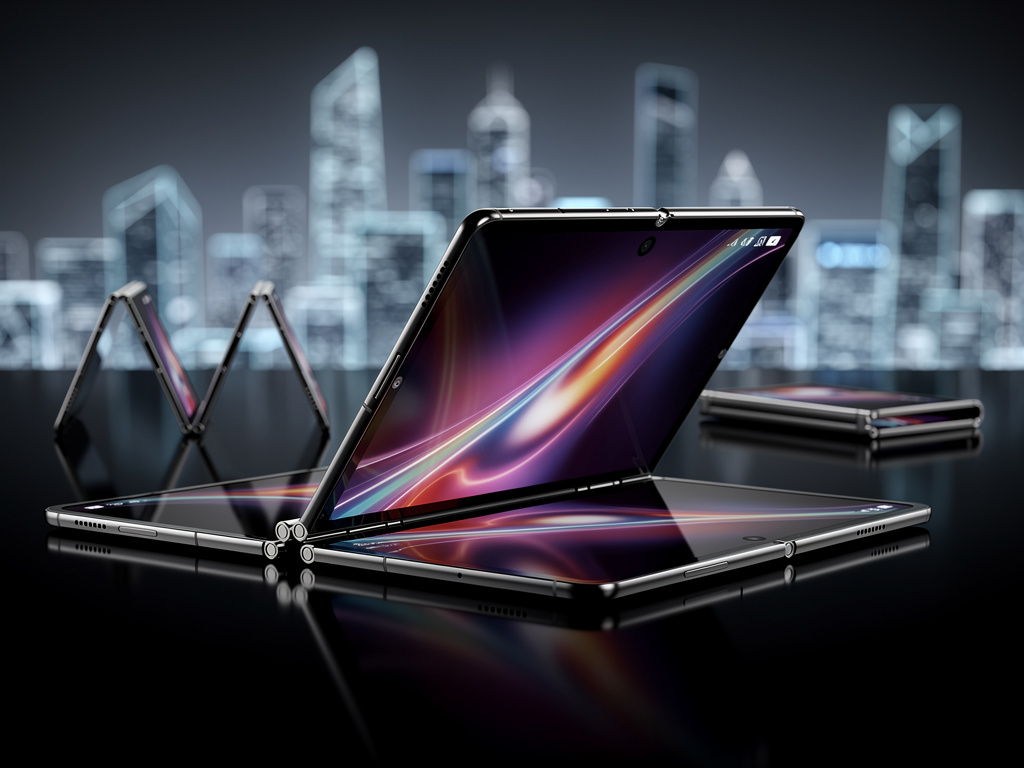
Unfolding Innovation: Samsung’s Galaxy Z TriFold Ushers in a New Era of Foldable Devices
Samsung Electronics has once again pushed the boundaries of smartphone design with the introduction of its Galaxy Z TriFold, a device that promises to transform how users interact with mobile technology. Announced earlier this week, the TriFold represents the company’s first foray into multi-folding smartphones, featuring a design that unfolds twice to reveal a massive, immersive display. This innovation arrives at a time when the foldable phone market is heating up, with competitors like Huawei already offering similar tri-fold models, but Samsung’s entry brings its signature polish and ecosystem integration to the forefront.
The Galaxy Z TriFold’s core appeal lies in its ability to expand from a compact phone into what essentially becomes a portable tablet, offering users unprecedented screen real estate in a pocketable form. According to Samsung’s official announcement on its news site, the device unfolds to provide “the most immersive screen on a phone,” enabling ultimate productivity in a mobile workspace alongside cinematic viewing experiences. This dual-hinge mechanism allows for a seamless transition between modes, catering to professionals who need a device that can handle multitasking without compromising portability.
Industry analysts are buzzing about the potential impact of this release, especially as it positions Samsung ahead of rivals in the premium foldable segment. The TriFold’s launch in South Korea is set for December 12, with a price tag of approximately $2,400, as reported by various outlets. This pricing strategy reflects the high-end materials and engineering required for such a complex design, but it also raises questions about accessibility for broader consumer adoption.
A Closer Look at Design and Build Quality
Hands-on impressions from early reviewers highlight the TriFold’s robust construction, which addresses some of the durability concerns that have plagued earlier foldables. The device features a sleek exterior when folded, resembling a traditional smartphone, but its true magic unfolds—literally—with two hinges that allow it to expand into a 10-inch display. This setup is ideal for users who juggle work and entertainment on the go, providing a workspace that rivals small laptops.
One notable aspect is the inclusion of advanced materials to minimize creases on the inner screens, a common issue in foldables. Samsung has incorporated ultra-thin glass and enhanced hinge mechanisms to ensure smoothness and longevity. Early videos and unboxings, such as those shared on tech sites, show the device maintaining structural integrity even after repeated folding, which is crucial for a product expected to withstand daily use.
The box contents, as detailed in a recent piece by Android Central, include the phone itself, a charger, USB cable, and documentation, but notably omit earbuds or a case, aligning with Samsung’s recent trend toward eco-friendly packaging. This minimalist approach encourages users to accessorize separately, potentially boosting aftermarket sales.
Performance Specs and Software Integration
Under the hood, the Galaxy Z TriFold is powered by the latest Snapdragon processor, paired with ample RAM and storage options to handle demanding tasks. Benchmarks from initial tests suggest it outperforms its dual-fold predecessors, making it suitable for everything from video editing to gaming. The integration of Galaxy AI features enhances usability, offering intelligent multitasking tools that automatically adjust apps across the expanded display.
Software optimizations are key here, with Samsung’s One UI tailored specifically for the tri-fold form factor. This includes split-screen modes that allow up to three apps to run simultaneously, turning the device into a productivity powerhouse. As noted in coverage from SamMobile, these enhancements build on Samsung’s experience with the Z Fold series, refining the user interface for larger canvases.
Battery life remains a critical factor for such a power-hungry device, and early reports indicate a substantial capacity that supports all-day usage, even with the screen fully extended. Fast charging capabilities ensure quick top-ups, addressing one of the pain points in foldable tech where larger displays can drain power rapidly.
Market Positioning and Competitive Pressures
Samsung’s decision to launch the TriFold initially in South Korea, with a U.S. release slated for 2026, as per CNET, suggests a strategic rollout to test the waters in a tech-savvy market. This phased approach allows the company to gather feedback and refine the product before wider availability, a tactic that has served it well in past launches.
Competition is fierce, with Huawei’s Mate XT already making waves in China as the world’s first commercially available tri-fold phone. Samsung’s entry, however, benefits from global brand recognition and a robust app ecosystem, potentially giving it an edge in Western markets. Reuters highlighted this intensifying rivalry in a recent article, noting how Samsung aims to solidify its leadership in foldables amid growing interest from other manufacturers.
Pricing at $2,400 positions the TriFold as a luxury item, targeting enterprise users and early adopters rather than the mass market. This premium strategy could pay off if the device delivers on its promise of blending phone, tablet, and mini-laptop functionalities into one cohesive package.
Innovative Features Driving User Adoption
One standout feature is the TriFold’s cinematic viewing mode, where the fully unfolded screen provides an aspect ratio optimized for movies and videos. Coupled with high-refresh-rate panels, this creates an engaging experience that rivals dedicated tablets. Samsung has also integrated S Pen support, allowing for precise input on the large display, which is a boon for creative professionals.
Camera capabilities haven’t been overlooked, with a versatile setup including under-display sensors that maintain a seamless look when folded. This innovation, drawn from Samsung’s ongoing refinements in foldable tech, ensures high-quality photography without compromising the design’s elegance.
On the software front, Galaxy AI introduces predictive features like real-time translation and enhanced note-taking, leveraging the expanded screen for more intuitive interactions. Posts on X from Samsung Mobile emphasize these AI-driven advancements, showcasing how they elevate the device’s utility beyond mere hardware specs.
Challenges and Durability Concerns
Despite its innovations, the TriFold isn’t without potential drawbacks. The complexity of two hinges introduces more points of potential failure, and while Samsung claims improved durability, long-term testing will be essential. Early hands-on reports from GSMArena praise the build but note the device’s thickness when folded, which might deter users accustomed to slimmer profiles.
Water resistance is another area of focus, with the TriFold boasting an IP rating that protects against splashes, a step up from earlier models. However, achieving full dust resistance in a multi-hinge design remains challenging, and Samsung’s engineering team has reportedly invested heavily in sealing mechanisms to mitigate this.
Repairability is a growing concern in the industry, and the TriFold’s intricate design could make fixes costly. Samsung’s commitment to extended software support, including several years of updates, helps offset this by ensuring the device remains relevant longer.
Ecosystem Integration and Future Implications
The TriFold seamlessly integrates with Samsung’s broader ecosystem, including wearables and smart home devices, creating a unified experience for users invested in the brand. This interconnectedness is a key differentiator, as highlighted in Samsung’s promotional materials, allowing for features like seamless file sharing and multi-device control.
Looking ahead, the TriFold could influence app development, encouraging creators to design software that exploits larger, flexible displays. This shift might accelerate the adoption of foldables, moving them from niche gadgets to mainstream tools.
Industry insiders speculate that Apple’s rumored entry into foldables, potentially in 2026, could be pressured by Samsung’s aggressive innovation. A MacRumors podcast episode discussed this dynamic, suggesting the TriFold sets a high bar for competitors.
Economic and Supply Chain Considerations
From a manufacturing standpoint, producing the TriFold involves advanced supply chain logistics, with components sourced globally. Samsung’s vertical integration, controlling everything from displays to chipsets, gives it an advantage in managing costs and quality.
Economic factors, such as fluctuating material prices and geopolitical tensions, could impact availability. The device’s high price point might limit initial sales, but as production scales, costs could decrease, making tri-folds more accessible.
Analysts from Reuters point out that this launch comes amid a maturing foldable market, where sales are projected to grow significantly in the coming years.
User Feedback and Early Adoption Trends
Initial reactions on social platforms like X indicate strong interest, with users praising the innovative form factor. Samsung Mobile’s posts have garnered thousands of views, reflecting excitement around the device’s potential to redefine mobile computing.
However, some feedback highlights concerns over weight and bulkiness, which could affect one-handed use. Early adopters in Korea will provide valuable insights, potentially shaping global iterations.
For industry professionals, the TriFold represents a benchmark in foldable evolution, blending cutting-edge hardware with thoughtful software to address real-world needs.
Strategic Rollout and Global Expansion
Samsung’s staggered release strategy, starting in its home market, allows for localized marketing and adjustments based on regional preferences. The delay in U.S. availability until 2026, as covered by CNET, might stem from regulatory hurdles or supply chain optimizations.
Partnerships with carriers and retailers will be crucial for widespread adoption, with promotions likely to include trade-in deals to offset the steep cost.
Ultimately, the Galaxy Z TriFold embodies Samsung’s vision for the future of mobile devices, where flexibility and functionality converge to meet the demands of an increasingly mobile workforce.
Technological Advancements in Display Tech
The heart of the TriFold is its advanced display technology, featuring dynamic refresh rates that adapt to content for optimal power efficiency. This not only enhances battery life but also provides smoother visuals for gaming and scrolling.
Samsung’s investment in foldable panels, honed over years with the Z series, culminates in screens that resist wear and maintain color accuracy across folds.
Comparisons with competitors reveal Samsung’s edge in brightness and outdoor visibility, making the TriFold versatile in various lighting conditions.
Security and Privacy Features
Security is paramount in this premium device, with biometric options including under-display fingerprint sensors and facial recognition enhanced by AI. These features ensure quick, secure access even in expanded modes.
Samsung Knox provides enterprise-level protection, appealing to business users who handle sensitive data on the go.
Privacy tools, such as app permissions and secure folders, are integrated deeply, reflecting growing consumer demands for data control.
Environmental Impact and Sustainability
Samsung emphasizes sustainability in the TriFold’s design, using recycled materials and energy-efficient components. The packaging, as noted in Android Central’s unboxing, is minimal to reduce waste.
Long-term support commitments encourage device longevity, aligning with global efforts to minimize electronic waste.
This approach not only appeals to eco-conscious consumers but also positions Samsung as a responsible leader in tech manufacturing.
Potential for Industry Disruption
The TriFold could disrupt traditional tablet and laptop markets by offering a hybrid solution that blurs category lines. Professionals in fields like design and finance might find it replaces multiple devices.
As more manufacturers enter the tri-fold space, innovation will accelerate, potentially leading to thinner, more affordable options.
Samsung’s bold move with the TriFold signals a maturing phase in foldable tech, where practicality meets ambition to reshape user expectations.


 WebProNews is an iEntry Publication