
Samsung’s Galaxy Z TriFold: Unfolding a New Era of Mobile Productivity
Samsung has once again pushed the boundaries of foldable technology with the introduction of the Galaxy Z TriFold, a device that unfolds twice to create what the company calls its most immersive screen yet. Announced in early December 2025, this multi-folding smartphone represents a bold step forward in a market increasingly crowded with innovative designs from competitors like Huawei and Apple. Drawing from a decade of foldable expertise, Samsung aims to blend premium performance with unprecedented portability, turning a compact phone into a expansive workspace.
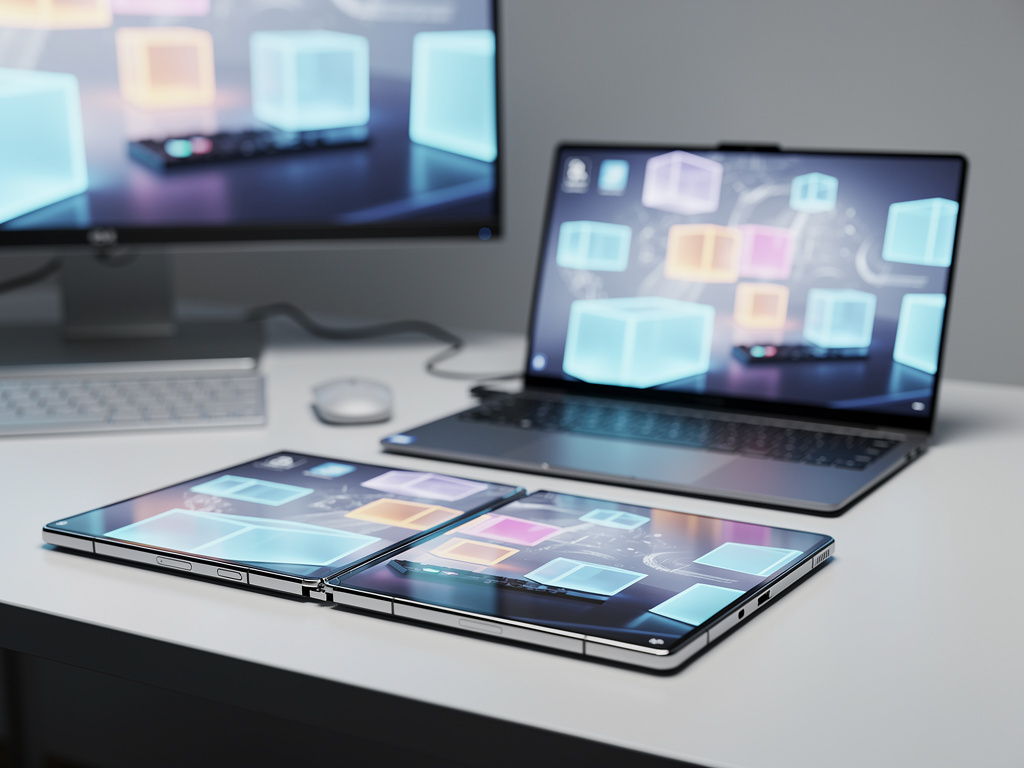
At the heart of the TriFold’s appeal is its ability to serve as a secondary monitor for Windows PCs, a feature that could redefine how professionals integrate mobile devices into their daily workflows. According to details from Android Authority, this Second Screen functionality allows users to extend their PC desktop onto the TriFold’s 10-inch display, providing extra real estate for multitasking without the need for additional hardware. This innovation comes at a time when remote work and hybrid setups demand more flexible tools, positioning the TriFold as a potential game-changer for productivity enthusiasts.
The device’s specifications underscore its premium positioning. Powered by the Snapdragon 8 Elite chipset, it boasts a 10-inch inner display with a 2160×1584 resolution and 120Hz refresh rate when fully unfolded, complemented by a 6.5-inch cover screen at 2520×1080 resolution. A 200MP main camera, 12MP ultrawide, and 10MP telephoto lens round out the imaging capabilities, while a titanium hinge and aluminum frame ensure durability with an IP48 rating. Weighing in at 309 grams and measuring just 3.9mm thin when unfolded, the TriFold promises to deliver flagship-level performance in a form factor that’s remarkably sleek.
Enhancing Workflow Integration
To activate the Second Screen mode, users connect the TriFold to a Windows PC via USB-C or wirelessly through Samsung’s ecosystem. Once linked, the foldable’s large screen mirrors or extends the PC’s display, enabling seamless dragging of windows and applications. This isn’t just a gimmick; it’s a practical extension of Samsung’s DeX platform, which has long allowed Galaxy devices to function like desktop computers. Industry observers note that this could appeal to creative professionals, such as graphic designers or video editors, who often juggle multiple screens.
Samsung’s official announcement, as reported by Samsung Newsroom, emphasizes the TriFold’s role in providing “ultimate productivity on a mobile workspace with cinematic viewing.” The dual-folding mechanism minimizes creasing on the display, addressing a common complaint with earlier foldables. Posts on X from tech influencers like Marques Brownlee highlight the device’s thin profile and high-end specs, generating buzz about its potential to disrupt traditional tablet and laptop markets.
Comparisons to rivals are inevitable. Huawei’s Mate XT, another tri-fold device, has set a high bar with its own expansive screen, but Samsung’s integration with Windows ecosystems gives it an edge in Western markets. Analysts suggest this feature could help Samsung maintain its lead in the foldable segment, especially as competition intensifies. Pricing remains a key factor; launched initially in select markets like China at a premium, the TriFold’s cost might limit its adoption to enterprise users and early adopters.
Pioneering Display Technology
Delving deeper into the display innovations, the TriFold’s 10-inch panel supports advanced multi-window multitasking, allowing up to three apps to run simultaneously. This is powered by Samsung’s optimized One UI software, which adapts dynamically to the unfolding states. For instance, partially folding the device creates a laptop-like mode, with one section acting as a keyboard and the other as a screen, enhancing on-the-go productivity.
Information from GSMArena details the device’s 5600mAh battery, which is the largest in Samsung’s foldable lineup, ensuring it can handle extended use as a secondary display without frequent recharges. The IP48 rating provides dust and water resistance, making it suitable for various professional environments. Tech posts on X praise the minimized creasing, attributing it to improved hinge technology that distributes stress more evenly across the folds.
However, challenges remain. The double hinge introduces potential points of failure, and long-term durability will be closely watched. Early reviews, such as those echoed in X discussions, express concerns about the visible creases during video playback, though Samsung claims advancements in materials have reduced this issue significantly. For industry insiders, the real test will be how well the Second Screen feature performs in real-world scenarios, like video conferences or data analysis sessions.
Market Positioning and Competitive Pressures
Samsung’s timing for the TriFold launch aligns with growing pressure from Chinese brands innovating rapidly in foldables. A report from CNBC notes that the company is accelerating its release to stay ahead, with availability starting in December 2025 in some regions and expanding to the US in Q1 2026. This move underscores Samsung’s strategy to dominate the high-end foldable market, where margins are higher than in standard smartphones.
The Second Screen capability builds on Samsung’s history of ecosystem integration. Unlike Apple’s more closed system, Samsung’s openness to Windows compatibility could attract business users who rely on Microsoft tools. As detailed in SamMobile, the TriFold can run DeX on its large screen while simultaneously serving as a PC monitor, offering dual functionality that maximizes its utility.
User sentiment on X reflects excitement mixed with skepticism. Influencers point out the device’s 16GB RAM and 1024GB storage options, ideal for heavy multitasking, but question whether consumers are ready for a phone that costs considerably more than traditional flagships. Polls on platforms like Android Central suggest a split: while tech enthusiasts are eager, mainstream users may balk at the price and complexity.
Technical Innovations Under the Hood
Beneath the surface, the TriFold incorporates cutting-edge materials like Armor Aluminum and a titanium hinge, contributing to its slim profile. The G-shaped folding mechanism allows for versatile configurations, from fully folded for pocketability to partially open for tent-mode viewing. This flexibility is key to the Second Screen feature, enabling users to prop the device up as an external display without additional stands.
Battery life is bolstered by efficient power management tied to the Snapdragon 8 Elite, which optimizes performance for extended display use. According to specs from PhilNews, the 5600mAh capacity supports fast charging and wireless options, ensuring minimal downtime. For insiders, this represents Samsung’s bet on AI-driven efficiencies, with the device engineered for the “AI era” as per company statements.
Camera innovations also play a role, with the 200MP sensor capable of high-resolution captures that can be edited directly on the large screen or transferred seamlessly to a connected PC. X posts from users like Alvin highlight the similarity to Galaxy S-series cameras, suggesting the TriFold doesn’t compromise on photography despite its foldable design.
Implications for Future Devices
Looking ahead, the TriFold’s Second Screen feature could influence broader industry trends, encouraging other manufacturers to explore hybrid device functionalities. Samsung’s push into multi-fold designs signals a shift toward devices that blur lines between phones, tablets, and computers, potentially reducing the need for multiple gadgets.
Challenges in manufacturing, such as ensuring hinge reliability over thousands of folds, are areas where Samsung has invested heavily. Reports indicate rigorous testing to achieve the minimized creasing, with the display rated for hundreds of thousands of cycles. For enterprise adoption, security features like Knox integration make the TriFold appealing for sensitive workflows.
Feedback from early adopters, as seen in X threads, emphasizes the cinematic viewing experience when unfolded, ideal for streaming or presentations. However, the weight of 309 grams might deter some users accustomed to lighter devices, though it’s a trade-off for the expanded capabilities.
Broadening Accessibility and Adoption
Samsung plans to roll out software updates to enhance the Second Screen experience, including better resolution scaling and app compatibility. This iterative approach mirrors the company’s strategy with previous foldables, where post-launch refinements have boosted user satisfaction.
In terms of global availability, the device is set for a phased launch, starting in Asia and expanding westward. Pricing in the Philippines, as per local sources, positions it as an ultra-premium offering, likely around the equivalent of $2,000 or more, aligning with its advanced features.
Industry analysts predict that if the TriFold succeeds, it could accelerate the mainstreaming of foldables, especially in professional sectors. The integration with PCs addresses a key pain point: the silos between mobile and desktop computing, fostering a more unified digital experience.
Ecosystem Synergies and User Experiences
The TriFold’s compatibility extends beyond Windows to Samsung’s own Galaxy ecosystem, allowing seamless pairing with wearables and other devices. This creates a cohesive environment where the foldable acts as a hub for productivity.
User reviews anticipated on platforms like MacRumors, which covered the launch, will be crucial in assessing real-world performance. Early indications suggest the large battery and efficient chipset handle demanding tasks well, from graphic-intensive apps to prolonged secondary display use.
Ultimately, the Galaxy Z TriFold embodies Samsung’s vision for the future of mobile computing, where flexibility and integration drive innovation. As the device hits markets, its success will hinge on how effectively it meets the needs of power users seeking to streamline their tech setups. With features like Second Screen leading the charge, Samsung is not just unfolding a phone but expanding the possibilities of what a smartphone can be.


 WebProNews is an iEntry Publication