
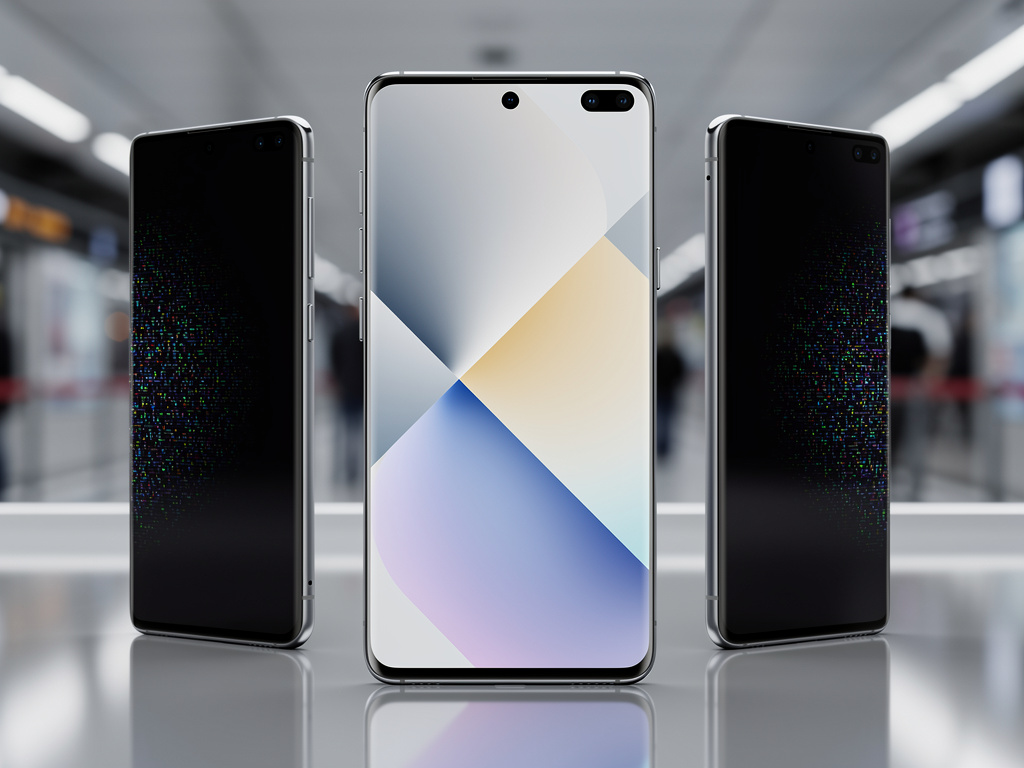
Samsung’s Invisible Shield: Unveiling the Galaxy S26 Ultra’s Game-Changing Privacy Display
In the ever-evolving world of smartphone technology, where innovation often hinges on incremental improvements, Samsung appears poised to introduce a feature that could redefine user privacy on mobile devices. Recent leaks suggest the Galaxy S26 Ultra will incorporate a built-in “Privacy Display” capability, designed to obscure screen content from prying eyes at side angles. This development, emerging from various tech leaks and insider reports, promises to eliminate the need for third-party privacy screen protectors, potentially setting a new standard for data security in public spaces.
The feature, reportedly powered by Samsung’s Flex Magic Pixel technology, allows users to activate a mode that limits visibility from off-angles, making it difficult for onlookers to glimpse sensitive information. According to details unearthed in Samsung’s updated Tips app and One UI 8.5 software, the Privacy Display can be toggled manually or set to activate automatically in certain scenarios, such as when entering passcodes or viewing private messages. This hardware-based solution is said to be exclusive to the Ultra model, distinguishing it from the standard S26 and S26 Plus variants.
Industry observers note that this isn’t just a gimmick; it addresses a growing concern in an era of increasing digital surveillance and shoulder-surfing risks. With smartphones handling everything from banking details to confidential emails, the ability to shield content without compromising the user’s viewing experience represents a significant leap forward. Leaks indicate the display will dim slightly when active, adding an extra layer of discretion, while maintaining the phone’s high-end specs like a QHD+ 144Hz OLED panel.
Flex Magic Pixel: The Tech Behind the Curtain
Samsung’s approach leverages advanced OLED technology, specifically the M14 panel, which is rumored to achieve peak brightness levels up to 2,600 nits or higher, alongside improved anti-reflective coatings. This integration of privacy features directly into the display hardware marks a departure from software-only solutions seen in competitors’ devices. Reports from Android Central detail how animations in leaked software demonstrate the screen transitioning into privacy mode, effectively masking content from side views while remaining crystal clear from the front.
Further insights reveal that the feature could automate based on environmental detection, such as recognizing public Wi-Fi networks or crowded locations via GPS and sensors. This smart functionality, if accurate, would allow the device to proactively protect user data without constant manual intervention. Tech enthusiasts on platforms like X have expressed excitement, with posts highlighting how this could render traditional privacy films obsolete, potentially disrupting a niche market segment.
Comparisons to existing technologies are inevitable. While some laptops and monitors have offered privacy filters for years, implementing this on a smartphone scale requires precise control over pixel behavior. Samsung’s solution reportedly uses directional light manipulation within the OLED layers, ensuring that light emissions are focused toward the user and scattered at angles, a technique that builds on years of display research.
Leaked Specs and Broader Implications
Delving deeper into the leaks, the Galaxy S26 Ultra is expected to boast other display enhancements, including Dolby Vision support, HDR10+, and improved power efficiency. A post from reliable leaker Ice Universe on X mentioned the One UI 8.5 code explicitly referencing “Privacy display” that limits side-angle visibility, corroborating reports from multiple sources. This feature is part of a larger upgrade package that includes a Snapdragon processor globally, an upgraded 12MP 3x telephoto camera, and a new selfie sensor, as detailed in various X posts and news outlets.
The economic ramifications for Samsung and its competitors are noteworthy. By embedding privacy directly into the hardware, Samsung could appeal to enterprise users who prioritize security, potentially boosting sales in corporate sectors. Analysts suggest this might pressure rivals like Apple and Google to accelerate their own privacy-focused innovations, fostering a race toward more secure mobile ecosystems.
Moreover, the timing aligns with heightened global awareness of data privacy, influenced by regulations like GDPR in Europe and evolving consumer expectations. If the S26 Ultra’s Privacy Display performs as leaked, it could influence future device designs, encouraging a shift toward integrated security features rather than relying on accessories.
Automation and User Control in Focus
One of the most intriguing aspects is the potential for automation. Leaks from Android Authority show animations where the feature activates upon detecting specific apps or notifications, such as banking apps or secure messages. This context-aware intelligence, possibly powered by on-device AI, would make privacy seamless, reducing the cognitive load on users who might otherwise forget to enable such protections.
Manual controls are equally emphasized, allowing customization for scenarios like photo browsing or password entry. The display’s dimming effect, while subtle, ensures energy efficiency isn’t overly compromised, a critical factor given the power demands of high-brightness OLEDs. Industry insiders speculate that this could extend to future foldable devices, expanding Samsung’s portfolio of privacy-enhanced products.
However, questions remain about real-world efficacy. Will it work effectively in brightly lit environments, or could it inadvertently reduce visibility for the primary user? Early leaks don’t provide hands-on testing, but simulations suggest a balanced approach that maintains usability.
Competitive Edges and Market Response
Turning to the broader market, Samsung’s move comes amid rumors of underwhelming upgrades in other areas, as noted in a PhoneArena report criticizing the S26 series for lacking revolutionary changes. Yet, the Privacy Display stands out as a “genius” feature, per SamMobile, potentially becoming a key selling point against Apple’s iPhone lineup.
Social media sentiment on X reflects a mix of skepticism and enthusiasm. Some users question exaggerated claims, like peak brightness reaching 6,000 nits, while others praise the anti-reflective coating integrated with privacy tech. This buzz underscores the feature’s appeal, especially for professionals handling sensitive information on the go.
In terms of hardware exclusivity, confining this to the Ultra model aligns with Samsung’s strategy of tiering features to justify premium pricing. It also hints at future trickle-down to mid-range devices, democratizing privacy tech over time.
Potential Challenges and Innovations Ahead
Despite the promise, challenges loom. Manufacturing such advanced displays could increase costs, potentially raising the device’s price point. Additionally, ensuring compatibility with accessories like cases or styluses—given the S26 Ultra’s S Pen support—will be crucial. Leaks from Android Police provide visual representations of the feature in action, suggesting seamless integration, but only official announcements will confirm.
Looking ahead, this innovation could spur advancements in related fields, such as augmented reality glasses or automotive displays, where privacy is paramount. Samsung’s investment in Flex Magic Pixel technology positions it as a leader in display security, potentially licensing it to other manufacturers.
For consumers, the feature addresses real pain points, like using phones in crowded trains or cafes without fear of eavesdroppers. As digital lives become more intertwined with mobile devices, such protections could become indispensable.
Industry Ripple Effects and Future Prospects
The leak’s timing, just weeks before the rumored February launch, builds anticipation. Reports from Tom’s Guide frame it as a “secret weapon” against the iPhone, highlighting its potential to sway privacy-conscious buyers. Combined with other upgrades like a 200MP main camera and enhanced telephoto capabilities, the S26 Ultra aims to dominate the high-end segment.
Critics, however, point to Samsung’s history of overhyping features, urging caution until reviews emerge. Nonetheless, if executed well, this could influence software updates for existing devices, though hardware limitations might restrict it to new models.
Ultimately, the Privacy Display exemplifies how smartphone makers are pivoting toward user-centric security, blending hardware prowess with intelligent software to create more intuitive experiences. As the industry awaits official confirmation, this feature signals a maturing focus on privacy in an increasingly connected world.
Evolving Display Technologies and Strategic Positioning
Expanding on the technical underpinnings, the M14 OLED panel’s rumored efficiency gains could offset any power draw from the privacy mode, ensuring battery life remains competitive. Posts on X from leakers like Debayan Roy detail improvements in color accuracy and HDR support, painting a picture of a holistic display upgrade.
Strategically, Samsung’s emphasis on privacy differentiates it in a crowded market, where competitors like Google emphasize AI and Apple touts ecosystem integration. This feature could attract users from sectors like finance and healthcare, where data breaches carry high stakes.
In the grand scheme, innovations like this propel the sector toward more secure, user-empowering devices, potentially reshaping consumer expectations and regulatory discussions around mobile privacy.


 WebProNews is an iEntry Publication