
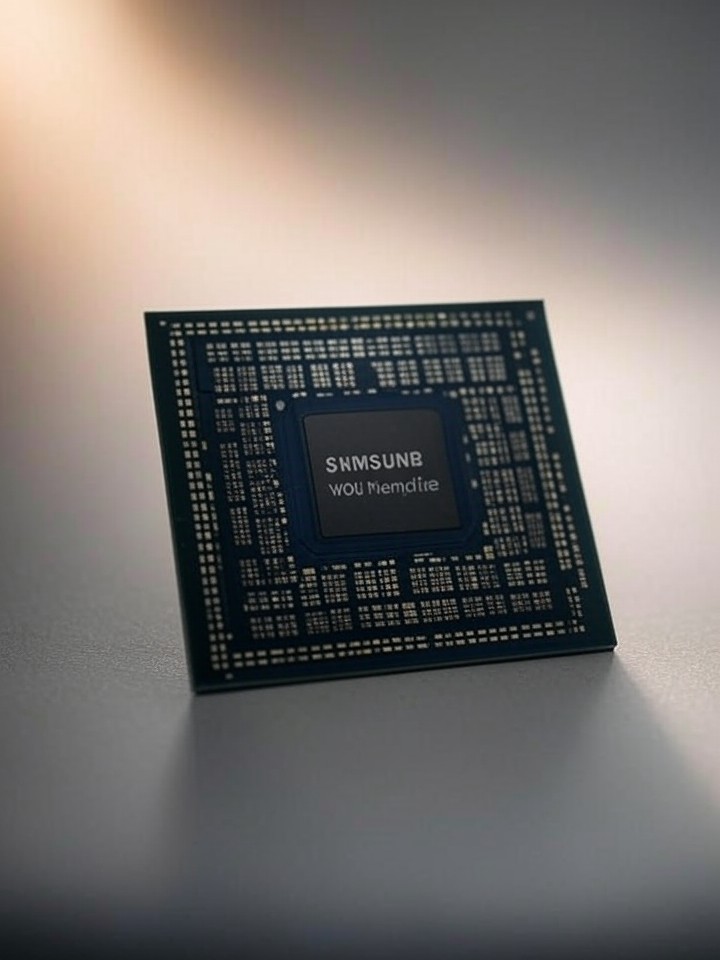
Samsung’s AI-Fueled Ascendancy: How Chip Demand is Propelling the Tech Giant to Unprecedented Heights
Samsung Electronics is poised for a remarkable financial turnaround, with projections indicating record-breaking profits driven by an explosive surge in demand for artificial intelligence chips. Recent forecasts suggest the company’s operating profit could triple compared to the previous year, fueled by a global scramble for memory chips essential to AI applications. This development underscores a broader shift in the semiconductor sector, where AI technologies are reshaping market dynamics and pushing prices upward.
The South Korean conglomerate has benefited immensely from a severe chip shortage, particularly in high-bandwidth memory used in AI servers. As data centers worldwide ramp up to support advanced AI models, Samsung’s position as a leading memory chip producer has become increasingly advantageous. Analysts point to this AI boom as the primary catalyst, with memory prices skyrocketing due to constrained supply and insatiable demand from tech giants.
Beyond memory chips, Samsung’s diversified portfolio in semiconductors, including logic chips and foundry services, is also seeing uplift. The company’s strategic investments in advanced manufacturing processes, such as 2nm technology, are expected to further solidify its competitive edge. This comes at a time when global semiconductor sales are projected to exceed $1 trillion in 2026, highlighting the sector’s robust growth trajectory.
The Ripple Effects of AI Demand on Supply Chains
Industry observers note that the surge in AI-driven demand has led to strains across the supply chain, affecting not just high-end AI components but also everyday consumer electronics like PCs and smartphones. Manufacturers are prioritizing profitable AI server production, which has inadvertently tightened supplies for other markets and driven up costs. This dynamic is evident in recent reports, where experts warn of potential price hikes for computing devices in the coming year.
Samsung’s earnings estimates for the fourth quarter of 2025 paint a vivid picture: an operating profit of approximately 20 trillion won, marking a 208% increase from the prior year. This figure surpasses even optimistic market expectations, as detailed in coverage from Reuters. The projection reflects not only higher chip prices but also improved yields in production, allowing Samsung to capitalize on the market fervor.
Comparisons to historical highs are inevitable. Samsung’s anticipated results eclipse previous records, reminiscent of the memory supercycle in 2018 but amplified by AI’s transformative impact. Posts on X from industry analysts emphasize this, with sentiments indicating that AI is ushering in a structural growth phase for semiconductors, far beyond cyclical rebounds.
Samsung’s success is intertwined with partnerships and orders from major players like Tesla, Qualcomm, and Google, as highlighted in various X discussions. These collaborations are boosting demand for Samsung’s advanced memory solutions, particularly high-bandwidth memory critical for AI computations. The company’s ability to scale production amid global shortages positions it as a key beneficiary of this trend.
Moreover, the broader semiconductor environment is evolving rapidly. Forecasts from sources like Bloomberg suggest that AI servers are supercharging the memory market, leading to profit multiples that were unimaginable a few years ago. Samsung’s quarterly profit is expected to more than triple, reaching new heights, according to Bloomberg.
This boom isn’t isolated to Samsung; competitors like Micron are also projecting significant growth in memory sales, with estimates pointing to a 39.4% year-over-year increase to nearly $295 billion in 2026. Such figures, drawn from X posts by tech influencers, illustrate the accelerating pace of the memory segment within the overall chip industry.
Strategic Investments and Technological Advancements
To sustain this momentum, Samsung has ramped up investments in cutting-edge technologies. The company’s focus on 2nm process nodes and high-bandwidth memory improvements is crucial for meeting the demands of next-generation AI systems. These advancements are not just about capacity but also efficiency, enabling faster data processing essential for AI training and inference.
Analysts from Bank of America, as referenced in X updates, project global semiconductor sales surging 30% year-over-year to over $1 trillion. This optimistic outlook implies massive valuations for chipmakers, underscoring the opportunity in AI-related hardware. Samsung’s role in this ecosystem is pivotal, as it supplies components that power everything from autonomous vehicles to cloud computing.
However, challenges loom. The tools required for chip manufacturing are becoming exorbitantly expensive, potentially exacerbating supply constraints. Warnings from industry experts, echoed in TechRadar, indicate that rising costs for fabrication equipment could lead to higher prices for end-user products, including PCs and smartphones.
Samsung’s foundry business, while not as dominant as TSMC’s, is gaining traction through AI-specific contracts. The company’s ability to integrate AI capabilities into its own devices, like smartphones and appliances, further leverages this demand. This internal synergy allows Samsung to test and refine technologies before scaling them for external clients.
Recent news from CNBC highlights the memory giant’s projected 20 trillion won profit for Q4 2025, a stark improvement from the previous year. This surge is attributed to skyrocketing memory prices amid the AI frenzy, positioning Samsung to achieve its highest-ever quarterly operating profit.
On X, users are buzzing about the sold-out status of 2026 high-bandwidth memory supplies, signaling sustained demand. Chip CEOs overwhelmingly expect revenue growth, with 93% anticipating increases, which bodes well for the sector’s stability.
Market Implications and Competitive Dynamics
The implications for the global economy are profound. As AI permeates industries from healthcare to finance, the demand for specialized chips will likely persist, driving innovation and investment. Samsung’s forecast aligns with broader trends, where AI is seen as the new profit engine for semiconductors, shifting focus from consumer gadgets to data centers.
Competitive pressures are intensifying. Nvidia remains the leader in AI chips, with revenues doubling year-over-year, but supply chain diversification is prompting companies to turn to Samsung for memory needs. Insights from SiliconANGLE detail how Samsung’s record-breaking profit forecast is tied directly to this booming demand.
Furthermore, geopolitical factors, including U.S.-China trade tensions, influence chip supply chains. Samsung’s South Korean base provides a strategic advantage, allowing it to navigate these complexities while expanding production facilities globally.
Samsung’s revenue is also hitting record highs, as reported in SamMobile. The company’s Q4 2025 estimates show profits tripling, with revenue soaring due to AI chip explosions. This performance is expected to continue into 2026, supported by ongoing investments.
X posts from financial analysts describe this as the onset of an unprecedented semiconductor supercycle, with AI at its core. Quotes from industry leaders reinforce that the boom is hardware-driven, emphasizing memory’s role.
In terms of stock performance, Samsung’s shares have reacted positively to these announcements, reflecting investor confidence in the AI narrative. The company’s ability to deliver on these forecasts will be closely watched, as any production hiccups could temper enthusiasm.
Future Trajectories and Industry Shifts
Looking ahead, Samsung is projecting the global chip market to expand significantly, potentially reaching $778 billion by 2028. This growth, driven by AI, represents a $250 billion increase from 2023 levels, as noted in earlier X analyses.
The company’s emphasis on advanced manufacturing, including AI compute and high-bandwidth memory, defines its strategy. This positions Samsung to capture a larger share of the market, especially as demand for AI servers continues to escalate.
Potential risks include overcapacity if demand cools, but current indicators suggest sustained growth. Reports from KED Global confirm Samsung’s all-time high quarterly profit of $14 billion, underscoring the memory boom’s impact.
Industry sentiment on X portrays AI as a structural shift, not a bubble, with global demand reshaping priorities. Semiconductor sales projections for 2026 at $670 billion reinforce this view.
Samsung’s integration of AI into its ecosystem, from chips to consumer products, creates a virtuous cycle. This holistic approach differentiates it from pure-play chipmakers.
As the sector evolves, collaborations will be key. Samsung’s ties with U.S. firms ensure it remains integral to the AI supply chain, mitigating risks from regional disruptions.
Sustaining Momentum in a Dynamic Environment
To maintain its lead, Samsung must continue innovating in areas like energy-efficient chips, crucial for sustainable AI growth. The environmental impact of data centers is gaining attention, pushing for greener technologies.
Economic factors, such as inflation and interest rates, could influence capital expenditures on AI infrastructure. Yet, the underlying demand appears resilient, supported by enterprise adoption of AI tools.
Finally, Samsung’s story is emblematic of how AI is redefining technology sectors. With record profits on the horizon, the company is not just riding the wave but helping to shape it, setting the stage for a new era in semiconductors.


 WebProNews is an iEntry Publication