
Samsung’s Ballie: A Rolling Dream Deferred in the Smart Home Arena
Samsung’s ambitious foray into companion robotics has hit yet another snag, with the company’s Ballie robot facing repeated delays that underscore broader challenges in bringing AI-powered home assistants to market. First unveiled as a prototype in 2020, Ballie was reintroduced with enhanced features in 2024 and promised for a consumer launch in the first half of 2025. Yet, as the year draws to a close, eager consumers are still waiting, and recent updates reveal the reasons behind the holdup. According to insights from industry sources, Samsung is grappling with refining the robot’s technology to meet high expectations for seamless integration and user experience.
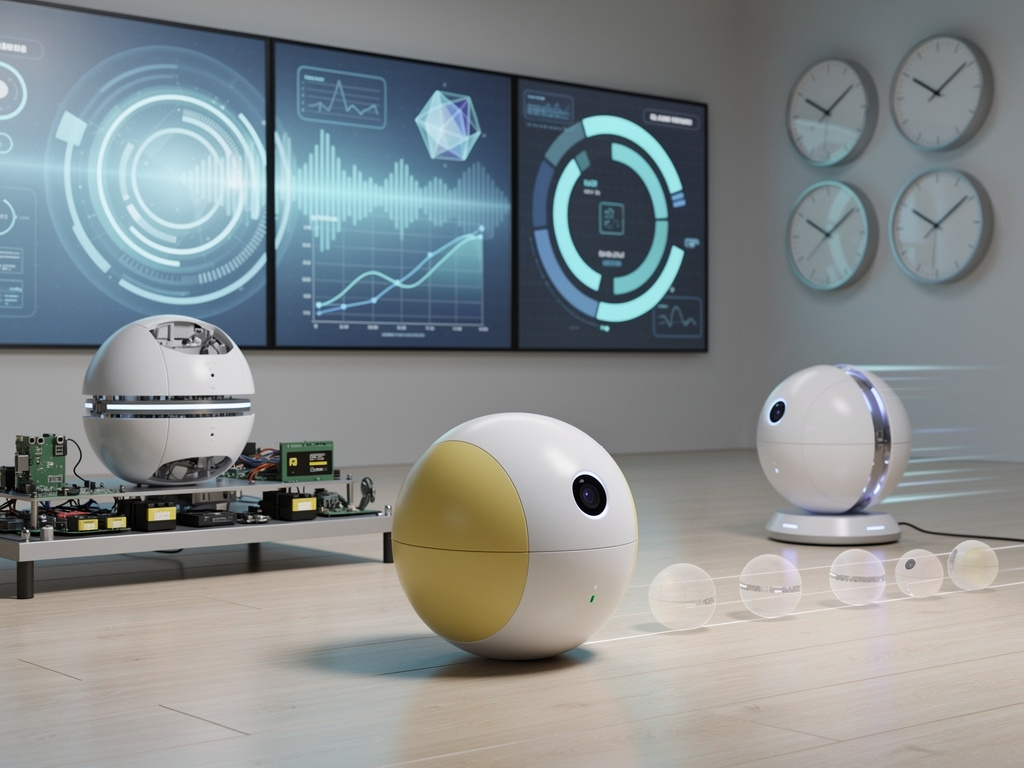
Ballie, a spherical robot roughly the size of a basketball, is designed to roll around homes, acting as a mobile hub for smart devices. It can control lights, thermostats, and appliances, project videos or interfaces onto surfaces, and even interact with pets or monitor home security. The device’s appeal lies in its blend of mobility and AI, powered by Samsung’s ecosystem, including integration with Galaxy smartphones and SmartThings platform. However, the path from concept to shelf has been fraught with obstacles, reflecting the complexities of developing consumer robotics in an era of rapid AI advancement.
The latest delay marks the second significant postponement this year alone. Initially slated for a summer 2025 release in the United States and Korea, Ballie missed that window, prompting speculation about its viability. Samsung has since confirmed that the project is not canceled, but the company is taking additional time to polish the product. This cautious approach highlights the high stakes involved in launching a novel device category amid fierce competition from established players like Amazon’s Astro and emerging startups in the robotics space.
Technical Hurdles and Refinement Efforts
At the heart of the delays are technical challenges, particularly in ensuring Ballie’s AI capabilities are robust and reliable. Sources indicate that Samsung is focusing on enhancing the robot’s navigation systems, battery life, and integration with third-party devices. For instance, early prototypes demonstrated impressive projection features, but scaling these for everyday use has proven tricky, especially in varied home environments with obstacles like furniture or uneven floors.
In a recent statement to TechRadar, Samsung explained that it is “continuing to refine and perfect the technology” before release. This refinement includes bolstering the AI algorithms that allow Ballie to anticipate user needs, such as adjusting room temperatures based on habits or reminding owners of schedules. The emphasis on perfection stems from lessons learned in previous product launches, where rushed releases led to user dissatisfaction and recalls.
Moreover, pricing concerns have emerged as a key factor. Industry analysts note that setting an appropriate price point for Ballie is challenging, given its premium features. Early estimates suggested a cost around $1,000 or more, which could deter mass adoption in a market where smart speakers like Google Nest or Amazon Echo offer similar functionalities at a fraction of the price. Samsung’s delay allows time to assess market feedback and potentially adjust pricing strategies to make Ballie more accessible.
Market Dynamics and Competitive Pressures
The broader environment of smart home technology plays a significant role in Ballie’s protracted development. As consumers increasingly demand interconnected devices, Samsung faces pressure to ensure Ballie not only competes but excels in an ecosystem dominated by voice assistants and stationary hubs. The robot’s unique mobility sets it apart, but integrating it seamlessly with existing standards like Matter protocol requires meticulous engineering.
Recent reports from PCMag highlight that this is the second delay after an initial tease for a first-half 2025 release. The publication notes Samsung’s ongoing commitment, with insiders suggesting that production ramp-ups in facilities like Vietnam are underway, pointing to a potential launch in early 2026. This aligns with Samsung’s history of iterating on innovative concepts, much like its foldable smartphones, which also faced early delays before becoming market leaders.
On social platforms like X, sentiment around Ballie remains mixed but optimistic. Posts from tech enthusiasts express frustration over the delays but also excitement about its potential, with some comparing it to fictional robots from movies like WALL-E. One user highlighted the robot’s AI companionship features, drawing parallels to evolving home automation trends, though these online discussions underscore the impatience building among potential buyers.
Historical Context and Evolution of Ballie
Tracing Ballie’s journey provides context for its current status. Debuting at CES 2020 as a tennis-ball-sized prototype, it captured imaginations with its ability to follow users and manage home tasks. However, the initial version lacked concrete release plans, serving more as a proof-of-concept for Samsung’s AI ambitions. By 2024, a revamped, larger Ballie emerged with advanced AI, including natural language processing and projector capabilities, reigniting interest.
At CES 2025, Samsung doubled down, promising a consumer rollout and even setting up a sign-up page for updates, as reported by TechCrunch. The company’s executives touted Ballie as a “mobile life assistant,” capable of everything from fitness coaching to pet entertainment. Yet, by mid-2025, delays surfaced, attributed to supply chain issues and the need for further software optimization.
Further insights from Phandroid reveal that pricing deliberations are intertwined with these technical refinements. Samsung is reportedly struggling to balance feature richness with affordability, aiming to position Ballie as a premium yet attainable device. This mirrors challenges faced by other tech giants, where ambitious robotics projects often extend timelines to avoid market flops.
Strategic Implications for Samsung’s Ecosystem
For Samsung, Ballie represents more than just a gadget; it’s a cornerstone of its vision for an AI-driven smart home. Integrating with the Galaxy AI suite and SmartThings, Ballie could enhance user retention within the Samsung ecosystem, encouraging purchases of compatible appliances and devices. Delays, however, risk ceding ground to competitors like Google’s rumored home robot or Apple’s potential entries into robotics.
Analysts from The Verge have noted Samsung’s demonstrations at trade shows, where Ballie’s rolling mobility and projection tech continue to impress. Yet, the absence of a firm launch date fuels speculation about internal priorities, possibly shifting resources toward more immediate revenue drivers like smartphones and TVs.
In Vietnam, where Samsung has significant manufacturing operations, recent developments suggest production is gearing up. A report from Digitimes indicates that the Ho Chi Minh City facility is preparing for Ballie assembly, a positive sign amid the delays. This move could streamline costs and accelerate availability once technical kinks are ironed out.
Consumer Expectations and Privacy Concerns
As Ballie inches closer to reality, consumer expectations are high, but so are concerns about privacy and data security. With built-in cameras and microphones, the robot’s always-on nature raises questions about surveillance in the home. Samsung has emphasized privacy features, such as on-device processing for AI tasks, but industry watchers remain vigilant, drawing from past data breaches in smart home devices.
Feedback from X users often touches on these issues, with some expressing wariness about a mobile robot capturing footage throughout the house. Others praise the potential for elderly care or child monitoring, highlighting Ballie’s versatility. This duality reflects the delicate balance Samsung must strike to gain trust.
Looking ahead, partnerships could play a pivotal role. Earlier collaborations with Google, as mentioned in posts on X and confirmed by sources like Bloomberg’s Mark Gurman, suggest integrated features like Google Assistant compatibility, which might broaden Ballie’s appeal.
Industry-Wide Lessons from Ballie’s Journey
Ballie’s delays offer valuable lessons for the tech industry at large, illustrating the gap between prototype hype and consumer-ready products. In the realm of companion robotics, where devices must navigate physical spaces intelligently, the margin for error is slim. Samsung’s iterative approach, while frustrating for fans, may ultimately lead to a more polished product.
Comparisons to other delayed projects, such as Amazon’s Astro, which also faced rollout limitations, underscore common pitfalls like regulatory hurdles and market readiness. According to Archyde, Ballie’s story is emblematic of the opportunities in robotics, where persistence can turn concepts into everyday helpers.
As 2025 wraps up, Samsung’s communication strategy will be crucial. Regular updates, perhaps through dedicated channels, could maintain enthusiasm. Industry insiders speculate that a 2026 launch, possibly announced at CES, could finally bring Ballie to homes, transforming it from a delayed dream into a rolling reality.
The Road Ahead for Robotic Companions
Envisioning Ballie’s future involves considering evolving trends in AI and home automation. With advancements in machine learning, future iterations could include more sophisticated emotional recognition or adaptive learning, making interactions feel more human-like.
Challenges remain, including battery efficiency for prolonged operation and ensuring durability against household hazards. Samsung’s focus on these areas, as per recent confirmations to TechRadar, positions Ballie to potentially lead in a nascent market segment.
Ultimately, the delays might prove beneficial, allowing Samsung to incorporate user feedback and technological breakthroughs. For industry observers, Ballie’s saga is a reminder of the patience required to innovate in consumer tech, where the promise of a helpful rolling companion continues to captivate imaginations.


 WebProNews is an iEntry Publication