
The Quiet Revolution: How Sam Altman and Jony Ive Aim to Eclipse the Smartphone with AI Ingenuity
In the ever-evolving realm of technology, where innovation often arrives with fanfare, a subtle yet profound shift is brewing. OpenAI’s Sam Altman and legendary designer Jony Ive are collaborating on an AI device that could redefine personal computing, potentially ushering in an era beyond the dominance of smartphones. Drawing from recent insights, this project promises a calmer, more intuitive interaction with technology, distancing itself from the constant buzz of notifications and screens that define current devices.
The partnership traces back to a friendship forged in curiosity and shared visions. According to a letter published on OpenAI’s website, Ive’s creative collective LoveFrom began collaborating with Altman and his team about two years ago. What started as tentative explorations blossomed into ambitious designs, leading Ive to found a new company called io with key talents from hardware and software fields. This venture quickly gained momentum, culminating in OpenAI’s acquisition of io, as detailed in reports from MacRumors.
Altman has been vocal about the device’s ethos, describing it as evoking a sense of peace akin to a cabin by a lake—far removed from the frenetic energy of an iPhone. In an interview with Laurene Powell Jobs of the Emerson Collective, Altman and Ive emphasized creating a product that fosters calm, distraction-free computing. This vision aligns with broader trends in AI, where the focus is shifting toward ambient intelligence that anticipates needs without demanding constant attention.
A Prototype Takes Shape Amid Secrecy
Recent developments indicate that prototypes are already in hand. Sources from TechCrunch reveal Altman teasing a launch within two years, with the device aimed at simplicity and playfulness. The design, under Ive’s influence, is said to be compact, possibly wearable, and audio-first, reducing reliance on visual interfaces.
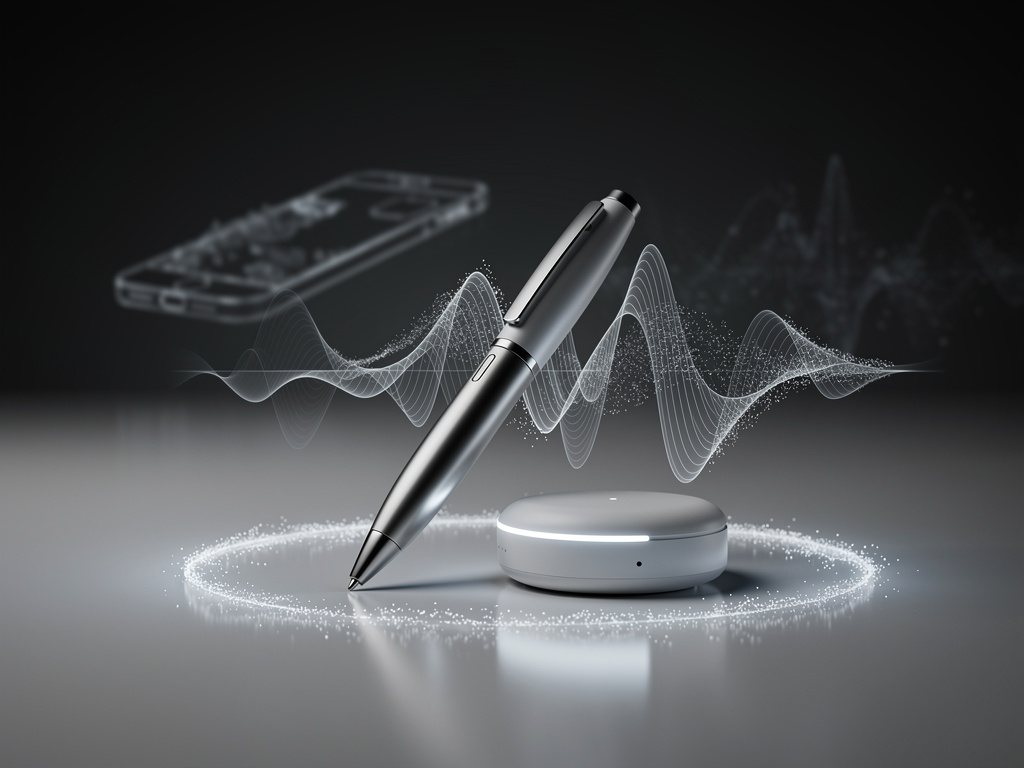
Speculation on the form factor has been rife. Leaks suggest it might resemble a smart pen, integrating real-time transcription, content generation, and audio recording to blend traditional handwriting with AI capabilities. WebProNews reports on the “Gumdrop” project, positioning it as a tool to enhance productivity while minimizing screen time. This audio-centric approach is further supported by OpenAI’s efforts to refine voice models, making interactions feel natural and interruptible.
Manufacturing details add another layer to the narrative. OpenAI has reportedly shifted production to Foxconn, moving away from previous Chinese suppliers like Luxshare, as noted in iClarified. This decision underscores a strategic pivot toward reliable, high-volume production, essential for a consumer device aiming for broad adoption.
From iPhone Legacy to AI Ambitions
Jony Ive’s track record at Apple, where he shaped iconic products like the iPhone and iPad, lends credibility to this endeavor. His departure from Apple and subsequent ventures signal a desire to innovate outside corporate constraints. Partnering with Altman, whose OpenAI has revolutionized AI through tools like ChatGPT, creates a powerhouse duo poised to challenge established norms.
The device is envisioned as more than a gadget; it’s a reimagination of computing in an AI-driven world. Altman has articulated that traditional computers were built for a pre-AI era, and this new product will act as a trusted proxy, understanding user context and making decisions aligned with personal judgment. Posts on X highlight public excitement, with users speculating on its potential to become the “iPhone moment” for AI, blending hardware elegance with advanced intelligence.
Comparisons to existing wearables like the Humane AI Pin or Rabbit R1 are inevitable, but Ive and Altman’s project differentiates itself through its emphasis on unobtrusiveness. Early prototypes, as described in The Verge, are slightly larger than the AI Pin, potentially wearable around the neck, with cameras for environmental awareness.
Navigating Challenges in a Competitive Arena
The road to launch is not without hurdles. OpenAI’s focus on overhauling voice technologies addresses past shortcomings in speed and accuracy, crucial for an audio-first device. Reports from MacDailyNews indicate intensified efforts in consolidating teams to advance these capabilities, ensuring conversations feel seamless and human-like.
Funding and scaling present additional complexities. The project has attracted significant investment, with plans to raise up to $1 billion, as mentioned in various X discussions echoing initial announcements. This financial backing is vital for research, development, and eventual mass production, especially as the device aims to integrate deeply with users’ lives, raising privacy and ethical considerations.
Critics, however, question whether this device can truly supplant smartphones. While it promises to reduce screen addiction, its success hinges on delivering tangible benefits that outweigh the convenience of established ecosystems like iOS and Android. Insights from The New Yorker explore the broader implications, suggesting this partnership could force AI into daily routines, for better or worse.
Industry Ripples and Future Visions
The potential impact on the tech sector is immense. If successful, this device could disrupt the smartphone market, dominated by giants like Apple and Samsung. By positioning itself as a “third core device” alongside laptops and phones, it challenges the status quo, as speculated in Wall Street Journal-inspired analyses shared on X. Enthusiasts on the platform describe it as a bid to control post-smartphone interfaces, potentially reshaping identity, payments, and assistant integrations.
Manufacturing shifts, such as the move to Foxconn reported in The Times of India, reflect geopolitical considerations, prioritizing supply chain security amid global tensions. This aligns with OpenAI’s broader strategy to build robust hardware capabilities, complementing its software prowess.
Looking ahead, the device’s audio-first nature could pave the way for new interaction paradigms. Imagine a world where AI companions handle tasks ambiently, from scheduling to information retrieval, without the need for constant screen engagement. X posts from tech influencers underscore this optimism, with some predicting it as the dawn of ambient proxies that act on our behalf.
Echoes of Innovation and Public Sentiment
Public sentiment, gauged from X, reveals a mix of hype and skepticism. Users draw parallels to past tech revolutions, with one post noting the device’s potential to rest on desks like a MacBook or iPhone, fully aware of surroundings. This awareness, enabled by cameras and sensors, promises contextual intelligence that anticipates needs, but it also invites scrutiny over data privacy.
Altman’s refusal to divulge specifics in interviews, such as one covered by CNBC, maintains an air of mystery, fueling speculation. Leaks suggesting a pen form factor, as in Mashable India, add intrigue, positioning it as a bridge between analog and digital worlds.
The collaboration’s roots in optimism and human-centered design resonate deeply. Ive’s philosophy of creating tools that inspire and delight echoes in descriptions of prototypes that “make everyone smile,” as per OpenAI’s own announcements. This human touch could be the key differentiator in a market saturated with utilitarian gadgets.
Toward a Calmer Technological Horizon
As 2026 approaches, the tech world watches closely. The device’s launch timeline, potentially extending to 2027 for variants like the Gumdrop pen, suggests a phased rollout to refine features. Integration with OpenAI’s ecosystem, including advanced models, will be crucial for delivering on promises of intelligent, proactive assistance.
Broader implications extend to productivity and well-being. By emphasizing calm over chaos, the device addresses growing concerns about digital overload. X discussions highlight its potential to make phones optional, with offline AI capabilities ensuring reliability even without constant connectivity.
Ultimately, this project embodies a bold bet on AI’s role in reshaping daily life. Whether it succeeds in dethroning the smartphone remains to be seen, but the alliance of Altman and Ive signals a commitment to pushing boundaries. Their vision of a peaceful, intuitive computing experience could very well set the tone for the next decade of innovation, inviting users to embrace a more harmonious relationship with technology.


 WebProNews is an iEntry Publication