
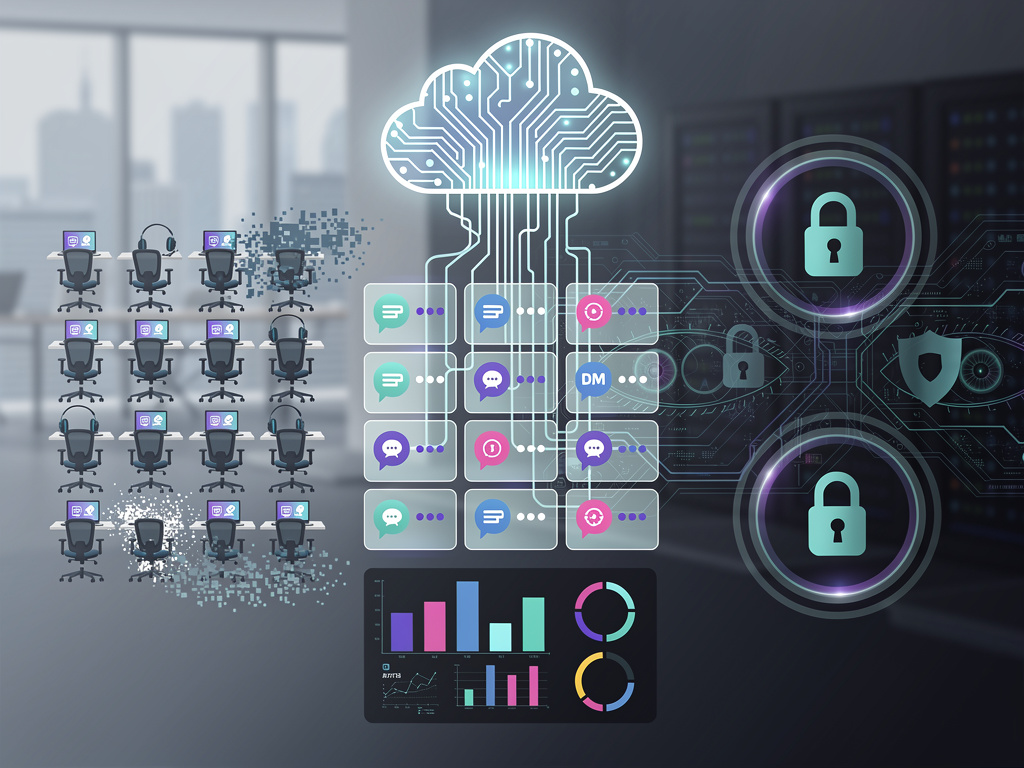
Marc Benioff knows what his employees are upset about. He asks Slackbot.
The Salesforce chief executive made the admission casually on a recent “All-In” podcast. His tone suggested this capability represented standard operational practice, not some experimental feature. “Because you run your company on Slack, all your DMs, all your channels, we’re reading that now through the AI and we can tell you more about your business than you know,” Benioff said, according to Business Insider.
Short. Direct. And loaded with implications.
He continued. “So, when I’m on Slackbot, I can ask it any question about my company. What are my top five deals? What are my employees upset about? What are the top three things I need to focus on? And then boom, I get the information because it has the data.”
The comments arrived at a moment when Salesforce has aggressively pushed AI across its portfolio. The company acquired Slack in 2021. It has since transformed the messaging platform from a chat tool into something closer to an always-on intelligence layer. Updates rolled out in January 2026 gave Slackbot agentic abilities. Drafting emails. Scheduling meetings. Searching inboxes. A March announcement added 30 more features, including reusable AI skills that pull data from channels and connected systems to create budgets or coordinate teams, TechCrunch reported.
But Benioff’s podcast remarks spotlight a particular angle. Sentiment analysis at scale. The AI doesn’t simply summarize threads. It surfaces frustration. It flags operational gaps. It tells the CEO what his people won’t say to his face.
Workforce Rebalancing Meets Always-On Monitoring
This capability doesn’t exist in isolation. Salesforce has already replaced roughly 4,000 customer-support roles with AI agents. The headcount in that division dropped from about 9,000 to 5,000. Executives described the move as rebalancing rather than layoffs. Many affected workers shifted to sales, engineering or other areas. The company reported record overall employment above 83,000 at one point. Still, nearly 1,000 positions were cut in early 2026 across marketing, product, analytics and even some AI teams, according to coverage from Salesforce Ben.
Benioff has pushed back against narratives that blame AI for white-collar job losses. “I just do not see it,” he said in a March CNBC interview. He called such pronouncements overstated. Yet his own company’s actions show AI handling routine tasks while human roles migrate toward higher-judgment work. The same infrastructure that replaces support agents can now scan internal chatter for signs of discontent.
And. The data sits right there. Every DM. Every channel. Employers own the workspace content. Slack’s own policies make that explicit. Employees have little technical or legal expectation of privacy on corporate accounts. The Business Insider article notes similar trends at Microsoft, Google and startups like Glean. Copilot in Teams. Gemini in Workspace. Tools that summarize meetings, extract action items and answer questions drawn from company data.
Privacy protections exist in the design, Slack EVP and GM Rob Seaman said during the March event. Users can adjust permissions. The architecture includes guardrails. Yet the direction feels unmistakable. Conversation becomes queryable. Emotion becomes data.
Executives gain visibility they never had before. They also inherit new risks. What happens when the AI misreads tone? When it flags legitimate complaints as noise? When employees learn their offhand remarks feed the CEO’s dashboard?
Workers already adapt their language on company platforms. They self-censor. They move sensitive topics to personal apps. Benioff’s demonstration may accelerate that shift. Why complain in a channel the AI monitors when you can text a colleague instead?
But the genie is out. Competitors watch closely. Microsoft integrates Copilot across productivity apps. Google does the same with Gemini. Enterprise search vendors train models on internal wikis, emails and chats. The ability to query “what are my employees upset about” moves from novelty to baseline expectation.
Salesforce positions Slack as the interface for work. Not just communication. Coordination. Automation. Insight. Slackbot now operates outside the app. It monitors desktop activity. It draws on calendars, deal data, conversation history. It suggests next steps. It drafts follow-ups. The line between assistant and observer blurs.
Benioff described the five years since the Slack acquisition as delivering two-and-a-half times revenue growth. Roughly a million businesses now run on the platform. The growth story continues. So does the expansion of AI capabilities.
Recent coverage shows the tension. Articles from April and May 2026 highlight how companies use workplace data to train agents. Others document employee backlash when executives make controversial remarks. In one case, Salesforce staff voiced frustration on Slack itself after Benioff’s comments at an internal event. The very channel the AI now analyzes.
So the system feeds on itself. Employees express concerns in the tool. The AI detects those concerns. The CEO receives a tidy list. Action follows. Or doesn’t. Trust either deepens or erodes. The data doesn’t specify which.
Industry leaders face a choice. Deploy these tools for genuine productivity gains. Or risk creating environments where people speak in code, knowing every word feeds the model. Benioff sounds enthusiastic. Many employees may feel differently. The technology doesn’t care. It simply reads what they write.
The real test lies ahead. As more companies connect AI agents to their communication platforms, the volume of analyzable data explodes. Sentiment models improve. Predictions sharpen. Interventions happen faster. Whether that leads to healthier organizations or more sophisticated surveillance remains an open question.
Benioff gets his answers in real time. The rest of the market will soon gain the same power. How they use it will shape workplace culture for years to come.


 WebProNews is an iEntry Publication