
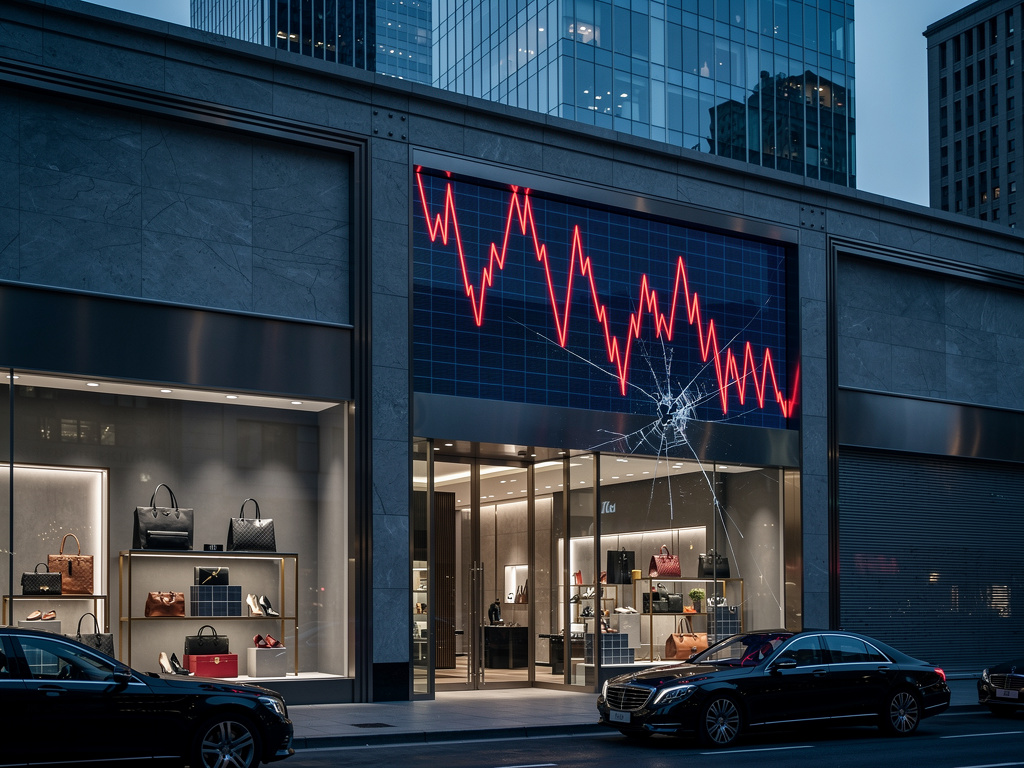
The Gilded Facade Crumbles: Saks Global’s High-Stakes Gamble and the Looming Shadow of Insolvency
In the opulent world of luxury retail, where designer labels and exclusive experiences define success, Saks Global finds itself teetering on the brink of financial ruin. Formed just over a year ago through the ambitious merger of Saks Fifth Avenue, Neiman Marcus, and Bergdorf Goodman, the company now grapples with a staggering debt load that threatens its very existence. Recent reports indicate that Saks Global missed a critical $100 million interest payment due at the end of 2025, sparking widespread speculation about an imminent Chapter 11 filing. This development comes amid a broader downturn in the high-end retail sector, where shifting consumer behaviors and economic pressures have exposed vulnerabilities in even the most storied brands.
The crisis traces back to the 2024 acquisition that created Saks Global. Hudson’s Bay Co., the parent entity, acquired Neiman Marcus in a deal valued at $2.65 billion, aiming to consolidate power in the luxury market. However, this move saddled the new entity with substantial debt, including bonds and loans tied to the acquisition. According to sources familiar with the matter, the company has been struggling to generate sufficient cash flow to service this debt, exacerbated by declining sales in physical stores and fierce competition from online giants. Industry analysts point to a perfect storm of factors: inflation-weary consumers cutting back on discretionary spending, the rise of direct-to-consumer luxury brands, and the lingering effects of supply chain disruptions.
As the payment deadline approached in late December 2025, whispers of restructuring grew louder. Saks Global reportedly hired advisors to explore options, including bankruptcy as a last resort. This isn’t the first time the retailer has faced financial headwinds; earlier restructurings in 2025 attempted to refinance portions of the $2.2 billion debt, but those efforts appear to have fallen short. The missed payment, detailed in a report by The Wall Street Journal, has sent shockwaves through the bond market, with second-out notes plummeting to just 7.5 cents on the dollar.
The Debt Domino Effect and Leadership Shakeup
The immediate fallout from the missed payment has been swift and severe. Bondholders, already jittery from prior downgrades, are bracing for potential losses. Saks Global’s senior debt has traded as low as 54 cents on the dollar, reflecting deep investor skepticism about the company’s recovery prospects. This distress is compounded by the retailer’s operational challenges, including excess inventory and sluggish foot traffic in flagship locations like New York and San Francisco. Posts on X, formerly Twitter, from financial observers highlight the rapid deterioration, with one user noting the irony of a debt restructuring in August 2025 that lasted mere months before crisis struck again.
Compounding the financial turmoil is a significant leadership change. Marc Metrick, the CEO who oversaw the merger and initial integration efforts, stepped down abruptly on January 2, 2026. Richard Baker, the executive chairman and architect of the acquisition, has assumed the CEO role, signaling a hands-on approach to navigate the crisis. This move, reported by The New York Times, comes at a pivotal moment as the company prepares for what could be a contentious bankruptcy process. Baker’s track record includes turning around Hudson’s Bay, but critics argue that his aggressive expansion strategy may have overleveraged the firm.
Metrick’s departure after nearly three decades with the company underscores the depth of the internal strife. Insiders suggest that disagreements over cost-cutting measures and digital transformation strategies contributed to the exit. Meanwhile, the luxury retail sector watches closely, as Saks Global’s fate could influence mergers and debt strategies across the industry. A report from Reuters cites sources indicating that bankruptcy preparations are underway, potentially filing in the coming weeks to reorganize under court protection.
Roots of the Retail Reckoning
To understand Saks Global’s predicament, one must delve into the broader shifts reshaping high-end shopping. The merger was touted as a defensive play against e-commerce behemoths like Amazon and Farfetch, which have eroded traditional department stores’ market share. Yet, the integration of Saks, Neiman Marcus, and Bergdorf Goodman has been fraught with challenges, from overlapping inventories to cultural clashes between the brands. Sales data from the past year show a 5.8% decline in growth, aligning with industry-wide trends where mall foot traffic dropped 2.3% year-over-year, even during peak seasons like Black Friday.
Economic headwinds have not helped. With inflation persisting into 2026, affluent consumers are increasingly selective, favoring experiences over material goods or opting for more affordable luxury alternatives. X posts from retail analysts, such as those predicting widespread chain store bankruptcies through March 2026, reflect a sentiment of impending doom for brick-and-mortar models. One astrologically inclined user even forecasted huge losses for retail chains starting in April 2025, though such claims remain speculative. More concretely, brands like Estée Lauder have placed credit holds on Saks in the past, as noted in older social media buzz, highlighting chronic payment issues.
The debt structure itself is a ticking time bomb. The $100 million-plus interest payment was tied directly to the Neiman Marcus acquisition financing. Missing it triggers default clauses, potentially accelerating other obligations. Bloomberg News reported in late 2025 that bankruptcy was being considered as a last resort, a notion echoed in Reuters coverage. This scenario would allow Saks Global to shed unprofitable leases and renegotiate supplier contracts, but at the cost of diluting equity and alienating stakeholders.
Strategic Missteps and Market Pressures
Critics argue that Saks Global’s woes stem from strategic errors post-merger. The company invested heavily in experiential retail, such as appointment-only shopping in San Francisco, but these initiatives failed to offset declining in-store sales. A 2024 post on X from The Gateway Pundit highlighted Saks’ layoffs and shift to appointment-based models, signaling early distress. Furthermore, the luxury sector’s reliance on international tourism has suffered from geopolitical tensions and a strong dollar, reducing visits from high-spending overseas customers.
Competition has intensified, with players like LVMH and Kering expanding their direct retail presence, bypassing department stores altogether. Saks Global’s online platform, while improved, lags behind pure-play digital natives in personalization and speed. Financial tweets, including those from junk bond investors, track the plummeting value of Saks’ securities, with one noting a drop from 36 cents to 7.5 cents in weeks. This volatility underscores the market’s lack of confidence in a turnaround without radical intervention.
As preparations for bankruptcy loom, the company has denied immediate plans in some statements, but actions speak louder. The hiring of restructuring advisors and the CEO transition suggest a Chapter 11 filing is more than hypothetical. Coverage from Fox Business in late December 2025 detailed the weighing of bankruptcy amid the looming debt payment, painting a picture of a retailer fighting for survival.
Implications for Suppliers and Employees
The ripple effects of Saks Global’s crisis extend far beyond its boardrooms. Suppliers, already wary from past invoice delays, face uncertainty. Luxury brands that rely on Saks’ distribution channels may see disrupted partnerships, forcing them to pivot to independent boutiques or online sales. Employees, numbering in the thousands across the U.S., brace for potential store closures and job cuts, reminiscent of previous retail bankruptcies like Barneys New York.
In the financial markets, bondholders and equity investors are positioning for a restructuring. The company’s assets, including prime real estate in Manhattan and Dallas, could be key in any bankruptcy auction. However, separating the valuable Bergdorf Goodman brand from the debt-laden whole poses legal complexities. A CNBC report from January 1, 2026, noted the missed payment and bankruptcy preparations, as covered in CNBC.
Consumer sentiment, gauged from X discussions, reveals frustration with the declining relevance of store-based retail. Posts emphasize how AI-driven online discovery and shifting shopping habits are pressuring traditional models, with Saks’ missed payment seen as a symptom of deeper malaise.
Path Forward Amid Uncertainty
Looking ahead, Richard Baker’s leadership will be tested as he steers Saks Global through turbulent waters. Potential strategies include aggressive cost reductions, such as closing underperforming stores labeled as such in critical X analyses, and bolstering e-commerce. Yet, private equity’s role in extracting value—often at the expense of long-term health—draws scrutiny, with social media threads decrying how such firms walk away enriched while brands falter.
The luxury retail arena, once a bastion of stability, now faces existential questions. Saks Global’s saga could herald consolidations or innovative hybrids blending physical and digital experiences. As reported in The Guardian, the CEO change follows the debt miss, encapsulating the high drama.
Ultimately, whether Saks Global emerges restructured or diminished, its crisis illuminates the fragility of debt-fueled growth in a rapidly evolving market. Industry insiders will watch closely, as the outcome may redefine strategies for surviving in an era where luxury’s allure must contend with economic realities. For now, the company stands at a crossroads, with bankruptcy’s shadow casting doubt on its glittering legacy.


 WebProNews is an iEntry Publication