
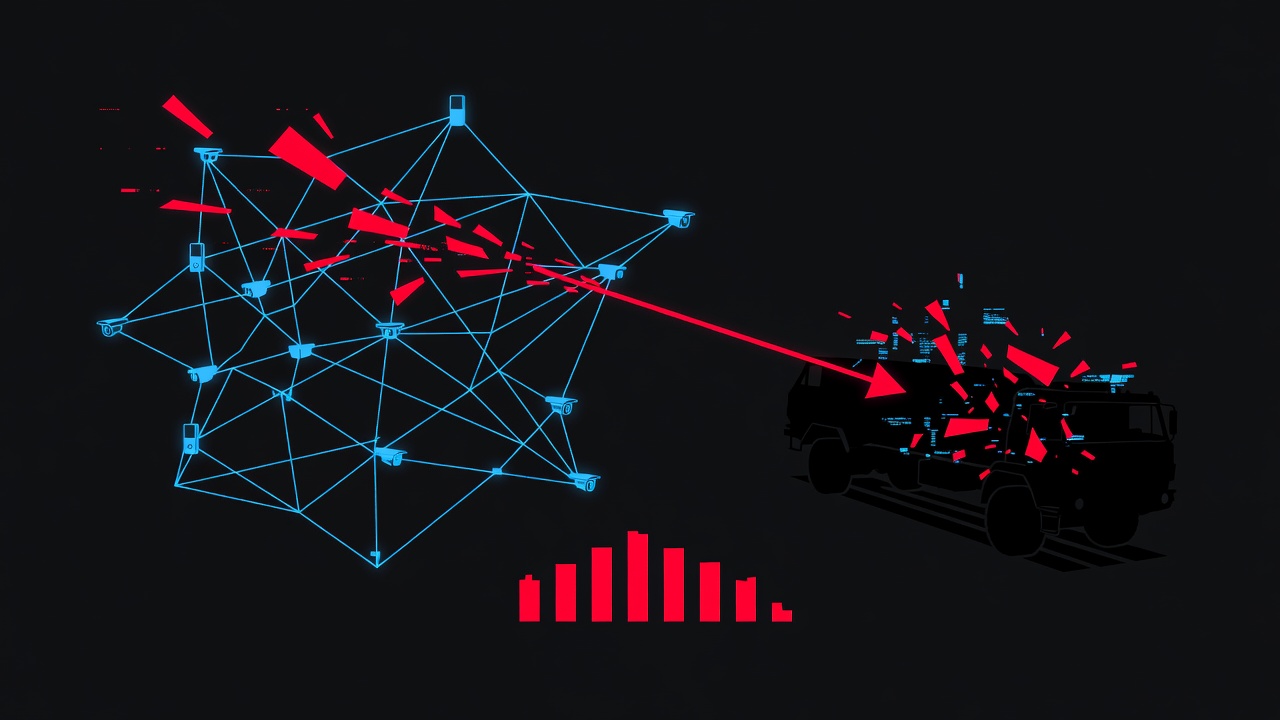
Russian intelligence operatives have spent months quietly slipping into home security cameras and video doorbells positioned along key NATO transport corridors. The goal? Track weapons shipments headed to Ukraine without deploying expensive drones or risking satellites that Western defenses might detect. Dutch authorities exposed the effort this week. The revelation underscores a stubborn truth about modern espionage. Consumer gadgets deployed for convenience have become prized intelligence assets.
The operation relied on nothing especially sophisticated. Hackers scanned for internet-connected cameras using widely available mobile apps. They then tested devices for basic security lapses. Many cameras still ran with factory-set passwords. Firmware had not been updated in years. Default configurations left video streams exposed to anyone who knew where to look. “When the IP camera is identified, the malicious party can attempt to access the IP camera via the internet,” Dutch agencies explained in their advisory. “This is often relatively easy, because many IP cameras connected to the internet are insufficiently secure.”
The Telegraph first reported the campaign, citing a joint assessment by the Netherlands’ AIVD domestic security service and MIVD military intelligence agency. Kremlin-linked actors focused their attention on routes in the Netherlands and near Ukrainian territory. Cameras pointed at roads, rail lines and military facilities captured truck movements, equipment markings and troop patterns. Such ground-level footage provides context aerial surveillance often misses. Shadows. License plates. Timing between convoys. Details that help Moscow anticipate arrivals and adjust battlefield tactics.
But this is no isolated incident. Similar Russian campaigns date back years. A May 2025 advisory from UK and allied intelligence accused GRU Unit 26165 of targeting cameras near European border crossings and rail stations to disrupt aid flows into Ukraine. That effort also hit municipal traffic cams and private systems. More than 10,000 devices were reportedly compromised at one point. The pattern holds. Cheap, ubiquitous hardware offers persistent access. Owners rarely notice when someone distant tunes in.
Earlier research from security firm Check Point documented how Russia, Iran, Israel and Ukraine have all turned to consumer cameras during the current conflict. In one documented case from January 2024, Russian forces exploited two cameras inside Kyiv to scout infrastructure and air defenses before strikes. Ukrainian officials responded by taking 10,000 internet-facing cameras offline. The tactic works both ways. Yet the latest Dutch findings show Russian actors continue to favor it because the cost remains low and detection stays difficult.
Organizations along the affected routes received direct warnings. “Organisations with IP cameras on these routes have now been warned so that they could take action,” the AIVD and MIVD stated. The message carried urgency. Many small and midsize businesses operate these systems without dedicated cybersecurity teams. A doorbell installed to watch a warehouse loading dock doubles as an open window for foreign spies. The same holds for logistics firms near ports or rail hubs. Convenience has outpaced caution.
Security analysts have long warned about the internet of things. Billions of devices ship with minimal protections. Manufacturers prioritize ease of setup over hardened defaults. Users seldom change passwords or enable two-factor controls. Firmware updates require technical know-how many homeowners lack. The result is a sprawling attack surface that state actors now treat as public infrastructure. Russian operators simply scan, test and watch. No malware. No zero-days. Just poor housekeeping on a global scale.
The implications stretch beyond Ukraine support lines. NATO bases across Europe sit near civilian neighborhoods. Supply depots share roads with residential traffic. A compromised camera on a private home could reveal convoy schedules for days or weeks before movement occurs. That information feeds targeting decisions, propaganda efforts or sabotage planning. And because the devices belong to private citizens or companies, attribution proves tricky. Traffic appears to come from legitimate IP addresses. Owners remain unaware their footage streams to Moscow.
Recent coverage reinforces the breadth of concern. A CyPro analysis published hours after the initial disclosure stressed risks for UK businesses operating near critical sites. The firm noted that attackers remain undetected precisely because “most camera owners are unaware their devices are broadcasting to the internet.” It urged immediate steps: replace default credentials, patch firmware, limit remote access and review access logs regularly. Small firms without IT staff face the highest exposure. Yet even larger logistics operators have been caught flat-footed.
So what makes doorbell cameras such an attractive target? They point outward. They run continuously. Mobile apps let owners check feeds from anywhere, which means those same feeds are reachable from anywhere else with the right credentials. Apps that locate devices on local networks or public IP ranges have existed for years. Shodan and similar search engines catalog exposed cameras by the thousands. Russian services appear to have systematized the process, focusing on geography rather than specific makes or models.
Industry observers note this shift represents an evolution in espionage tradecraft. Satellite passes are predictable. Drone flights risk electronic warfare countermeasures. Hacked civilian cameras operate 24 hours a day with no additional budget line. They blend into the background noise of everyday digital life. Ground perspectives add texture that overhead imagery lacks. A truck’s cargo marking visible at eye level tells a story radar cannot. The practice has become cheaper than traditional methods. It also creates operational surprise because victims rarely suspect their front-door camera now serves a foreign power.
Western governments have issued repeated alerts on internet-connected devices. The U.S. and allies warned about Russian router compromises earlier in 2026. Those campaigns also targeted small office and home networks to reroute traffic or monitor activity. The camera effort fits the same mold. Persistent, low-signature collection against logistics and defense-adjacent targets. NATO members have responded with joint advisories and direct notifications. But the scale of vulnerable hardware suggests warnings alone fall short.
Experts recommend treating every IP camera as a potential intelligence leak. Disable remote viewing unless essential. Segment devices onto isolated networks. Enable automatic updates where possible. Audit logs for connections from unfamiliar locations. For organizations supporting military movements, the bar must sit higher. A single exposed feed can compromise an entire resupply schedule. The Dutch services made that point explicit when they contacted affected parties. Action followed discovery. Yet the broader problem persists across Europe and beyond.
Russia’s interest in these systems aligns with its battlefield priorities. Moscow seeks to slow or interdict Western weapons before they reach Ukrainian forces. Real-time visibility into truck movements provides exactly that edge. Camera feeds can confirm vehicle types, count shipments and reveal staging areas. The data feeds analytical models that predict future deliveries. None of it requires physical presence on NATO soil. The spies operate from keyboards, often routed through proxies that complicate tracing.
Comments on technology forums following the disclosure highlighted a common reaction. Many users expressed surprise that such basic flaws remain widespread years into widespread IoT adoption. Others pointed out that compromising a device with a default password hardly qualifies as advanced hacking. One noted that motivated individuals could replicate the technique in an afternoon. The observation carries weight. State actors do not need custom tools when commodity weaknesses suffice. The barrier to entry has dropped so low that espionage now overlaps with common cybercrime tactics.
Still, the strategic value remains high. Aggregated feeds from dozens of cameras along a route create a persistent surveillance mesh. Individual owners lose privacy. Militaries lose operational security. The asymmetry favors the attacker. Defenders must secure thousands of disparate systems. The attacker needs only to find the weakest ones in the right locations. Dutch intelligence has now forced some of those weaknesses into the open. Whether owners and organizations respond with meaningful upgrades will determine if the campaign loses momentum or simply shifts to the next batch of unsecured devices.
The episode serves as a stark reminder. In conflicts that span physical battlefields and digital domains, the devices people install for peace of mind can become instruments of war. Doorbells. Security lights. Traffic monitors. All feed the same insatiable appetite for information. Russia has demonstrated again how readily that information can be taken. The question now is how quickly the rest of the alliance adapts before the next route falls under silent watch.


 WebProNews is an iEntry Publication