
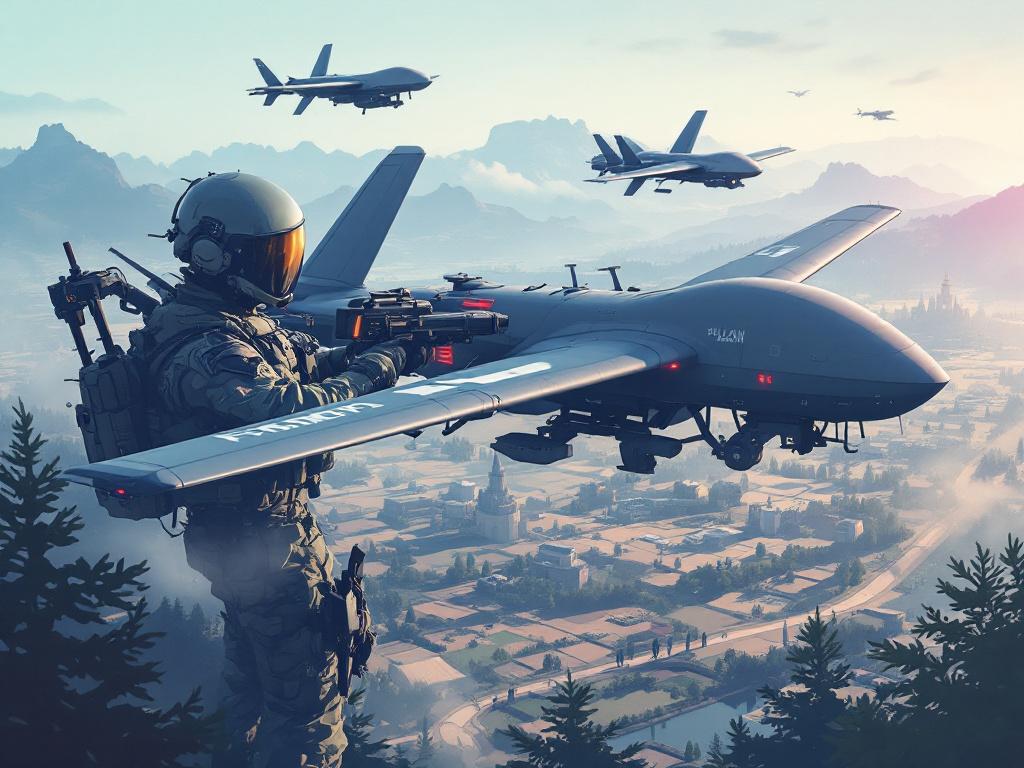
Shadow Circuits: Russia’s Persistent Use of Illicit Starlink in Drone Warfare
In the fog-shrouded battlefields of eastern Ukraine, a technological cat-and-mouse game unfolds, pitting Western innovation against Russian ingenuity. Recent imagery and reports reveal that Russian forces continue to integrate black market Starlink terminals into their drone operations, circumventing international efforts to restrict access. This development underscores the challenges of controlling dual-use technologies in modern conflicts, where satellite communications have become as crucial as ammunition. Despite SpaceX’s repeated attempts to block unauthorized use, Russian drones equipped with these compact terminals maintain extended ranges and real-time data links, enhancing their lethality.
The story traces back to early 2024, when reports first surfaced of Russian troops acquiring Starlink devices through shadowy supply chains. These terminals, originally designed for civilian broadband, offer high-speed, low-latency connections via SpaceX’s constellation of low-Earth orbit satellites. For militaries, this translates to seamless coordination of unmanned aerial vehicles (UAVs), enabling strikes far beyond traditional radio limits. A recent analysis from Behind The Black highlights imagery of a Russian Molniya-type drone fitted with a mini-Starlink terminal, suggesting improvised adaptations that extend operational reach.
Efforts to curb this misuse have been ongoing. SpaceX, under Elon Musk’s direction, has collaborated with U.S. authorities to geofence and deactivate terminals in restricted areas. Yet, black market networks persist, funneling devices through intermediaries in regions like the Middle East and Africa. This illicit trade not only bolsters Russia’s capabilities but also raises questions about the enforceability of export controls on cutting-edge tech.
The Black Market Pipeline Fueling Frontline Tech
Investigations into the supply chain reveal a web of smugglers and resellers exploiting global demand. According to a report in Business Insider, terminals are routed through countries like Sudan, where enforcement is lax, before reaching Russian hands. Prices on these underground markets can soar to five times the retail value, reflecting the premium placed on reliable connectivity in war zones. Ukrainian intelligence has intercepted shipments, but the volume suggests a thriving ecosystem.
Posts on X, formerly Twitter, from military analysts and news outlets amplify these findings. Users have shared accounts of Russian units boasting improved drone coordination, attributing gains to Starlink’s bandwidth. One such post from a Ukrainian military specialist detailed a downed Russian reconnaissance drone equipped with a Starlink setup, complete with local modifications for onboard systems. These anecdotes, while not definitive, paint a picture of adaptive engineering under sanctions.
The Pentagon has stepped in, partnering with SpaceX to enhance detection and shutdown protocols. A piece from United24media notes that despite these crackdowns, Russian forces persist in equipping drones like the Molniya with terminals, raising alarms over unauthorized long-range operations. This resilience highlights gaps in international sanctions, where technology’s borderless nature outpaces regulatory frameworks.
Technological Adaptations and Tactical Advantages
Delving deeper, Russian engineers appear to be modifying Starlink hardware for military specs. Reports indicate integrations with drone autopilots and cameras, allowing real-time video feeds and autonomous navigation. This setup mirrors Ukraine’s own use of Starlink, which has been pivotal since 2022, as documented in a Wikipedia entry on the satellite’s role in the conflict. Ukrainian forces camouflage their terminals to evade detection, a tactic now echoed by Russian counterparts.
The strategic edge is evident in operations near Donetsk, where Starlink-enabled drones conduct surveillance and strikes with precision. A Reuters investigation from earlier this year, accessible via Reuters, recounted instances where Musk personally intervened to disable services during Ukrainian advances, illustrating the tech’s double-edged sword. Yet, Russia’s black market acquisitions bypass such controls, potentially shifting battlefield dynamics.
Industry insiders point to the mini-terminal’s portability as a key factor. Weighing under a kilogram, these devices fit seamlessly onto UAV frames without compromising flight performance. Combined with Russia’s domestic drone production, this creates hybrid systems that challenge Western dominance in electronic warfare.
Geopolitical Ripples and Enforcement Challenges
The implications extend beyond Ukraine. U.S. officials worry about proliferation to other adversaries, such as Iran or North Korea, who might replicate these tactics. A separate Reuters article, found at Reuters, discussed threats to withhold Starlink from Ukraine over unrelated mineral disputes, underscoring the service’s leverage in diplomacy. Such maneuvers highlight how private companies like SpaceX wield influence in global security.
On X, discussions among defense experts speculate on future countermeasures, including advanced jamming or satellite hardening. Posts reference Russia’s development of its own constellations, like a proposed Starlink rival mentioned in a news snippet from Pravda EN, aiming to reduce dependency on Western tech. These insights suggest a race toward self-sufficiency in space-based communications.
Enforcement remains a thorny issue. The U.S. Department of Defense has allocated resources to monitor illicit terminals, but black market ingenuity persists. Sources indicate that resellers use VPNs and spoofed locations to activate devices, evading geofencing. This cat-and-mouse dynamic demands constant innovation from SpaceX’s engineers.
Innovations in Drone Warfare and Countermeasures
Examining specific drone models, the Molniya stands out for its reconnaissance prowess. Equipped with Starlink, it can relay high-definition imagery over hundreds of kilometers, facilitating artillery barrages or troop movements. A detailed account in Defence Blog describes a captured unit with integrated satellite tech, revealing Russian adaptations like custom power supplies to sustain operations in harsh environments.
Ukrainian responses include electronic warfare units tasked with disrupting these links. Reports from the front lines detail successes in jamming Starlink signals, but Russia’s countermeasures, such as frequency hopping, complicate efforts. This back-and-forth exemplifies the evolving nature of asymmetric warfare, where access to commercial tech levels the playing field.
Broader industry trends show a surge in satellite constellations, with competitors like Amazon’s Kuiper eyeing military applications. For Russia, black market Starlink serves as a stopgap while domestic programs mature. Analysts predict that by 2026, indigenous systems could render Western sanctions moot.
Ethical Dilemmas and Corporate Responsibilities
The saga raises ethical questions for SpaceX. Musk’s public stance against misuse contrasts with the reality of persistent breaches. Internal documents leaked to media outlets suggest ongoing debates about balancing humanitarian aid with security risks. In Ukraine, Starlink remains a lifeline, as per accounts in Behind The Black, supporting everything from command centers to civilian internet.
Yet, the dual-use dilemma persists. Experts argue for stricter international regulations on satellite tech exports, perhaps through bodies like the United Nations. Posts on X from think tanks like the Institute for the Study of War emphasize Russia’s push for technological parity, using illicit Starlink to enhance their tactical reconnaissance.
Corporate accountability is under scrutiny. SpaceX’s partnerships with the Pentagon, detailed in various reports, include contracts for secure military variants of Starlink. These developments aim to prevent misuse, but the black market’s adaptability challenges even the most robust systems.
Future Trajectories in Satellite-Driven Conflicts
Looking ahead, the integration of AI with satellite comms could amplify drone effectiveness. Russian prototypes reportedly incorporate machine learning for target identification, fed by Starlink’s data streams. This fusion portends a new era of autonomous warfare, where human oversight diminishes.
Counterstrategies might involve orbital defenses or cyber operations against satellite networks. U.S. initiatives, as covered in StartupNews.fyi, focus on rapid deactivation protocols, but experts warn of escalation risks if attacks target satellites directly.
In the broader context, this episode illustrates the globalization of military tech. Nations like China observe closely, potentially adapting similar tactics. For industry insiders, it underscores the need for resilient supply chains and ethical frameworks in tech development.
Persistent Challenges and Adaptive Strategies
As winter deepens in Ukraine, drone operations intensify, with Starlink playing a pivotal role on both sides. Russian forces’ continued access via black markets, as evidenced in recent imagery, defies expectations of a quick resolution. Ukrainian specialists, sharing finds on platforms like X, document these adaptations, fostering a community-driven intelligence effort.
The economic angle reveals sanctions’ limitations. Black market premiums fund further innovations, creating a self-sustaining cycle. Reports from Dagens note Western concerns over Russia’s improvised tech, which remains a thorn in defense planning.
Ultimately, this narrative reflects the intersection of commerce, conflict, and connectivity. As SpaceX expands its constellation, the battle for control over these invisible highways intensifies, shaping the future of warfare in unforeseen ways. With each downed drone yielding new insights, the cycle of adaptation continues, demanding vigilance from all stakeholders involved.


 WebProNews is an iEntry Publication