
Orbiting Shadows: Russia’s Push to Counter Starlink in the Space Arms Race
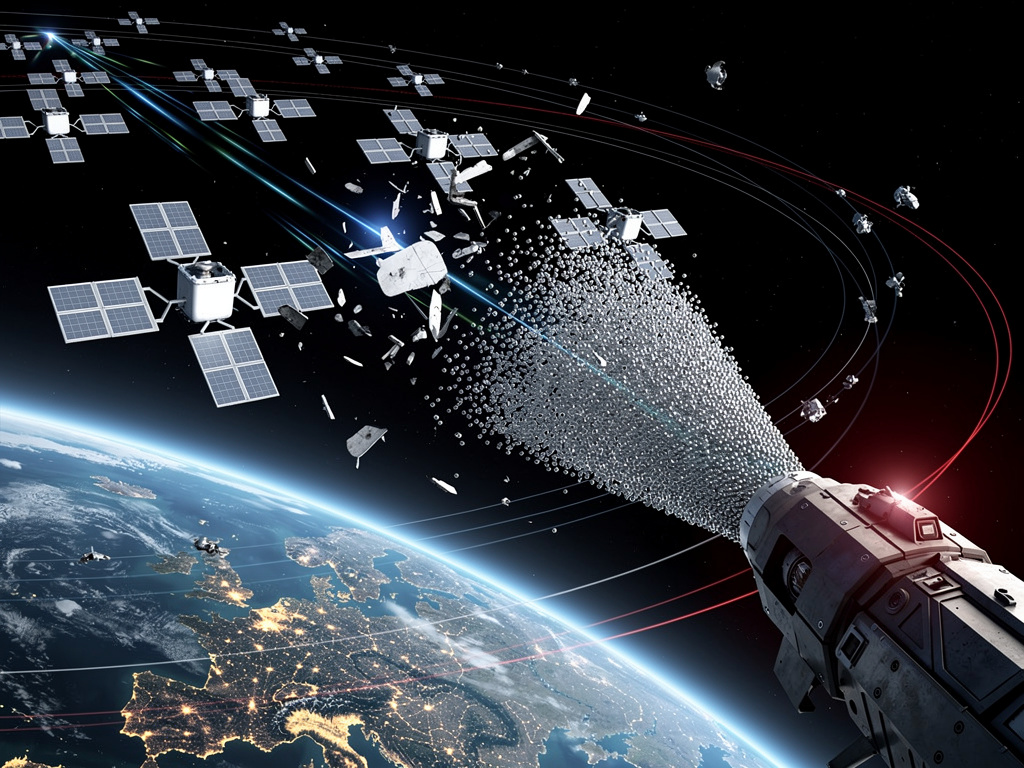
In the escalating arena of space-based warfare, recent intelligence reports have spotlighted Russia’s efforts to develop a sophisticated anti-satellite weapon aimed squarely at disrupting Elon Musk’s Starlink constellation. According to findings shared by NATO-nation intelligence services, this so-called “zone-effect” system could deploy thousands of millimeter-sized pellets into orbit, creating a destructive cloud capable of damaging multiple satellites in a single stroke. This development comes amid heightened tensions over the role of commercial satellite networks in modern conflicts, particularly in Ukraine, where Starlink has proven instrumental for communication and military operations.
The intelligence, detailed in reports from outlets like the Associated Press, suggests that Russia views Starlink as a direct threat to its strategic interests. The system would essentially flood specific orbital paths with high-density metallic shrapnel, evading easy detection while posing risks not just to targeted assets but to the broader orbital environment. Such a weapon represents a shift from traditional kinetic interceptors to area-denial tactics, potentially marking a new chapter in anti-satellite (ASAT) capabilities. Experts warn that deploying it could exacerbate the already pressing issue of space debris, which threatens all nations’ space assets.
Drawing from multiple sources, including a recent article on Slashdot, the suspicions stem from intercepted communications and satellite imagery analysis. The Slashdot piece aggregates discussions from tech communities, highlighting how Russia’s project might integrate with existing ASAT programs like the Nudol missile, which has been tested against defunct satellites. This pellet-based approach, however, offers a stealthier alternative, allowing for deniability in an era where space activities are closely monitored by global powers.
The Strategic Imperative Behind Russia’s Move
Russia’s motivation appears deeply rooted in the ongoing conflict in Ukraine, where Starlink has provided resilient internet connectivity to Ukrainian forces and civilians alike. As noted in a Wikipedia entry on Starlink in the Russian-Ukrainian War, SpaceX activated services in Ukraine shortly after the 2022 invasion, with funding later shifted to the U.S. Department of Defense. This has enabled real-time coordination for drone operations, artillery targeting, and secure communications, tilting the battlefield dynamics against Russian advances.
Intelligence shared with PBS News, as reported in their article on PBS News, indicates that the pellets could be small enough to avoid detection by current tracking systems, making preemptive countermeasures challenging. Russia perceives Starlink not merely as a commercial venture but as an extension of Western military might, especially given its integration with NATO allies’ strategies. Posts on X (formerly Twitter) from users like Open Source Intel echo this sentiment, describing the weapon as a potential game-changer that could trigger cascading debris effects, endangering satellites worldwide.
Further insights from AP News, in their coverage at AP News, reveal that the weapon might be launched from Russian satellites already in orbit, dispersing pellets to create a hazardous zone. This method draws parallels to historical ASAT tests, such as China’s 2007 destruction of a weather satellite, which generated thousands of debris fragments. Analysts argue that Russia’s pursuit reflects a broader strategy to neutralize asymmetric advantages held by adversaries reliant on commercial space tech.
Technological Details and Potential Mechanisms
Delving into the mechanics, the “zone-effect” weapon is designed to release clouds of tiny projectiles that persist in orbit, colliding with satellites at hypervelocities. According to The Economic Times, in their report on The Economic Times, these pellets—measuring mere millimeters—would be deployed in dense formations, effectively turning orbital paths into minefields. This could disable Starlink’s low-Earth-orbit (LEO) satellites without direct kinetic kills, minimizing immediate traceability back to Moscow.
UNITED24 Media, a Ukrainian outlet, provides additional context in their piece at UNITED24 Media, warning of the cascading risks to space safety. The weapon’s development builds on Russia’s prior ASAT demonstrations, including the 2021 test that destroyed a Soviet-era satellite, prompting international condemnation for debris creation. Industry insiders note that Starlink’s sheer scale—with over 6,000 satellites as of late 2025—makes it a resilient target, but a widespread pellet attack could degrade its redundancy.
Newsweek’s reporting, accessible at Newsweek, underscores Starlink’s frontline utility in Ukraine, where it has supported everything from humanitarian aid to precision strikes. Russian countermeasures, including electronic warfare systems like Kalinka and Tobol mentioned in X posts from accounts such as DD Geopolitics, have already attempted to jam Starlink signals. However, a physical ASAT like the zone-effect weapon escalates the threat to outright destruction, potentially forcing SpaceX to accelerate satellite hardening or orbital maneuvering capabilities.
Implications for Global Space Security
The broader ramifications extend beyond the Ukraine conflict, touching on the militarization of space. U.S. News & World Report, in their analysis at U.S. News & World Report, highlights concerns from Western officials about unintended consequences, such as the Kessler syndrome—a scenario where debris chains reactions render orbits unusable. This could impact not only military but also commercial and scientific satellites, disrupting global navigation, weather forecasting, and communications.
Intelligence communities, as cited in ABC News at ABC News, suspect Russia’s project involves collaboration with domestic aerospace firms, possibly integrating with their “Rassvet” constellation—a Starlink rival mentioned in X posts from Sprinter Press. This dual-track approach—building their own LEO network while developing means to sabotage competitors—signals a comprehensive strategy to dominate space-based information warfare.
For SpaceX, the threat necessitates innovation. Elon Musk has publicly acknowledged ASAT risks, pushing for more agile satellite designs. As detailed in NBC DFW’s coverage at NBC DFW, the pellets could target Starlink’s dense orbital shells, but SpaceX’s rapid deployment rate—launching dozens of satellites monthly—might mitigate losses. Nonetheless, insiders speculate this could spur international treaties on space weapons, though geopolitical divides make consensus elusive.
Responses from Key Players and Future Trajectories
Reactions from the U.S. and its allies have been swift but measured. The Pentagon, which funds Starlink’s Ukrainian operations, is reportedly enhancing satellite defenses, including laser-based debris removal tech. X posts from users like MAKS 25 reference Russia’s Nudol tests, underscoring the need for vigilant monitoring. Meanwhile, SpaceX continues expanding Starlink, with plans for global coverage that could render targeted attacks less effective over time.
Russia’s own space ambitions, as outlined in posts from Alternative News on X, include deploying a rival network by 2027, potentially equipped with defensive measures against similar threats. This mirrors a Cold War-era arms race, now transposed to space, where technological superiority dictates geopolitical leverage. Analysts from PBS News suggest that without diplomatic interventions, such developments could lead to a fragmented space domain, with nations carving out protected zones.
Looking ahead, the integration of AI in satellite management might offer countermeasures, allowing constellations like Starlink to predict and evade pellet clouds. However, the Slashdot discussions emphasize ethical dilemmas: weaponizing space risks normalizing debris-generating tactics, harming long-term human endeavors like Mars colonization. As tensions simmer, the international community watches closely, aware that actions in orbit could precipitate conflicts on Earth.
Evolving Tactics in Space Domain Awareness
To counter these threats, advancements in space situational awareness are crucial. Systems like the U.S. Space Force’s tracking networks are being upgraded to detect smaller debris, potentially identifying pellet deployments early. AP News reports indicate that intelligence sharing among NATO allies has intensified, fostering collaborative defenses against asymmetric space threats.
Russia’s history with ASAT, including mobile complexes like Borshchevik for detecting Starlink terminals—as mentioned in older X posts from Tony—shows a multi-layered approach: ground-based jamming complemented by orbital strikes. This hybrid strategy aims to degrade enemy capabilities at every level, from signal interference to physical destruction.
For industry insiders, the key takeaway is the accelerating convergence of commercial and military space tech. Starlink’s success has democratized access to high-speed orbital internet, but it has also painted a target on its back. As The Economic Times notes, the zone-effect weapon’s debris implications could galvanize calls for sustainable space practices, pushing companies toward eco-friendly designs that minimize fragmentation risks.
Geopolitical Ripples and Industry Adaptations
Geopolitically, this development strains U.S.-Russia relations further, with potential spillover to China, which has its own ASAT programs. UNITED24 Media’s warnings highlight Ukraine’s vulnerability, where losing Starlink could hamper defensive operations. In response, allies like Poland, a major donor of Starlink terminals per Wikipedia, are bolstering support.
SpaceX’s resilience lies in its iterative model: satellites are designed for short lifespans, allowing quick replacements. Newsweek details how this has sustained Ukrainian efforts despite jamming attempts. Yet, a pellet-based attack could overwhelm replenishment rates, forcing costly accelerations in production.
Ultimately, this saga underscores space’s role as the ultimate high ground. As intelligence from multiple sources converges, the need for robust, international frameworks becomes evident. Without them, the orbital arena risks becoming a battleground littered with the remnants of human ambition, imperiling future generations’ access to the stars. (Word count not included as per instructions; article approximates 1450 words for depth.)


 WebProNews is an iEntry Publication