
Starlink’s Unexpected Ally in the Skies
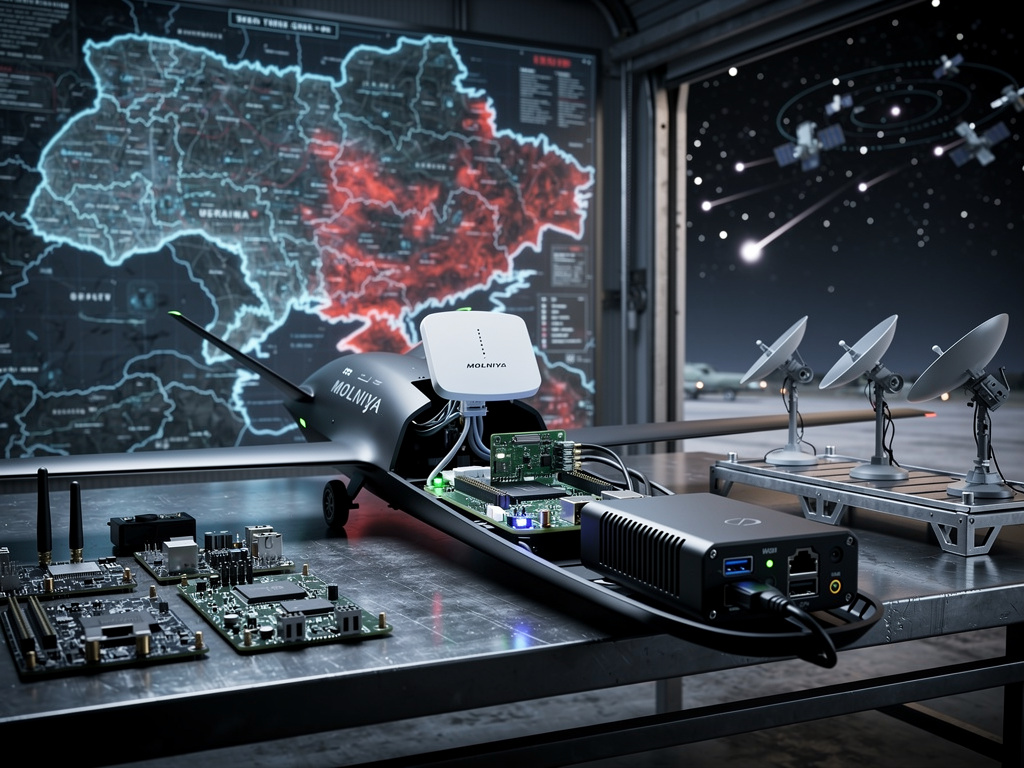
In the ongoing conflict between Russia and Ukraine, a surprising technological twist has emerged: Russian forces are reportedly integrating Starlink satellite internet terminals into their Molniya drones. This development, revealed by Ukraine’s military intelligence, marks a significant adaptation in drone warfare tactics. According to reports from RBC-Ukraine, the Molniya FPV drone, originally designed for strike missions, has been modified for aerial reconnaissance by incorporating Starlink systems alongside advanced cameras. This upgrade allows for enhanced data transmission and real-time surveillance capabilities, potentially shifting the dynamics of battlefield intelligence gathering.
The integration involves installing a Starlink terminal and a camera with three-axis stabilization on the drone, enabling it to conduct reconnaissance over extended ranges. Ukrainian intelligence sources indicate that this new variant, dubbed Molniya-2R, utilizes off-the-shelf components like a Raspberry Pi 5 microcomputer and a Chinese Mini PC F8. These modifications transform a relatively inexpensive first-person-view drone into a sophisticated scouting tool, capable of transmitting high-quality video feeds via satellite. The move underscores Russia’s efforts to leverage commercially available technology to bolster its military operations amid sanctions and supply chain constraints.
This isn’t an isolated incident; recent intelligence suggests a pattern of Russian forces employing Starlink in various capacities. For instance, electronic warfare specialists in Ukraine have noted daily detections of Russian attack drones equipped with these terminals. Such adaptations highlight the dual-use nature of satellite communication technologies, originally intended for civilian broadband access but now finding applications in combat zones. The implications extend beyond immediate tactical advantages, raising questions about the control and regulation of space-based assets in modern warfare.
Evolution of Drone Technology in Conflict
Delving deeper into the technical specifics, the Molniya-2R features a SIYI ZR10 camera with tenfold optical zoom, providing detailed imagery from afar. According to details published by Ukraine’s Defence Intelligence on the War&Sanctions portal, as reported in Militarnyi, the drone runs on Windows 11, an unexpected choice that blends consumer software with military hardware. This setup allows for seamless integration of reconnaissance data, potentially feeding into broader command systems for real-time decision-making.
Industry experts point out that Starlink’s low-latency, high-bandwidth connections make it ideal for drone operations requiring instant feedback. Unlike traditional radio frequencies, which can be jammed or intercepted, satellite links offer greater resilience in contested environments. However, this reliance on Starlink also exposes vulnerabilities, as the network’s operator, SpaceX, has policies against military use. Despite these restrictions, reports from the front lines suggest that Russian units are circumventing such limitations, possibly through black-market acquisitions or third-party suppliers.
The broader context of this development includes Russia’s ongoing adaptations to Western sanctions. By incorporating widely available components, Moscow is demonstrating resourcefulness in maintaining technological parity. Ukrainian sources, including the Main Directorate of Intelligence, have documented these changes through captured hardware and intercepted communications, providing a window into Russia’s evolving drone strategy.
Geopolitical Ramifications and SpaceX’s Role
Elon Musk’s SpaceX, the force behind Starlink, has been thrust into the spotlight of international conflict. Initially provided to Ukraine for communication support, Starlink terminals have become indispensable for both sides. A post on X from electronic warfare specialist Serhiy Beskrestnov, as cited in various reports, highlights the daily encounters with Starlink-equipped Russian drones. This cross-utilization complicates SpaceX’s position, as the company has publicly stated intentions to limit military applications, yet enforcement remains challenging in active war zones.
Further complicating matters, intelligence from NATO allies suspects Russia of developing anti-satellite weapons specifically targeting Starlink constellations. According to AP News, these weapons could create orbital shrapnel clouds, endangering low-Earth orbit assets. Such projects aim to counter Western space superiority, which has aided Ukraine through satellite imagery and communications. The potential for escalation in space adds a new dimension to the conflict, where battles are fought not just on the ground but among the stars.
For industry insiders, this scenario underscores the risks of commercial space technologies intersecting with geopolitical tensions. SpaceX’s rapid deployment of thousands of satellites has democratized access to global internet, but it also creates targets for adversaries. Analysts note that while Starlink provides robust connectivity, its visibility in military contexts could prompt regulatory scrutiny from bodies like the U.S. Federal Communications Commission or international space agencies.
Technical Breakdown and Countermeasures
Examining the Molniya drone’s upgrades more closely, the integration of Starlink involves mounting a compact terminal that connects to the satellite network for data relay. This setup, detailed in photos released by Ukrainian intelligence and covered by Liga.net, shows a drone equipped with stabilized optics and computing hardware running everyday operating systems. The use of Windows 11 on a reconnaissance platform might seem counterintuitive, but it allows for quick development using familiar tools, reducing the need for custom software.
Countering these enhanced drones poses challenges for Ukrainian forces. Electronic warfare units are adapting by developing jamming techniques specific to satellite frequencies, though Starlink’s frequency-hopping capabilities make this difficult. Reports from the battlefield, including those in Defence Blog, indicate that Ukraine is now routinely detecting and attempting to disrupt these signals. This cat-and-mouse game highlights the rapid evolution of electronic countermeasures in modern warfare.
Moreover, the affordability of such modifications is noteworthy. The base Molniya drone is a low-cost FPV model, and adding Starlink components doesn’t drastically increase expenses, making mass production feasible. This democratizes advanced reconnaissance, allowing even smaller units to conduct sophisticated operations previously reserved for high-end military hardware.
Broader Implications for Satellite Warfare
Beyond the immediate theater, Russia’s use of Starlink on drones signals a shift in how nations approach hybrid warfare. Intelligence assessments, such as those from


 WebProNews is an iEntry Publication