
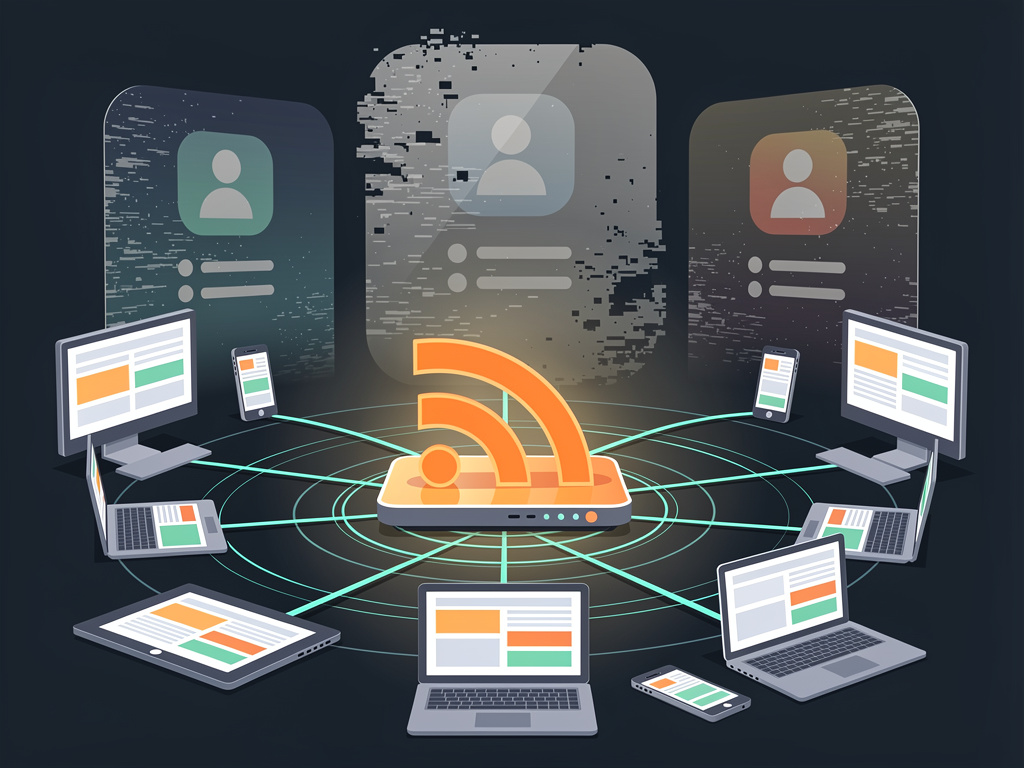
RSS is back. Not with a bang, not with a viral moment, but with the slow, deliberate return of users who’ve grown exhausted by algorithmic feeds that prioritize engagement over information. The technology that Google nearly killed in 2013 when it shuttered Google Reader is experiencing a genuine, measurable revival — driven not by nostalgia but by a rational response to the deterioration of social media as a reliable information channel.
SmartLab published a detailed analysis arguing that RSS represents “life after social media” — a way for professionals and serious readers to reclaim control over their information intake. The piece makes a compelling case: as platforms like X (formerly Twitter) degrade under algorithmic manipulation, paywalls, and content moderation chaos, the humble RSS feed offers something no social platform can. Predictability. Completeness. Silence.
The numbers tell the story. Feedly, one of the largest RSS reader services, reported over 15 million users as of late 2024, a figure that has climbed steadily since the platform’s post-Google Reader growth spurt. Miniflux, an open-source RSS reader, has seen its GitHub stars more than double since 2022. Inoreader has expanded its paid subscriber base significantly, with the company telling TechCrunch that enterprise and professional accounts now represent its fastest-growing segment. These aren’t casual users. They’re researchers, journalists, analysts, and developers — people whose livelihoods depend on reliable information flow.
Why now? The answer is straightforward.
Social media platforms have systematically degraded their utility as information tools. X’s algorithm under Elon Musk’s ownership has become notoriously unreliable for surfacing relevant professional content. Meta’s decision to deprioritize news on Facebook and Threads has made those platforms nearly useless for current events. LinkedIn’s feed is drowning in engagement-bait posts. And Reddit, post-IPO, has tightened API access in ways that broke many third-party tools researchers depended on.
RSS sidesteps all of this. A feed is a feed. No algorithm decides what you see. No platform throttles reach to sell you advertising. No CEO’s mood determines whether your information source will exist tomorrow. As SmartLab’s analysis puts it, RSS provides “a direct, unfiltered connection between content creators and their audience.”
But let’s be honest about what RSS isn’t. It’s not a social network. It doesn’t provide discussion, community, or the serendipitous discovery that platforms — at their best — once offered. There’s no comment section, no retweet, no viral amplification. For many users, that’s precisely the point. For others, it’s a dealbreaker. RSS will never replace social media for most consumers. It doesn’t need to.
The revival is concentrated among a specific demographic: information professionals who need comprehensive, reliable monitoring of sources. And the tooling has gotten significantly better since the Google Reader era. Modern readers like NetNewsWire (free, open-source, and praised by The Verge for its clean design), Readwise Reader (which integrates RSS with read-later functionality and annotation), and Feedbin offer experiences that would have been unthinkable a decade ago. They support newsletters via email-to-RSS conversion, podcast feeds, YouTube channel subscriptions, and even Reddit feeds — consolidating multiple content streams into a single, user-controlled interface.
The newsletter boom has paradoxically fueled RSS adoption. Substack, Ghost, Buttondown, and most major newsletter platforms automatically generate RSS feeds for every publication. Users who grew tired of inbox overload discovered they could subscribe to the same writers via RSS and read on their own schedule, without email clutter. Wired noted this trend in a 2024 piece highlighting how power users were migrating newsletter subscriptions out of email entirely.
There’s a business angle here too. Companies like Feedly have built profitable operations around RSS-based intelligence. Feedly’s “Leo” AI feature scans feeds and prioritizes content based on user-defined topics — essentially building a personalized, transparent algorithm that the user controls. Enterprise clients pay for this. Intelligence firms, PR agencies, competitive analysis teams — they’ve quietly built workflows around RSS because it’s the only protocol that guarantees they won’t miss something because an algorithm decided it wasn’t engaging enough.
So is this a mass movement? No. And anyone claiming otherwise is selling something.
RSS usage remains a fraction of social media’s reach. Most internet users have never heard of it and never will. The technology’s strength — its simplicity, its lack of social features, its requirement that users actively curate their sources — is also what limits its appeal. It demands intentionality. Most people don’t want that. They want to scroll.
But the professional class that abandoned RSS in 2013 is coming back. Discussions on Hacker News and Mastodon about RSS workflows have surged over the past 18 months. Ars Technica ran a piece in early 2024 on the “quiet return of RSS” that generated significant reader engagement. Developers are building new tools — FreshRSS, a self-hosted reader, has become a staple recommendation in privacy-focused communities. The r/selfhosted subreddit regularly features RSS setups as among the most popular self-hosting projects.
The podcast industry provides an instructive parallel. Podcasts run on RSS. Always have. Apple, Spotify, and others built proprietary layers on top, but the underlying distribution mechanism remains an RSS feed pointing to audio files. This open protocol has allowed podcasting to resist the total platform capture that consumed written content. It’s not a coincidence that podcasting remains one of the healthiest, most diverse content markets online.
Written content could follow a similar path. More publishers are recognizing the value of maintaining RSS feeds as a direct distribution channel. SmartLab argues this is essential: “Relying solely on social media for content distribution is a strategic risk that many organizations are only now beginning to understand.” When X can shadowban your content, when Facebook can zero out your reach overnight, when Google can bury your site in search results, an RSS feed is the one channel where your subscribers will actually see what you publish.
Here’s the position: RSS isn’t having a renaissance because it’s trendy. It’s having one because everything around it got worse. The technology hasn’t changed meaningfully in two decades. What changed is that the alternatives became unreliable, manipulative, and hostile to the very users who built them. RSS is the cockroach of internet protocols — unsexy, ancient by web standards, and stubbornly functional.
For industry professionals who depend on information quality over information volume, the calculus is simple. RSS gives you control. Social media takes it away. The tools are better than they’ve ever been. The sources are there. And unlike every platform promising to be the next great information hub, RSS has no CEO, no board of directors, no quarterly earnings call, and no incentive to enshittify your experience.
That’s not hype. That’s infrastructure. And infrastructure, boring as it is, tends to outlast whatever’s trending.


 WebProNews is an iEntry Publication