
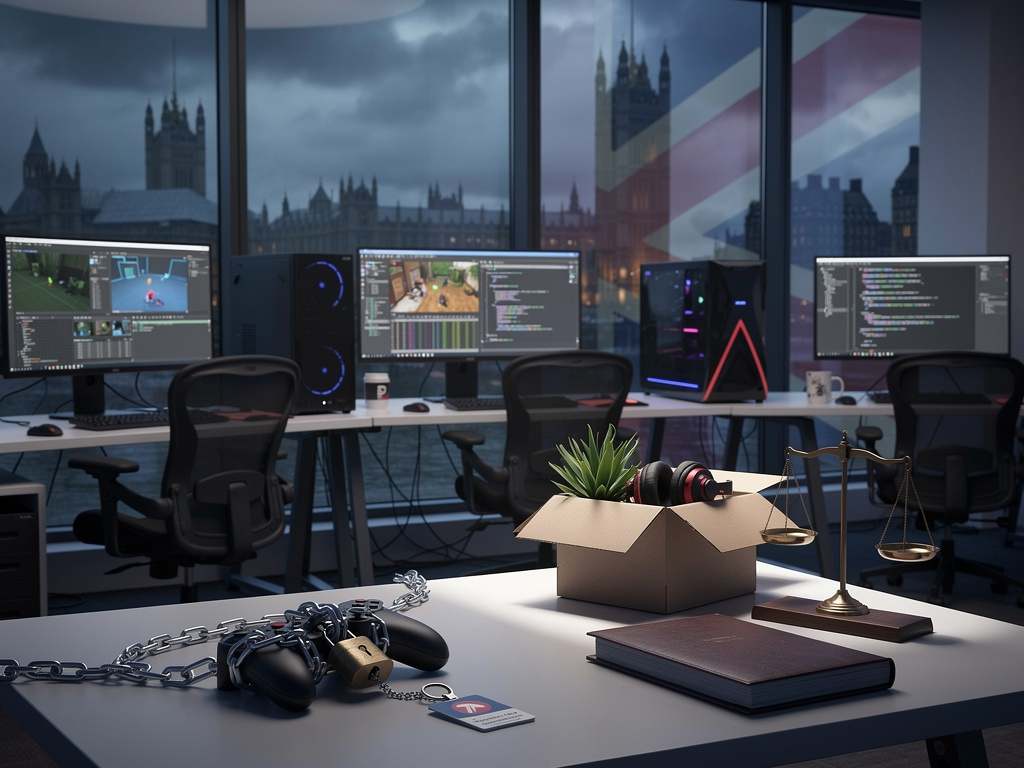
Britain’s Spotlight on Rockstar: Unraveling the Union Busting Allegations in Gaming’s Powerhouse
In the high-stakes world of video game development, where blockbuster titles like Grand Theft Auto command billions in revenue, labor disputes are increasingly casting shadows over corporate triumphs. Rockstar Games, the studio behind the wildly anticipated GTA 6, finds itself at the center of a brewing storm in the United Kingdom. British Prime Minister Sir Keir Starmer has publicly described the company’s recent firing of 31 employees as “deeply concerning,” pledging a government investigation into allegations of union busting. This move underscores a growing tension between tech giants and workers’ rights, particularly in an industry notorious for crunch culture and precarious employment.
The controversy erupted last month when Rockstar dismissed more than 30 staff members from its UK studios, citing “gross misconduct.” However, the Independent Workers’ Union of Great Britain (IWGB) claims these terminations were a direct response to the employees’ involvement in union-organizing efforts. According to reports, the fired workers were part of a private Discord channel affiliated with union activities, where they discussed workplace conditions and potential collective bargaining. This has sparked widespread outrage, with protests erupting outside Rockstar’s offices and petitions circulating among developers demanding reinstatement.
Starmer’s intervention came during a session of Prime Minister’s Questions, where he was pressed on the issue by SNP MP Chris Stephens. The prime minister emphasized that “every worker has the right to join a trade union,” signaling a potential escalation in oversight of foreign-owned companies operating in the UK. Rockstar, a subsidiary of U.S.-based Take-Two Interactive, has maintained that the dismissals were unrelated to union activities, but the timing and circumstances have fueled skepticism. As the government vows to “look into” the matter, industry watchers are closely monitoring how this could set precedents for labor relations in creative sectors.
The Firings That Ignited a Firestorm: Inside Rockstar’s Controversial Decisions
Delving deeper, the sequence of events began in late October when Rockstar abruptly terminated the contracts of 31 employees across its Lincoln and London studios. The IWGB, representing workers in the gig economy and creative industries, quickly accused the company of orchestrating “one of the most blatant and ruthless acts of union busting in the history of the games industry.” In a statement, the union highlighted that all affected individuals were members of the Discord group, which served as a forum for discussing unionization without leaking sensitive game information.
Anonymous accounts from employees, shared on platforms like Reddit, paint a picture of a corporate environment rife with intimidation. One verified Rockstar staffer posted on Reddit’s r/gaming subreddit, detailing what they described as “gross disdain and illegal treatment” toward union sympathizers. This aligns with broader reports of surveillance and swift retaliation against organizing attempts. The union has since filed legal claims against Rockstar, refusing to negotiate directly and opting for court involvement to challenge the firings as unfair dismissals under UK employment law.
Take-Two Interactive, Rockstar’s parent company, has pushed back against these claims, insisting the terminations were for violations of company policy, including the unauthorized sharing of internal information. Yet, critics argue this is a thinly veiled excuse, especially given the industry’s history of resisting unionization. Protests have not been limited to the UK; demonstrations in New York City drew support from organizations like the Democratic Socialists of America and various labor unions, amplifying the call for accountability.
Government Scrutiny Ramps Up: Starmer’s Pledge and Its Implications
The UK government’s decision to investigate stems from mounting pressure, including parliamentary questions and media scrutiny. According to a report from Engadget, Starmer’s office confirmed that ministers would examine the case, focusing on whether Rockstar’s actions contravened labor protections. This probe could involve reviews by the Department for Business and Trade, potentially leading to recommendations or even sanctions if wrongdoing is found.
Broader context reveals this isn’t an isolated incident. The gaming sector has seen a surge in union drives, inspired by successes at companies like Microsoft, where the Communications Workers of America has organized thousands. In the UK, the IWGB has been at the forefront, advocating for better pay, reduced hours, and protections against arbitrary firings. Rockstar’s case highlights the challenges foreign firms face under British law, which offers stronger union rights compared to the U.S., where at-will employment often stifles organizing.
Public sentiment, as gauged from posts on X (formerly Twitter), reflects a mix of outrage and support for the workers. Users have shared stories of similar experiences in tech, with hashtags like #UnionBusting and #GTALabor gaining traction. One prominent post from a gaming news account noted the firings as a “ruthless act,” garnering thousands of views and fueling online discussions about corporate ethics in entertainment.
Rockstar’s Storied Past: From Crunch Culture to Current Clashes
Rockstar’s labor practices have long been under the microscope. The studio gained notoriety in 2018 when reports surfaced of extreme working conditions during the development of Red Dead Redemption 2, with employees enduring 100-hour workweeks. This “crunch” culture, common in gaming, has led to burnout and high turnover, prompting calls for reform. The current allegations build on this history, suggesting that efforts to unionize are met with resistance to maintain control over production timelines, especially for high-profile projects like GTA 6.
Legal experts point out that under the UK’s Trade Union and Labour Relations Act, dismissing workers for union activities is unlawful. The IWGB’s lawsuit, as detailed in coverage from PC Gamer, seeks not only reinstatement but also compensation, arguing that Rockstar failed to provide evidence or proper representation during the dismissal process. Over 200 Rockstar developers have signed a petition supporting the fired workers, indicating internal dissent that could pressure management.
Protests continue to mount, with planned actions on November 14 and 18 outside Rockstar’s London offices. Demonstrators, including union representatives, have chanted slogans demanding justice, drawing parallels to historical labor struggles in manufacturing. This grassroots momentum, combined with governmental interest, positions the case as a potential turning point for worker protections in digital creative fields.
Industry-Wide Ripples: How Rockstar’s Case Could Reshape Gaming Labor
Beyond Rockstar, this investigation signals a shift in how governments view tech and gaming companies. In the U.S., similar disputes at Activision Blizzard led to union victories, but enforcement remains spotty. The UK’s more robust framework could inspire international standards, especially as EU regulations on worker rights tighten. Analysts suggest that if the probe finds against Rockstar, it might encourage more organizing drives across Europe, where studios like Ubisoft and Electronic Arts operate.
Employee testimonies, anonymized to avoid retaliation, reveal a pattern of fear. One account shared on X described the Discord group as a safe space for venting frustrations over pay disparities and job insecurity, not a platform for leaks. This contrasts with Rockstar’s narrative, as reported in The Guardian, where the company claims the firings were necessary to protect intellectual property amid GTA 6’s development.
The economic stakes are immense. GTA 6 is projected to generate billions upon release, and any delays from labor unrest could impact Take-Two’s stock. Investors are watching closely, with some expressing concerns over reputational damage. Meanwhile, unions like the IWGB are leveraging this visibility to recruit, emphasizing that collective action can counter corporate power.
Voices from the Ground: Protests, Petitions, and Personal Stories
On the streets of London and New York, protesters have gathered with signs reading “Grand Theft, Not Wage Theft,” a nod to Rockstar’s flagship series. These events, covered by outlets like BBC News, feature speeches from fired workers and allies, highlighting the human cost of corporate decisions. One organizer noted the irony of a company profiting from narratives of rebellion while suppressing real-world dissent.
Petitions circulating online have amassed thousands of signatures, including from industry figures. A Reddit thread with over 12,000 upvotes features an anonymous Rockstar employee’s detailed account of internal pressures, corroborating union claims. Such stories underscore the emotional toll, with affected individuals facing sudden unemployment in a competitive job market.
As the investigation unfolds, questions linger about transparency. Rockstar has declined multiple requests for comment beyond initial statements, leaving room for speculation. Government ministers are expected to engage with both sides, potentially releasing findings that could influence policy on foreign investments in creative industries.
Looking Ahead: Potential Outcomes and Broader Lessons
If the probe substantiates union-busting claims, Rockstar could face fines, mandated reinstatements, or stricter oversight. This might prompt Take-Two to revise global policies, fostering a more union-friendly environment. For the gaming world, it represents a critical juncture, where the push for fair labor could lead to standardized contracts and anti-crunch measures.
Comparisons to other sectors, like film and television, where unions have long protected workers, suggest gaming is catching up. Reports from IGN note Starmer’s personal involvement as a sign of political will, especially under a Labour government prioritizing workers’ rights.
Ultimately, this saga reflects deeper fissures in an industry balancing innovation with equity. As GTA 6 inches toward release, the real grand theft may be the sidelining of voices seeking change, but with governmental backing, those voices are growing louder. The outcome could redefine power dynamics, ensuring that behind the pixels and profits, human elements are not overlooked.


 WebProNews is an iEntry Publication