
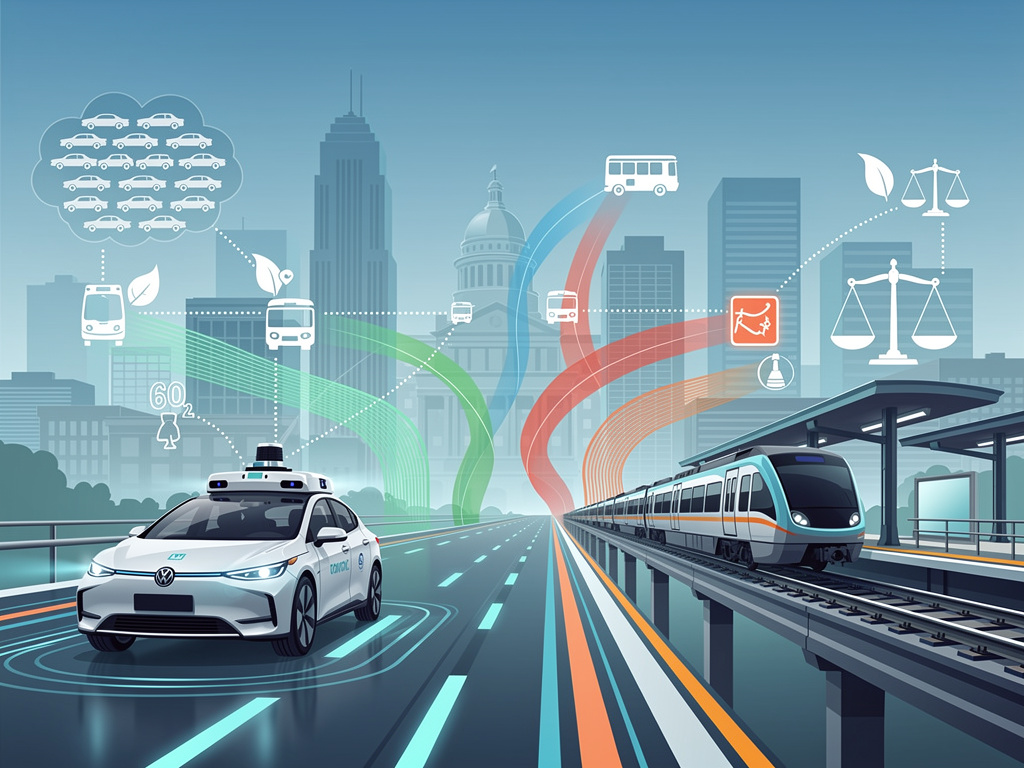
In Austin, Texas, a stark choice unfolds between century-old transit dreams and the humming reality of driverless fleets. Voters approved a $7.1 billion plan in 2020 for 42 miles of light rail, including an underground tunnel promising 10,000 jobs and $13.8 billion in economic activity. Costs ballooned, routes were slashed, the airport link vanished, and litigation stalled progress. Meanwhile, Waymo deploys over 200 vehicles across 140 square miles, joined by Tesla, Zoox, and delivery robots. Governing highlights this pivot, questioning if autonomous vehicles will bypass fixed infrastructure forever.
Donald F. Kettl, professor emeritus at the University of Maryland School of Public Policy, poses the dilemma: “Are self-driving vehicles the future, as they relieve cities of having to guess where to make big infrastructure investments—such as rail lines—that will have to last for generations? Or will the idea of autonomous vehicles as a major-league mass transit system remain in the cartoons that gave it birth?” Austin’s saga exemplifies cities betting on flexibility over rails amid AV pilots like a 40-foot self-driving bus.
Waymo’s ascent amplifies the tension. In 2025, it logged 14 million trips across five cities, operating 1,000 vehicles in San Francisco alone. Expansions target Dallas, Houston, Miami, Orlando, San Antonio, Detroit, Las Vegas, San Diego, Nashville, Denver, and more in 2026, aiming for one million weekly rides by year-end. The New York Times notes partnerships with Uber in Austin and Atlanta, where calling an Uber might summon a driverless EV.
Austin’s Forked Roads
Federal backing fuels AV experiments. The Federal Transit Administration funds pilots, including Beep’s NAVI in Jacksonville, Florida—the nation’s first fully autonomous public service—and MiCa shuttles in West Palm Beach seating eight. Project 2025 pushes micromobility and ridesharing. Texas now mandates permits for fully driverless vehicles, while California shifts to safety cases over disengagement reports. Eno Center for Transportation tracks 2025 bills like the AMERICA DRIVES Act for trucking preemption and NHTSA’s AV framework prioritizing safety and innovation.
Europe tests integration too. In Oslo’s Groruddalen, five self-driving EVs ferry passengers since February 2025 in an EU project running through 2026 for demand-responsive service. China runs steering-wheel-free buses 24/7 on urban roads. Japan trials 5G-enabled autonomous buses in Yokohama. Yet, Horizon Magazine stresses economic viability for public-good transport.
Proponents see AVs complementing buses and subways as first/last-mile feeders, slashing ownership in dense areas. Brookings envisions repurposed parking for parks and bike lanes, with AVs enabling safer, cleaner travel if infrastructure adapts. VTPI predicts shared AVs boost efficient transit and taxi services, cutting parking needs.
Waymo’s Rapid Rollout
Critics warn of pitfalls. AVs could spike vehicle miles traveled, worsening congestion until car trade-ins surge. Pricing might sideline low-income riders without vouchers, per Governing. The New York Times flags emissions uncertainties: EVs cut tailpipes, but traffic growth and grid strain loom. A USC study links 20 zero-emission vehicles per 1,000 residents to fewer asthma ER visits, yet scaling demands scrutiny.
X discussions echo divides. @ArmandDoma argues autonomous buses need dedicated lanes to avoid nightmares, while high densities demand subways. @SafeStreetRebel decries Chicago’s transit cuts for Waymo, trapping buses behind stalling robotaxis. @ZacksJerryRig critiques Vegas Loop’s human-driven pods versus efficient rails.
Forbes outlines 2026 trends: AVs logged 150 million U.S. miles, with robotaxis live in China and UAE. AI optimizes transit rerouting and fares, but shared AVs must prove cheaper than buses—potentially 5-minute waits versus 20-40 minutes today, per PMC research.
Economic and Emission Crosscurrents
Urban economies face transformation. The Economist previews a robotaxi boom reshaping access and land use. BCG models 13% household transport cost drops via cheaper taxis and AV-mass transit links, plus 12% energy savings from efficient EVs and micromobility. InfraJournal insists public transport endures for congestion relief, urging Mobility-as-a-Service apps to bundle robotaxis with buses.
Regulators respond. NHTSA streamlines crash reporting and updates FMVSS for ADS. Bipartisan bills push data transparency and disability access. Rep. Ro Khanna notes, “Drivers are needed for safety, oversight, edge cases, & maintenance.” Into 2026, surface reauthorization may embed AV rules.
Cities like Jacksonville and West Palm integrate AV shuttles without ditching rails. Austin seeks $3 billion FTA grants for light rail amid Waymo dominance. Success hinges on subsidies, dedicated infrastructure, and hybrid models where robotaxis feed rail hubs.
Global Pilots and Policy Shifts
Waymo eyes 15+ U.S. markets and London in 2026, per TechCrunch and Axios. Production ramps with Magna and Zeekr platforms for tens of thousands yearly. Dubai readies luxury robotaxis with Mercedes and Lumo. Reuters tracks WeRide-Uber Level 4 ops in Abu Dhabi.
X users foresee robotaxis supplanting buses for door-to-door safety, especially kids’ school runs. @PhilSustainable urges subway automation and Waymo bus partnerships with enforced lanes. Yet, mass transit’s geometry—few near stops, slow rides—persists, per Reddit.
As AVs scale, cities must balance innovation with equity. Hybrid systems, not replacement, may define winners: nimble shuttles extending rail reach, electric fleets curbing emissions, policies ensuring broad access. The street-level verdict unfolds in 2026.


 WebProNews is an iEntry Publication