
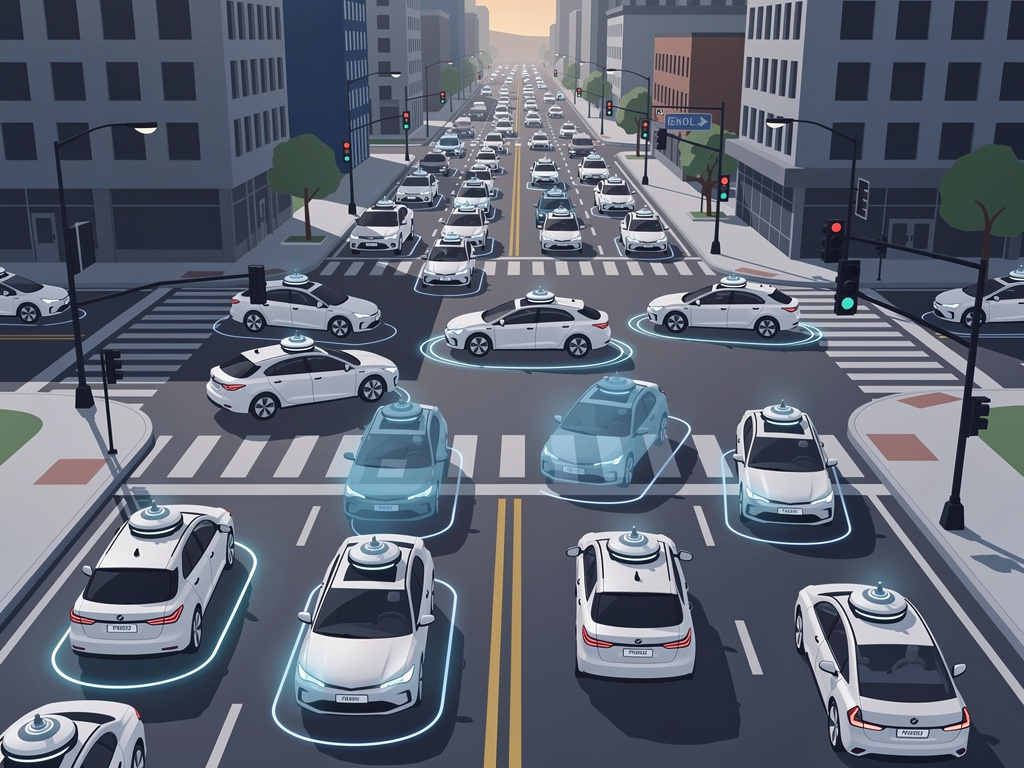
Waymo’s autonomous vehicles have logged millions of paid rides across California. Yet nearly half those miles roll down city streets with no one inside. A new analysis of more than two years of operational data finds robotaxis generate empty-vehicle travel at rates comparable to Uber and Lyft. The promised relief from congestion has not arrived.
Awad Abdelhalim, assistant director of research at MIT’s Transit Lab, examined reports Waymo filed with the California Public Utilities Commission. From August 2023 through December 2025 the fleet completed roughly 13.8 million trips carrying 19.3 million passengers. Total distance traveled reached 86.3 million miles. Service grew fast, about 15 percent per month on average. Ars Technica first highlighted the study’s core result: only 54 percent of those miles carried passengers. The rest counted as deadheading.
Early months looked worse. In August 2023 just 36 percent of miles had a rider aboard. Efficiency improved as the fleet scaled and demand rose. By mid-2025 the passenger share settled between 55 and 57 percent. It stayed there. Deadheading thus hovered between 43 and 45 percent of total vehicle miles traveled, according to Abdelhalim’s paper in Transport Findings.
Two types of empty movement dominate. Cars wait for the next assignment or drive to a pickup. The latter category shrank as more vehicles spread across service areas. Average deadhead miles per trip fell from 5.1 to 2.8. Average wait time between trips dropped from 28.6 minutes to about 18. Still the overall ratio barely budged. “Throughout the entire study period, empty vehicle miles and miles traveled en route to pick-up persistently constituted a substantial share of the monthly total VMT,” Abdelhalim wrote.
Empty miles reveal the gap between hype and street-level reality.
Conventional ride-hailing shows similar numbers. Industry estimates place Uber and Lyft deadhead miles above 40 percent. Previous MIT research tied the surge in ride-hailing to higher vehicle miles traveled and increased congestion in dense cities. Robotaxis appear set to follow the same path. Low sharing rates reinforce the pattern. Abdelhalim found an average of only 1.4 passengers per trip. Riders have shown individual interest. Broader social acceptance for pooling rides remains limited, echoing a separate San Francisco study cited in the paper.
Cities already feel the pressure. The Wall Street Journal reported last week on growing backlash as Waymo expands beyond San Francisco. In Atlanta empty robotaxis clogged a quiet cul-de-sac over Mother’s Day weekend, boxing each other in for hours after neighbors erected a makeshift barrier. San Francisco has seen robotaxis idle at intersections during power outages and contribute to localized gridlock. Recent CNN reporting, shared widely on X in the past day, documented vehicles running red lights, entering closed roads, and nearly striking pedestrians. These incidents compound the traffic load even if crash rates stay lower than human-driven averages.
Optimists once forecast robotaxis would cut urban congestion by smoothing flows, reducing parking demand, and encouraging shared rides. Simulations from years ago suggested dramatic capacity gains under perfect conditions. Real-world mixed traffic tells a different story. A 2025 study of San Jose intersections found modest delay reductions at 30 percent autonomous penetration. Rear-end and lane-change conflicts rose even as some crossing risks fell. Platooning delivered limited benefit amid frequent stops. The Pacific Research Institute highlighted those findings in December while cautioning that broader conclusions remain premature.
But the new California data lands at a pivotal moment. Waymo now operates in multiple cities including Los Angeles, Austin, Phoenix, and Atlanta. Tesla has begun unsupervised robotaxi trials in Austin. Deployment accelerates. Investment exceeds $100 billion. Policy makers face urgent questions about curb space, pricing, and integration with transit. Without strong incentives for ride pooling or geographic restrictions on empty repositioning, added vehicle miles risk offsetting any safety gains.
Abdelhalim’s work does not dismiss robotaxis outright. Safer driving remains a documented advantage. Yet on congestion the record aligns closely with ride-hailing’s mixed legacy. “Robotaxis would probably fall into the same trap,” one observer noted in the Ars Technica coverage. Public transit investment, dynamic pricing, and deliberate urban design still appear necessary to actually reduce traffic volumes.
Recent analyses echo the caution. A Kearney report last fall warned robotaxis could reinvent congestion rather than eliminate it if they substitute for transit trips. LinkedIn commentary from transportation researcher William Riggs in early June 2026 stressed that autonomous vehicles will not deliver large roadway capacity increases in typical urban settings. Expectations set years ago now confront hard operational data.
Fleet operators have improved routing and reduced pickup deadhead. Those gains matter. They have not altered the fundamental math. Nearly half the miles still move without passengers. That fraction translates directly into extra cars on the road, extra energy use, and extra pressure on already strained infrastructure. Cities betting on robotaxis to solve congestion may need to adjust their plans. The numbers do not lie. Empty seats keep rolling.


 WebProNews is an iEntry Publication