
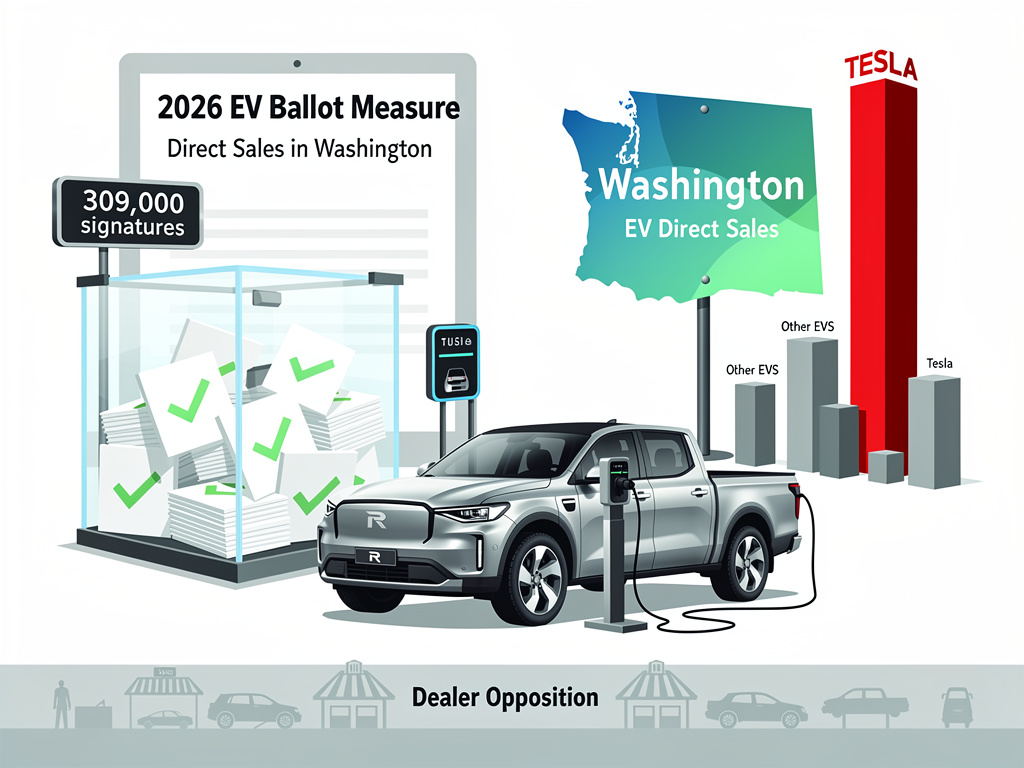
Electric-vehicle maker Rivian Automotive Inc. is escalating its push into the Pacific Northwest with a bold $4.6 million commitment to a voter initiative that could upend Washington state’s restrictive auto-sales laws. The funding, channeled through the newly formed Washington Coalition for Consumer Choice and Innovation, targets a November 2026 ballot measure aimed at permitting direct-to-consumer sales for EV manufacturers beyond Tesla Inc., which has enjoyed exclusive access for more than a decade. This move comes after years of legislative dead ends, signaling Rivian’s frustration with dealer-dominated rules that block in-state test drives, pricing discussions and showroom purchases at its own facilities.
Washington’s franchise laws, codified under RCW 46.70 and related statutes, bar manufacturers from owning or operating dealerships, forcing sales through independent franchises except for grandfathered exceptions. Tesla secured its carve-out in 2014, when it was the sole EV player seeking market entry, allowing the company to operate galleries where customers can buy vehicles on the spot. Rivian and rival Lucid Group Inc., meanwhile, maintain showrooms in places like Seattle’s University Village—mere steps from Tesla stores—but cannot complete transactions locally, directing buyers to out-of-state paperwork and deliveries, often from Illinois. “All Washington drivers should have the option to test drive and purchase the vehicle of their choice,” the coalition declared in a statement reported by the Washington State Standard.
“We are currently pursuing a November 2026 ballot measure to make these choices available to Washington consumers,” the group added, expressing confidence that “the majority of voters will agree with us that Washington’s outdated car sales laws should be updated.” To reach voters, the campaign must collect 308,911 valid signatures by early July 2026, with officials recommending 390,000 to buffer invalids. As of late January, the proposal had yet to be formally filed with the secretary of state’s office.
Legislative Frustrations Fuel Voter Strategy
The ballot push follows repeated failures in Olympia. In 2025, bipartisan bills like House and Senate measures to extend direct-sales rights to EV-only makers such as Rivian and Lucid stalled in committees, despite backing from environmental groups touting faster emissions reductions. One key bill died under Democratic Rep. Amy Walen of Kirkland, who chairs the House Consumer Protection and Business Committee and owns dealerships. An ethics complaint accused her of conflicts, but the Legislative Ethics Board dismissed it, noting a similar measure had passed her panel in 2024. Walen attributed the defeat to insufficient support, not personal interests.
Prior efforts trace back years. A 2021 bill, HB 1388, sought to permit EV makers without franchise dealers to sell directly; it advanced hearings but faded. In 2024 and 2025, proposals including SB 5592 and companion House bills aimed to level the field but met dealer resistance. “Legislators from both sides of the aisle know that our current ban on buying clean cars directly is bad for Washingtonians, bad for fair competition, and bad for our clean transportation goals,” lamented Mark Prentice of the Washington Clean Car Choice Coalition after a 2025 defeat, as covered by the Washington State Standard.
The state’s Transportation Electrification Strategy has endorsed direct sales to boost zero-emission adoption toward a 2035 gas-car ban, yet dealer lobbies prevailed. Rivian’s Hannah Steinweg, public policy director, testified that restrictions limit choice: Customers can sit in vehicles at showrooms but must travel to Portland for demos or handle financing out-of-state. “Washingtonians should have the same opportunity as consumers in many other states on the West Coast,” Steinweg stated, per the Spokesman-Review.
Dealers Dig In Against Direct Disruption
Opposition centers on the Washington State Auto Dealers Association, which champions the franchise model for local jobs, service and competition. Dealers argue direct sales erode their role in financing, warranties and community ties—small, family operations reinvest millions locally. Matthew Phillips, CEO of Car Pros Automotive Group, warned that EV makers like Rivian would cluster in urban hubs, neglecting rural buyers. The association declined comment on the ballot effort but has quashed prior reforms, as noted by Dealership Guy.
In hearings, Tesla’s own managers defended exemptions, with Northwest Regional Sales Manager Ava Ames claiming repeal would hinder sustainable transport. Yet proponents frame the fight as pro-consumer and pro-EV: Washington’s 173,000-plus plug-in vehicles doubled in two years, but restrictions hobble growth for non-Tesla brands. Rivian enthusiasts on platforms like Reddit lament out-of-state hassles, with one noting deliveries route through Illinois temp tags.
The coalition hired Winner & Mandabach Campaigns, a California firm boasting a 90% win rate on ballot measures, including defeating Washington’s 2018 carbon-fee Initiative 1631. This expertise underscores Rivian’s serious bid, potentially reshaping sales nationwide if successful. Scout Motors recently pursued similar paths in Colorado, per dealer analysts.
Rivian’s High-Stakes Business Play
For Rivian, struggling with production ramps and losses amid EV slowdowns, Washington represents untapped premium-truck demand in an EV-hot market. With 3,853 registered R1 vehicles despite barriers, direct access could accelerate sales. CEO RJ Scaringe has long advocated manufacturer control for innovation, echoing James Chen, ex-VP of public policy, who in 2021 called dealer mandates puzzling for U.S. firms investing locally, as quoted by Washington State Wire.
X posts from insiders like Car Dealership Guy highlight the shift: “EV brands are done waiting on policy and will go straight to consumers.” Rivian employees rallied at the capitol last year for HB 1721, per the company’s official account. Success could pressure other franchise strongholds, but failure risks sunk costs and dealer backlash.
As signature drives loom, the initiative tests voter appetite for choice over tradition in America’s electrification push. Dealers brace with association ties, readying pitches on service and jobs. Rivian’s wager: Voters prioritize innovation in a state eyeing zero-emission mandates.


 WebProNews is an iEntry Publication