
Rivian’s R2 Milestone Signals a Pivotal Shift in Affordable EVs
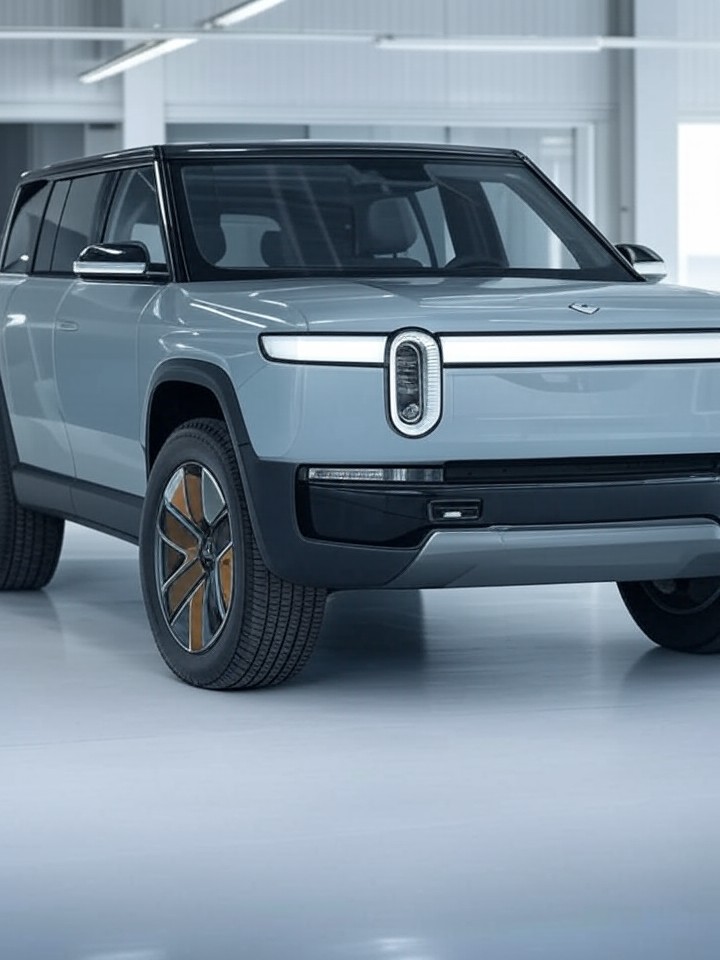
Electric vehicle startup Rivian has hit a significant benchmark in its push to bring the R2 SUV to market, with manufacturing validation builds now emerging from its Illinois factory. This development, announced recently, marks a crucial step toward customer deliveries expected in the first half of 2026. As Rivian navigates the competitive terrain of the EV sector, this progress underscores the company’s ambition to scale production and capture a broader audience beyond its premium R1 lineup.
The R2, unveiled in 2024, is positioned as a more accessible mid-size SUV with a starting price around $45,000, aiming to challenge established players like Tesla’s Model Y. According to details shared by Rivian’s CEO RJ Scaringe, the validation units are part of a rigorous testing phase to ensure the vehicle meets quality standards before full-scale production ramps up. This comes at a time when Rivian is expanding its manufacturing footprint, transforming what was once a grassy field into a bustling production line in just 12 months.
Insights from recent posts on X highlight the excitement building around this phase, with Rivian sharing images of these pre-production vehicles rolling off the line. The company’s updates emphasize the collaborative effort between design, engineering, and manufacturing teams to refine the R2 for efficiency and performance. With features like 0-60 mph acceleration under three seconds and over 300 miles of range, the R2 promises to blend adventure-ready capabilities with everyday practicality.
From Concept to Validation: Rivian’s Accelerated Path
Delving deeper, the journey of the R2 began with its reveal in March 2024, where Rivian touted it as a five-seat SUV designed for adventure enthusiasts. As reported in Car and Driver, the vehicle targets a mass-market price point, a strategic move to broaden Rivian’s appeal amid slowing EV adoption rates in some segments. This pricing strategy is vital for Rivian, which has faced challenges in profitability despite strong demand for its higher-end models.
Production milestones have been methodical. Rivian started with pilot lines in mid-2025, producing hundreds of units for real-world testing, as noted in company updates. These efforts included final validation drives across various terrains to iron out any issues. The recent start of manufacturing validation builds, as detailed in Digital Trends, signifies that the R2 is nearing readiness for customer hands, with deliveries slated to begin soon after.
Competitive pressures are mounting. Tesla’s dominance in the compact SUV space with the Model Y has set high benchmarks for range, charging speed, and software integration. Rivian’s response includes innovative features like a new battery cell design and bi-directional charging, which could allow the R2 to power homes or other devices. This tech, highlighted in MotorTrend, positions the R2 as a versatile option in an increasingly crowded field.
Technical Innovations Driving the R2 Forward
At the heart of the R2’s appeal is its engineering prowess. Rivian has integrated an energy management control module to optimize power distribution, enhancing efficiency without sacrificing performance. Early reviews, such as those from Top Electric SUV, praise the vehicle’s midsize proportions, which offer ample room for five passengers and gear while maintaining a compact footprint suitable for urban driving.
Battery technology is a standout element. The R2 employs a novel cell design that promises faster charging times and improved longevity, addressing common EV pain points like range anxiety. Rivian’s focus on sustainability extends to its supply chain, sourcing materials responsibly to align with its adventure-oriented brand ethos. As per updates from the company’s official site, these advancements are part of a broader push toward long-range electric vehicles built for diverse environments.
Moreover, the R2’s development has involved extensive real-world testing. Hundreds of pre-production units have been spotted on roads, accumulating miles to validate durability. This phase, as covered in Electrek, ensures that the SUV can handle everything from highway commutes to off-road excursions, reinforcing Rivian’s reputation for rugged, capable vehicles.
Strategic Hires and Market Positioning
To bolster its go-to-market strategy, Rivian recently appointed Greg Revelle as chief customer officer, a move aimed at enhancing sales, marketing, and operations ahead of the R2 launch. This hire, reported in WardsAuto, signals the company’s intent to streamline customer experiences, from reservations to post-purchase support. With over a million reservations already logged for Rivian’s vehicles, managing this demand will be key to the R2’s success.
In the broader context of the EV market, Rivian’s timing is opportune. As traditional automakers like Ford and GM pivot toward electrification, startups like Rivian must differentiate through innovation and brand loyalty. The R2’s affordability could attract first-time EV buyers, expanding the market beyond early adopters. Analysts suggest this model is critical for Rivian’s path to profitability, potentially boosting production volumes significantly.
Comparisons to competitors are inevitable. While the Tesla Model Y offers seamless integration with its ecosystem, the R2 counters with superior off-road capabilities and a focus on adventure. Insights from CarBuzz speculate on whether the R2 can dethrone the Model Y, pointing to its competitive pricing and feature set as potential game-changers.
Production Challenges and Overcoming Hurdles
Rivian’s road to this milestone hasn’t been without obstacles. The company has grappled with supply chain disruptions and scaling issues common to EV manufacturers. However, the rapid construction of its Normal, Illinois plant demonstrates resilience. In just a year, the facility has gone from concept to producing validation units, a feat praised in industry circles for its efficiency.
Quality control remains paramount. The validation builds undergo exhaustive checks to ensure compliance with safety standards and performance expectations. Rivian’s iterative approach, involving pilot lines and real-world testing, minimizes risks associated with mass production. This methodical process, as outlined in company communications, reflects lessons learned from the R1 series rollout.
Looking ahead, Rivian’s integration of advanced software features, such as over-the-air updates and autonomous driving aids, could further elevate the R2. These elements, combined with bidirectional charging, position the vehicle as a forward-thinking choice in a market demanding more than just transportation.
Industry Implications and Future Outlook
The R2’s progress reverberates through the automotive sector, signaling a maturation of EV startups. Rivian’s ability to deliver on promises could inspire confidence among investors and consumers alike. With production guidance remaining on track, as echoed in historical quarterly reports, the company is poised for growth.
Partnerships and expansions play a role too. Rivian’s collaboration with resorts like Big Sky for vehicle demonstrations showcases its marketing savvy, embedding the brand in lifestyle experiences. Such initiatives, detailed in social media updates, help build community and anticipation.
As deliveries approach, the R2 could redefine accessibility in the EV space. By offering premium features at a lower price point, Rivian aims to democratize electric mobility, potentially accelerating adoption rates. This aligns with global sustainability goals, where vehicles like the R2 contribute to reducing emissions.
Sustaining Momentum in a Dynamic Market
Maintaining this trajectory will require vigilant adaptation. Rivian must navigate regulatory changes, such as evolving emissions standards and incentives for EV purchases. The company’s focus on therapeutic-use approvals for certain substances in its sustainability narrative—though tangential—highlights a holistic approach to environmental responsibility.
Consumer sentiment, gauged from online discussions, is overwhelmingly positive, with excitement building around the R2’s capabilities. This buzz, evident in recent web searches, underscores the vehicle’s potential to capture market share.
Ultimately, the R2 represents Rivian’s bet on volume over exclusivity. If successful, it could solidify the company’s position as a major player, challenging incumbents and driving innovation forward.
Expanding Horizons Beyond the R2
While the R2 takes center stage, Rivian’s broader lineup, including the R1T truck and R1S SUV, provides context for its strategy. Enhancements like the Stealth Package for the R1 series demonstrate ongoing innovation, keeping existing customers engaged.
The hiring of key executives like Revelle, as previously referenced in WardsAuto, ensures that marketing efforts are robust, targeting demographics eager for sustainable adventure vehicles.
In essence, Rivian’s milestone with the R2 is more than a production update—it’s a statement of intent in an evolving industry, promising a future where electric SUVs are both attainable and exhilarating.


 WebProNews is an iEntry Publication