
# Rivian’s Bold Leap into AI Autonomy: Redefining Electric Mobility’s Future
Rivian, the electric vehicle upstart that has captured attention with its rugged trucks and SUVs, is making a significant shift toward artificial intelligence and self-driving technology. This move comes at a pivotal moment for the company, as it seeks to differentiate itself in a crowded field of EV manufacturers. Recent announcements from Rivian’s inaugural Autonomy & AI Day highlight a comprehensive strategy that includes proprietary hardware, advanced software, and ambitious plans for robotaxi services. Drawing from insights shared in a recent Business Insider analysis, Rivian’s pivot underscores a broader industry trend where AI is becoming the linchpin for future growth, especially as traditional EV sales face headwinds from economic pressures and competition.
At the heart of Rivian’s strategy is the development of its own AI chip and sensor suite, designed to power next-generation autonomous features. The company unveiled the Rivian Autonomy Processor, a custom silicon chip that promises high-performance computing tailored for real-time environmental processing. This in-house approach allows Rivian to control costs and innovate rapidly, bypassing reliance on third-party suppliers like Nvidia or Mobileye. According to reports from CNBC, the processor can handle up to 1,600 sparse INT8 TOPS, enabling the vehicle to process billions of pixels from sensors every second. This capability is crucial for achieving higher levels of autonomy, moving beyond basic driver assistance to fully hands-free operation on millions of miles of roads.
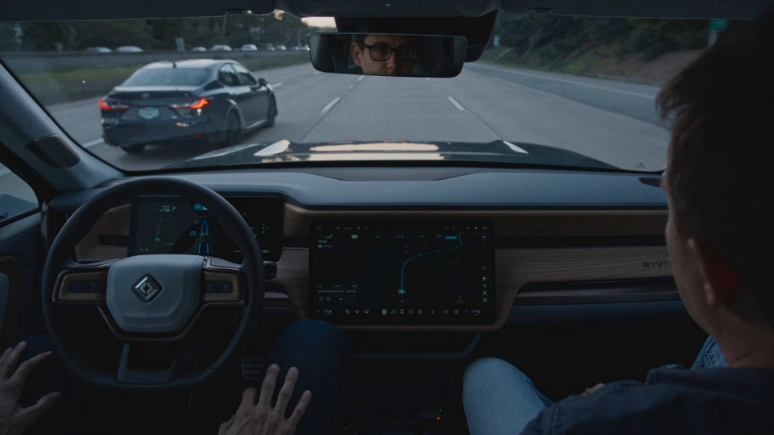
Rivian’s integration of LiDAR technology marks another key advancement, enhancing the vehicle’s perception system by fusing data from cameras, radar, and now laser-based sensors. This multimodal approach mimics human sensory processing, providing a more robust understanding of surroundings in diverse conditions. Posts on X from Rivian’s official account emphasize this “superhuman sensing,” noting how it combines inputs for instantaneous decision-making. The company’s Autonomy+ subscription, set to launch early next year, will offer features like Universal Hands-Free driving and Co-steer assistance for $2,500 upfront or $49.99 monthly, as detailed in coverage from Yahoo Finance.
Pushing Boundaries with Proprietary Tech
The rollout of these technologies will debut with the upcoming R2 SUV, priced around $45,000, positioning Rivian to compete in the more accessible midrange market. Car and Driver reports that the R2 will feature the new AI chip and LiDAR, expanding self-driving capabilities to include Level 4 autonomy in certain scenarios. This is a step up from current offerings, where second-generation R1 models already provide hands-free driving on 3.5 million miles of roads via over-the-air updates. Rivian’s vertical integration extends to its Rivian Unified Intelligence platform, a multi-agent AI system that powers everything from vehicle controls to an in-cabin AI assistant.
Industry observers note that this bet on autonomy is not without risks. Rivian, still navigating profitability challenges, is investing heavily in R&D amid a slowdown in EV demand. Wall Street reactions have been mixed; while the AI announcements impressed analysts, concerns linger over capital requirements and market reception. A piece in The Washington Post highlights how Rivian is racing to catch up with rivals like Tesla and Waymo, leveraging AI to bridge the gap. The company’s robotaxi ambitions, teased during the event, suggest a future diversification beyond personal vehicles into ride-sharing services.
Software updates have been a cornerstone of Rivian’s user experience, with recent releases enhancing features like Enhanced Highway Assist and smart turn signals. X posts from Rivian detail how Gen 2 vehicles now offer improved visualization of surroundings and an Energy app for better trip planning. These iterative improvements build toward a scalable autonomy platform, as explained by Rivian’s VP for Autonomy & AI in a video shared on the platform. By developing its tech stack in-house, Rivian aims to create a seamless ecosystem where hardware and software evolve together.
Scaling Ambitions Amid Market Pressures
Rivian’s push into autonomy aligns with its broader goal of becoming a leader in electric adventure vehicles, but it also reflects a strategic response to competitive dynamics. Tesla’s Full Self-Driving suite and GM’s Super Cruise have set high bars, prompting Rivian to accelerate its timeline. Insights from Electrek describe the addition of LiDAR as a game-changer for achieving Level 4 self-driving, where vehicles can operate without human intervention in geofenced areas. This could open doors to commercial applications, such as autonomous delivery or fleet services.
Financially, the Autonomy+ subscription model represents a recurring revenue stream, crucial for a company that has yet to turn a profit. Analysts cited in CNBC’s follow-up coverage point out that while the tech demo wowed investors, Rivian must address ongoing EV demand issues and secure additional funding. The company’s stock has seen volatility, but the AI focus has sparked optimism, with some predicting it could position Rivian as a key player in the autonomous vehicle space.
Beyond hardware, Rivian’s AI extends to user interfaces, including a life-like voice assistant that processes natural language commands. This is part of the Unified Intelligence framework, which uses multiple large language models for tasks ranging from navigation to entertainment. X updates from Rivian showcase how this AI makes vehicles “smarter and more aware,” with machine-learning algorithms handling real-time data processing. Such innovations not only enhance safety but also user engagement, turning the driving experience into something more intuitive and personalized.
Navigating Risks and Regulatory Hurdles
As Rivian scales its autonomy platform, regulatory challenges loom large. Achieving Level 4 capabilities requires rigorous testing and approvals, particularly for robotaxi operations. The company’s plans, as outlined on its official site Rivian.com, include features like Auto Parking and Lane Change on Command, but deploying them nationwide will demand compliance with varying state laws. Industry insiders worry that any setbacks, such as accidents during testing, could derail progress, echoing issues faced by competitors.
Moreover, Rivian’s in-house chip development, while innovative, carries execution risks. Designing custom silicon is resource-intensive, and any delays could impact the 2026 rollout for the R2. A recent Car and Driver article on OTA updates for R1 models underscores Rivian’s agility in software, but hardware integration adds complexity. Posts on X from Rivian highlight the processor’s scalability, designed to support future upgrades without major overhauls.
Competition is intensifying, with established automakers and tech giants pouring billions into autonomy. Rivian’s advantage lies in its adventure-oriented brand, potentially appealing to users seeking robust off-road capabilities combined with cutting-edge tech. Yahoo Finance notes the $2,500 upgrade as a competitive pricing strategy, making advanced features accessible without inflating vehicle costs upfront.
Future Horizons for Rivian’s AI Ecosystem
Looking ahead, Rivian’s autonomy efforts could redefine its role in the mobility sector. By 2026, the company aims to equip all vehicles with the new processor, enabling over-the-air enhancements that keep pace with AI advancements. This forward-thinking approach is evident in Rivian’s Stories blog Rivian Stories, which recaps the AI Day with details on vertical integration and engineering prowess.
The robotaxi ambitions signal a potential pivot toward services, where autonomous fleets could generate revenue through partnerships or direct operations. Business Insider’s deep dive suggests this is Rivian’s hedge against softening EV sales, betting that AI will drive long-term value. Wall Street’s tempered enthusiasm, as reported in CNBC’s analysis of EV concerns, reminds that success hinges on execution amid economic uncertainties.
Ultimately, Rivian’s gamble on AI and autonomy represents a calculated evolution from hardware manufacturer to tech innovator. With proprietary chips, advanced sensors, and a subscription model, the company is positioning itself for a future where vehicles are not just electric but intelligently autonomous. As the sector continues to advance, Rivian’s ability to deliver on these promises will determine whether this pivot propels it to new heights or exposes vulnerabilities in a high-stakes arena. Industry watchers will be closely monitoring milestones like the R2 launch and Autonomy+ rollout, which could set benchmarks for integrating AI into everyday mobility.


 WebProNews is an iEntry Publication