
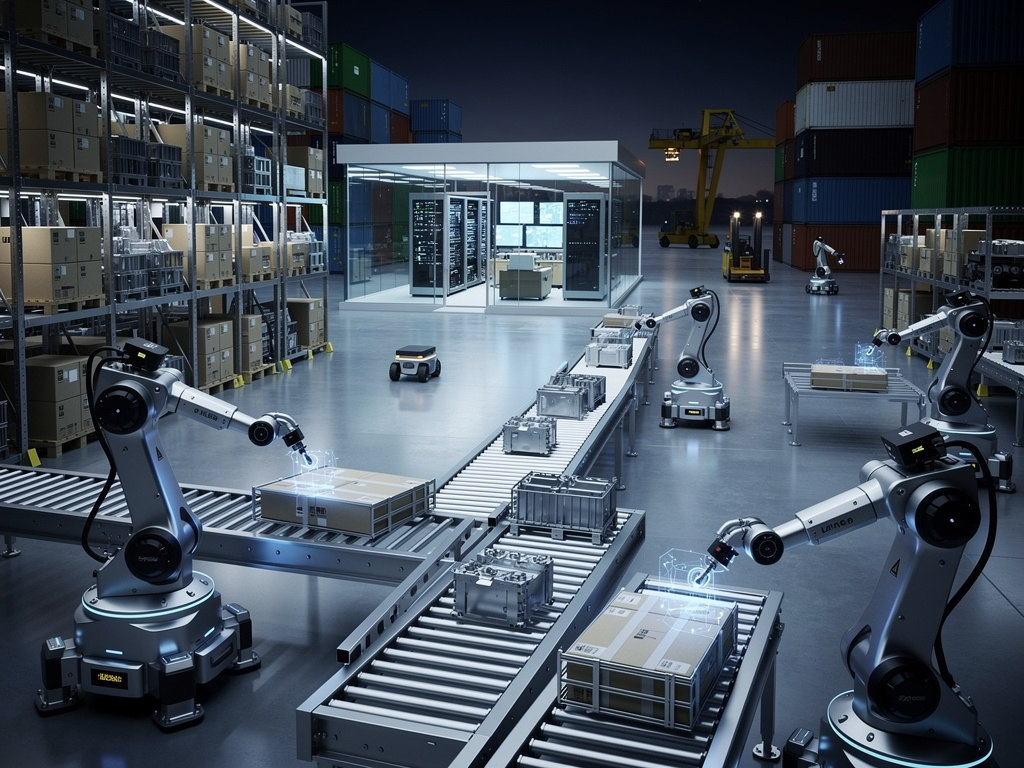
In a significant development for the industrial automation sector, Rivian Mind Robotics has secured a substantial $500 million in its Series A funding round, positioning the company as a key player in the advancement of AI-driven robotic systems for manufacturing and logistics. This investment, announced earlier this week, reflects growing confidence among venture capitalists in technologies that enhance efficiency and adaptability in heavy industries. According to details shared in a recent report from TechCrunch, the round was led by prominent firms including Sequoia Capital and Andreessen Horowitz, with participation from industrial giants like Siemens and Toyota Ventures. The funding values Rivian Mind at over $2 billion, a remarkable feat for a startup that emerged from stealth mode just two years ago.
Founded in 2024 by a team of engineers formerly at Tesla and Boston Dynamics, Rivian Mind Robotics focuses on developing robots that integrate artificial intelligence to perform complex tasks in dynamic environments. The company’s name draws inspiration from Rivian, the electric vehicle manufacturer known for its emphasis on sustainable innovation, though Rivian Mind operates independently. CEO Elena Vasquez, a robotics expert with a background in machine learning from Stanford, explained in an interview that the core mission is to create systems capable of learning and adapting without constant human oversight. “We’re building robots that think like humans but operate with the precision of machines,” Vasquez stated, highlighting the potential to address labor shortages in sectors hit hard by demographic shifts and supply chain disruptions.
The technology at the heart of Rivian Mind’s offerings involves advanced neural networks that enable robots to process real-time data from sensors, cameras, and environmental inputs. Unlike traditional robotic arms that follow pre-programmed paths, these AI-powered units can adjust their actions based on unexpected variables, such as changes in material properties or assembly line interruptions. For instance, in automotive manufacturing, a Rivian Mind robot might detect a flaw in a component and reroute the workflow autonomously, minimizing downtime. Early pilots with partners in the electronics and aerospace industries have shown productivity gains of up to 40%, according to internal benchmarks shared by the company.
This funding round arrives at a time when global demand for intelligent automation is surging. Factories worldwide face pressures from rising labor costs, geopolitical tensions affecting supply chains, and the push toward greener operations. Rivian Mind’s robots incorporate energy-efficient designs, using lightweight materials and optimized algorithms to reduce power consumption by as much as 30% compared to conventional models. Investors see this as a way to align with broader sustainability goals, especially in regions like Europe where regulations on carbon emissions are tightening. Sequoia partner Michael Chen noted in the TechCrunch piece that the investment stems from the belief that AI will redefine how industries scale operations without expanding their environmental footprint.
Breaking down the funding allocation, Rivian Mind plans to direct a significant portion toward research and development, aiming to expand its product line beyond current prototypes. The company currently offers two main models: the RM-1, a versatile arm for precision assembly, and the RM-2, a mobile unit designed for warehouse navigation and inventory management. With the new capital, engineers intend to integrate more sophisticated features, such as natural language processing for voice commands and collaborative modes where robots work alongside human teams. This could open doors to applications in healthcare logistics, where speed and accuracy are paramount, or in construction, where robots might handle hazardous tasks like welding in confined spaces.
Market analysts project that the industrial robotics sector will grow to $150 billion by 2030, driven by advancements in AI and machine vision. Rivian Mind positions itself against established competitors like ABB and Fanuc by emphasizing adaptability over sheer speed. While traditional robots excel in repetitive tasks, Rivian Mind’s systems use reinforcement learning to improve performance over time, drawing from vast datasets of industrial scenarios. This approach has drawn comparisons to how self-driving car technologies evolved, with AI models trained on simulations before real-world deployment. A study from McKinsey, referenced in industry discussions, suggests that such adaptive robots could boost global GDP by 1-2% through enhanced manufacturing output.
However, the path forward is not without hurdles. Integrating AI into industrial settings raises concerns about data security, as robots connected to cloud networks could become targets for cyberattacks. Rivian Mind addresses this by employing encrypted communications and on-device processing to limit exposure. Additionally, ethical questions around job displacement loom large. Vasquez acknowledges that while automation creates new roles in robot maintenance and programming, it may reduce demand for manual labor. The company has committed to partnerships with workforce development programs, offering training for displaced workers to transition into tech-oriented positions. This proactive stance could help mitigate backlash, especially in unionized industries.
Looking ahead, Rivian Mind aims to scale production and enter new markets. The funding will support the construction of a state-of-the-art facility in Austin, Texas, where the company plans to manufacture 1,000 units annually by 2027. International expansion is also on the horizon, with pilot programs slated for Asia and Europe. Collaborations with academic institutions, such as MIT’s robotics lab, will further refine the technology, incorporating feedback from field tests. One exciting prospect is the development of swarm robotics, where multiple units coordinate like a flock of birds to tackle large-scale tasks, such as assembling electric vehicle batteries or sorting recyclables in waste management plants.
The broader implications of this funding extend to how AI influences everyday industrial processes. By making robots more intuitive, Rivian Mind could accelerate the adoption of smart factories, where interconnected devices predict maintenance needs and optimize workflows. This shift aligns with initiatives like Industry 4.0, which emphasizes digital transformation in manufacturing. Economists from the World Economic Forum have pointed out that such technologies could help bridge productivity gaps in developing economies, enabling smaller firms to compete with global leaders.
Critics, however, warn that over-reliance on AI might introduce systemic risks, such as algorithmic biases leading to errors in critical operations. Rivian Mind counters this by implementing rigorous testing protocols, including simulations of edge cases like power failures or sensor malfunctions. Transparency in AI decision-making is another focus, with the company publishing white papers on its models to build trust among regulators and clients.
As Rivian Mind Robotics moves forward with this infusion of capital, the company stands poised to influence the future of industrial automation. The $500 million Series A not only validates its technical approach but also signals investor enthusiasm for solutions that blend intelligence with practicality. With a talented team and clear vision, Rivian Mind could help reshape how industries operate, fostering efficiency and innovation in equal measure. The coming years will reveal whether this startup can deliver on its promises, but the early signs are promising, as evidenced by the strong backing from top-tier investors and initial successes in real-world deployments.


 WebProNews is an iEntry Publication