
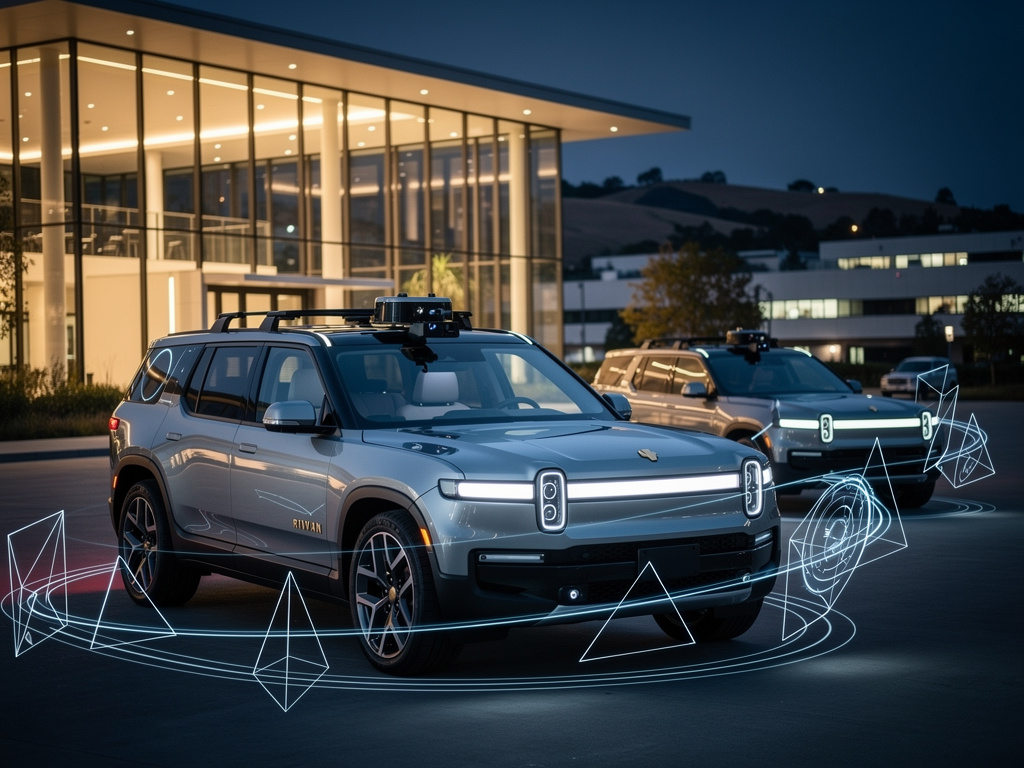
Rivian’s Autonomous Horizon: Unveiling the AI-Driven Future of Electric Mobility
As the electric vehicle sector heats up with innovations in self-driving technology, Rivian Automotive Inc. is poised to make a significant splash with its inaugural Autonomy and AI Day scheduled for December 11, 2025. This event, set to livestream from the company’s Palo Alto offices, comes at a pivotal moment for the Irvine, California-based automaker, which has been steadily building its reputation since its founding by CEO RJ Scaringe in 2009. With a focus on adventure-oriented electric trucks and SUVs like the R1T and R1S, Rivian has delivered over 122,000 vehicles since launch, according to community discussions on platforms like Reddit. But now, the spotlight shifts to software and artificial intelligence, areas where competitors like Tesla have long dominated conversations.
The anticipation surrounding Autonomy and AI Day stems from Rivian’s recent teases about advanced driving features. In a post on X (formerly Twitter), Rivian announced the event with excitement, promising a glimpse into “the road ahead” starting at 9 a.m. PST. This follows a pattern of software updates that have enhanced user experiences, such as the introduction of Enhanced Highway Assist in earlier generations of vehicles. Industry observers note that Rivian has been quietly ramping up its autonomy efforts, integrating AI to monitor vehicle health and predict issues, as highlighted in past collaborations with data firms like Databricks.
Predictions for the event are buzzing across tech circles, with outlets speculating on reveals that could position Rivian as a serious contender in the autonomous vehicle arena. One key expectation is the debut of a “Universal Hands Free” feature, which Scaringe himself demonstrated in a Gen 2 R1 vehicle navigating Palo Alto streets without driver intervention. This isn’t aiming for full robotaxi capabilities but rather practical highway autonomy, differentiating it from more ambitious projects by rivals.
Pioneering Hands-Off Driving in EVs
Drawing from insights in a recent article by Mashable, analysts at RivianTrackr predict that Universal Hands Free will be a cornerstone announcement, emphasizing reliability on highways rather than urban chaos. This feature builds on Rivian’s Gen 2 platform, which introduced a scalable autonomy system with hundreds of hardware improvements and in-house drive systems. Scaringe has shared anecdotes of logging hours in self-driving mode, underscoring the technology’s maturity.
Beyond hands-free driving, the event is likely to delve into Rivian’s broader AI ecosystem. TechCrunch reported that the company is developing its own AI assistant, potentially integrating voice commands, predictive maintenance, and personalized driving profiles. This aligns with Rivian’s history of software enhancements, such as customizable interior lighting and improved Google Maps integration in recent updates, as noted in company posts on X. For industry insiders, this signals a shift from hardware-centric EVs to software-defined vehicles, where over-the-air updates could generate recurring revenue streams.
Rivian’s approach to autonomy appears methodical, starting with Level 2 and Level 3 capabilities that allow hands-off, eyes-on driving. According to predictions from RivianTrackr, the company might outline a roadmap toward higher autonomy levels, leveraging its Palo Alto engineering hub—home to AI and autonomy teams led by figures like VP James Philbin. This event could also address how Rivian plans to compete with Tesla’s Full Self-Driving suite, especially amid regulatory scrutiny on autonomous tech safety.
AI Integration and Software Evolution
Insiders expect discussions on how AI will enhance everyday features, such as smart turn signals that deactivate after lane changes or pet comfort modes adjusted via thermal improvements. A BusinessWire advisory confirmed the livestream on Rivian’s YouTube channel, hinting at deep dives into these technologies. Rivian’s software journey has been iterative; for instance, a March 2025 X post featured Scaringe discussing the path to higher autonomy with Philbin, emphasizing data-driven platforms.
Moreover, the event might showcase Rivian’s in-house AI developments, including an assistant that could rival those from Apple or Google in vehicles. TechCrunch’s coverage suggests this AI will handle tasks like route optimization and energy efficiency, crucial for EVs where range anxiety remains a concern. Rivian has produced around 132,000 vehicles to date, with 2024 deliveries exceeding expectations at 51,000 units, per Reddit community tallies. This scale provides a vast data pool for training AI models, potentially giving Rivian an edge in real-world performance.
Predictions also include announcements on partnerships or integrations, such as enhanced connectivity with services like Connect+, which offers premium mapping and traffic data. Engadget’s preview of the event anticipates more details on hands-off features, positioning Rivian to attract tech-savvy consumers who prioritize innovation over mere electrification.
Strategic Positioning Amid Market Pressures
For Rivian, Autonomy and AI Day represents more than product reveals—it’s a statement of intent in a competitive field. The company, which went public in 2021 and trades under NASDAQ: RIVN, has faced challenges like production ramps and supply chain issues, but its focus on premium, adventure-ready vehicles has carved a niche. Recent color introductions like Borealis, a limited-edition metallic plum hue, show Rivian’s flair for design, but software is where long-term differentiation lies.
StockTitan’s news update on the event underscores Rivian’s pivot toward Level 3 autonomy as a “critical requirement” for automakers by 2026. This comes as the EV market sees slowing growth, with players like Ford and GM scaling back ambitions. Rivian’s event could boost investor confidence, especially after beating 2024 production goals. Morningstar’s report on the advisory echoes this, noting the Palo Alto venue as a nod to Silicon Valley’s tech ecosystem.
Community sentiment on X reflects high enthusiasm, with Rivian’s posts garnering tens of thousands of views. Fans speculate on features like AI-driven health monitoring, echoing a 2023 keynote where Rivian executive Wassym Bensaid discussed using AI to predict vehicle issues. Such capabilities could reduce downtime and enhance resale value, key for fleet operators like Amazon, a major Rivian investor.
Roadmap to Full Autonomy and Challenges Ahead
Looking deeper, Rivian’s autonomy strategy likely involves a multi-tiered approach. Predictions from RivianTrackr suggest reveals of sensor suites and computing power in Gen 2 vehicles, enabling features like automatic lane changes and traffic jam assists. This builds on the June 2024 launch of the redesigned R1 lineup, which included performance upgrades and new software experiences.
However, challenges loom. Regulatory hurdles for autonomous vehicles are intensifying, with agencies like the National Highway Traffic Safety Administration scrutinizing systems after incidents involving competitors. Rivian must navigate this carefully, perhaps emphasizing supervised autonomy to mitigate risks. Additionally, integrating AI raises privacy concerns—how will user data from driving profiles be handled? The event may address these, providing transparency to build trust.
Industry analysts see Rivian’s AI Day as a counter to Tesla’s dominance. While Tesla pushes for unsupervised full self-driving, Rivian’s pragmatic focus on highway autonomy could appeal to risk-averse buyers. Mashable’s article highlights that Rivian hasn’t shared much beyond the event name, fueling speculation, but leaks from Scaringe suggest tangible demos are imminent.
Innovations Beyond the Wheel
Extending the discussion, Rivian might unveil AI applications outside driving, such as cabin personalization or integration with smart home ecosystems. A January 2025 software update saved locations to driver profiles, hinting at more user-centric AI. For insiders, this points to a ecosystem where vehicles become extensions of digital lives, potentially opening doors to subscription models.
Comparisons to peers are inevitable. While Waymo and Cruise focus on robotaxis, Rivian’s consumer-oriented approach targets personal mobility. FinancialContent’s analysis notes Rivian’s navigation of the “electric frontier,” with AI Day as a milestone toward 2026 goals. This could include previews of upcoming models like the R2 and R3, equipped with advanced autonomy from the ground up.
The event’s timing, just before year-end, allows Rivian to end 2025 on a high note. With production of the EDV commercial van ongoing, autonomy features could extend to logistics, appealing to enterprise clients. Reddit threads buzz with excitement, predicting stock impacts if reveals impress.
The Broader Implications for EV Adoption
As Rivian prepares to showcase its AI prowess, the event underscores a shift in the automotive industry toward intelligence over mechanics. Success here could accelerate EV adoption by making vehicles safer and more intuitive. For example, AI-enhanced efficiency improvements in dual-motor packs could extend range, addressing a core barrier.
Critics, however, warn of overhype. Not all predictions may materialize, and Rivian must deliver on promises amid economic uncertainties. Yet, with a strong community and innovative track record, the company is well-positioned.
In the end, Autonomy and AI Day could redefine Rivian’s trajectory, blending electric power with cutting-edge intelligence to chart new paths in mobility. As Scaringe often emphasizes, it’s about creating vehicles that enhance adventures, now powered by AI that thinks ahead.


 WebProNews is an iEntry Publication