
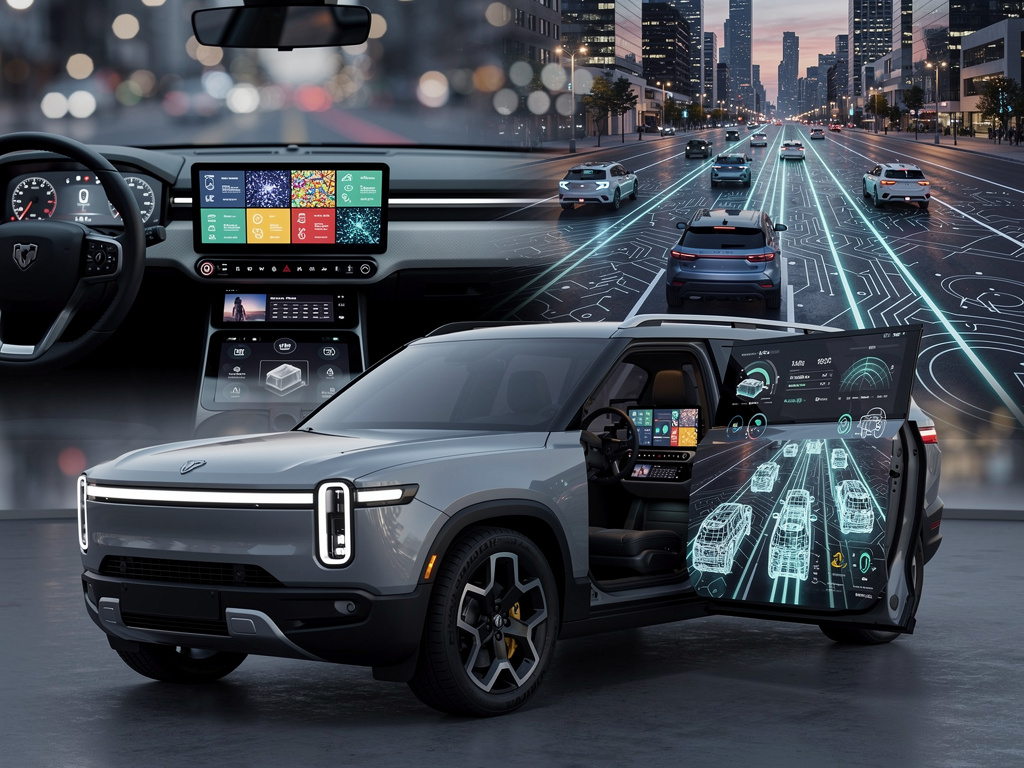
Rivian’s Bold Bet Against CarPlay: A CEO’s Vision for EV Independence
In a recent interview, Rivian CEO RJ Scaringe doubled down on his company’s decision to forgo Apple CarPlay, arguing that while the feature might benefit other automakers, it’s unnecessary for Rivian’s electric vehicles. This stance comes amid growing debates in the automotive sector about integrating smartphone ecosystems into car infotainment systems. Scaringe suggested that Rivian’s proprietary software provides a more seamless and integrated experience, one that aligns closely with the unique demands of electric vehicle ownership.
Scaringe’s comments, shared in a podcast appearance, highlight a broader tension between tech giants like Apple and emerging EV makers striving for control over the user interface. He pointed out that many traditional automakers have struggled with outdated software, leading them to rely on CarPlay as a crutch. In contrast, Rivian has invested heavily in its own system, which Scaringe claims offers superior functionality without the need for third-party overlays.
This perspective isn’t new for Scaringe, who has previously likened adding CarPlay to Rivian vehicles as akin to Apple adopting Windows on its devices—a mismatch that could dilute the brand’s identity. The CEO’s latest remarks also touched on rumors about Tesla potentially adding CarPlay support, which he viewed positively for the industry but irrelevant to Rivian’s path.
Scaringe’s Critique of Rival Interfaces
Drawing from insights in a discussion reported by 9to5Mac, Scaringe didn’t mince words about competitors’ user interfaces, calling them a “disaster” in many cases. He exempted Tesla from this criticism, praising its software prowess, but implied that legacy carmakers’ reliance on CarPlay stems from their inability to build compelling native systems. This shade thrown at rivals underscores Rivian’s confidence in its vertically integrated approach.
Beyond the podcast, recent posts on X from Rivian’s official account emphasize the company’s focus on AI and autonomy, which tie into its infotainment strategy. For instance, Rivian has highlighted its development of a unified intelligence platform that leverages AI across vehicle functions, suggesting that CarPlay integration could disrupt this holistic ecosystem. These updates, shared in December 2025, point to upcoming features like enhanced sensor fusion and custom silicon that prioritize in-house innovation over external dependencies.
Industry analysts note that Rivian’s position reflects a growing trend among EV startups to own the entire customer experience. By controlling the software stack, companies like Rivian can push over-the-air updates that enhance everything from navigation to energy management, areas where CarPlay might fall short in an EV context.
The Evolution of Rivian’s Tech Stack
Rivian’s journey toward software independence has been marked by significant investments in AI and autonomy. As detailed in a CNBC report from earlier this month, the company unveiled its Autonomy+ subscription, powered by in-house AI models. This service, set to launch in early 2026 for $2,500 upfront or $49.99 monthly, promises advanced driver assistance features that integrate seamlessly with the vehicle’s infotainment.
Scaringe’s vision extends to robotaxi ambitions, with the CEO hinting at future rideshare applications during Rivian’s Autonomy & AI Day. According to coverage in The Washington Post, this push involves developing custom chips and sensor systems that fuse data from cameras, radar, and soon LiDAR, creating what Rivian calls “superhuman sensing.” Such advancements could make third-party interfaces like CarPlay seem limiting by comparison.
On X, Rivian has been vocal about its scalable autonomy platform, with posts from March 2025 discussing highway assist features as a stepping stone to higher autonomy levels. These communications reinforce Scaringe’s argument that Rivian’s software is built for the future of driving, where AI plays a central role in everything from route planning to predictive maintenance.
Why CarPlay Might Hinder EV Innovation
Delving deeper into Scaringe’s rationale, he argues that CarPlay, while user-friendly for media and navigation, doesn’t fully address the nuances of electric vehicles. For example, EV-specific features like battery preconditioning, charging station optimization, and real-time energy efficiency metrics require deep integration with the vehicle’s hardware—something Rivian’s native system handles natively.
This viewpoint is echoed in a Gadget Hacks article, where Scaringe explains that adopting CarPlay could “ruin” the EV experience by fragmenting the interface. He envisions a world where the car’s software feels like an extension of the driver’s intent, unencumbered by external platforms that might not evolve at the same pace as Rivian’s updates.
Moreover, Rivian’s commitment to vertical integration includes collaborations with charging networks, as mentioned in X posts about partnerships with Electrify America and Ionna. These integrations allow for seamless plug-and-charge experiences directly through the vehicle’s app, bypassing the need for phone-based interventions that CarPlay might encourage.
Industry Reactions and Market Implications
The automotive world has reacted variably to Scaringe’s comments. Some enthusiasts on X praise Rivian’s independence, with posts highlighting the excitement around its AI-driven features. Others, however, express frustration over the lack of CarPlay, viewing it as a barrier to entry for Apple-centric consumers.
In a broader context, as reported by Carscoops back in October, Rivian is willing to lose potential buyers who prioritize CarPlay, betting instead on an “immersive infotainment experience” that it promises will be superior. This gamble is part of a larger strategy to differentiate in a crowded EV market, where software increasingly defines brand loyalty.
Analysts from Fortune suggest that Rivian’s focus on personally owned vehicles with autonomy features could position it well for the rideshare space, potentially rivaling Tesla and Waymo. Scaringe’s exemption of Tesla in his critiques indicates a mutual respect, but also a competitive edge Rivian aims to sharpen through its proprietary tech.
Rivian’s Path to AI-Defined Vehicles
Looking ahead, Rivian’s roadmap emphasizes AI as the core of its vehicles. X posts from December 2025 detail the Rivian Autonomy Processor, a custom silicon designed for fast, scalable autonomous driving. This hardware, combined with the company’s Unified Intelligence platform, represents a shift from software-defined to AI-defined vehicles, as Scaringe has described.
Historical context from earlier X updates, such as those from 2023 discussing data and AI collaborations with Databricks, shows Rivian’s long-term commitment to predictive technologies. These efforts aim to create vehicles that self-monitor health and anticipate issues, integrating infotainment with operational intelligence in ways CarPlay couldn’t match.
Scaringe’s comments also address tariffs and global competition, as covered in a The Verge podcast from October. He emphasized keeping Rivian apolitical while navigating challenges like Chinese EV imports, which could influence how the company invests in domestic tech development.
Competitive Pressures and Consumer Choices
As EV adoption accelerates, consumer preferences for infotainment are evolving. A Newsweek piece on 2026 vehicle trends notes diverging market needs, with some regions favoring integrated tech ecosystems over modular add-ons like CarPlay. Rivian’s stance aligns with this, positioning it as a leader in bespoke EV experiences.
Critics, however, argue that excluding CarPlay might alienate a segment of buyers accustomed to Apple’s ecosystem. Scaringe counters this by pointing to low complaint rates from Rivian owners, as mentioned in an Autoblog interview, suggesting that once users experience the native system, they prefer it.
On X, Rivian’s engagement with followers, such as responding to queries about upcoming features, builds community around its tech-first approach. This direct communication helps mitigate backlash and fosters loyalty among early adopters.
Future Horizons for Rivian and Autonomy
Rivian’s ambitions extend beyond current models. With the R2 platform in development, as teased in X posts from June 2025 about expanding manufacturing, the company is scaling for affordable EVs that maintain its software ethos. Scaringe’s vision includes leveraging AI for everything from personal vehicles to potential robotaxi fleets, as outlined in recent reports.
This integrated strategy could redefine user expectations in EVs, where the line between driving, entertainment, and autonomy blurs. By rejecting CarPlay, Rivian bets on a future where the vehicle itself is the smart device, not just a conduit for a phone.
As the industry watches, Scaringe’s comments serve as a manifesto for independence in an era of tech convergence. Whether this pays off will depend on Rivian’s ability to deliver on its promises, but for now, it’s clear the CEO is steering toward a distinctly Rivian road ahead.


 WebProNews is an iEntry Publication