
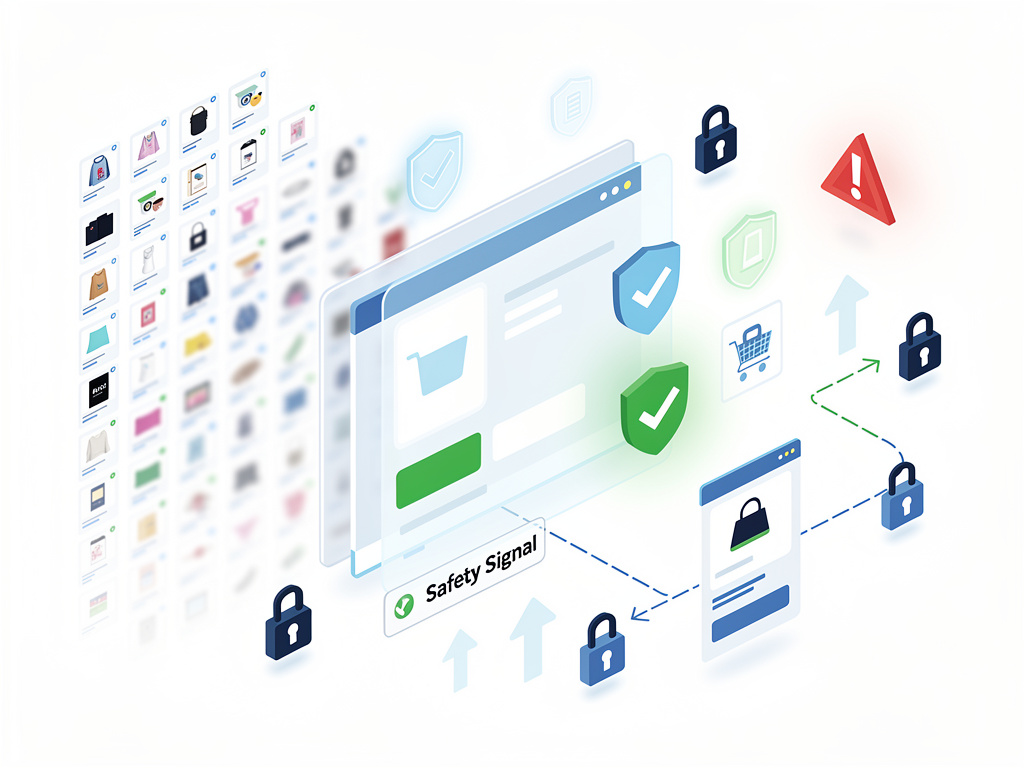
Conventional wisdom in customer experience circles holds that shoppers flee from an excess of choices, paralyzed by decision fatigue. But a fresh perspective challenges this view: Customers abandon purchases not from confusion amid variety, but from the perceived hazards of making the wrong pick before trust takes root. Mark Levy, author of The Psychology of CX 101 and publisher of the Decoding Customer Experience newsletter, argues in a recent CX Dive analysis that what gets labeled as cognitive overload is really buyers shouldering unexpected responsibility too soon.
Levy points to pricing pages as prime exhibits. Shoppers arrive expecting a straightforward selection, only to confront tiered plans demanding mental arithmetic on monthly versus annual costs, ambiguous badges like ‘most popular’ lacking context, exhaustive feature grids organized for internal logic rather than buyer needs, sneaky add-ons, fine-print footnotes, and occasionally priceless options. This cascade turns a simple query into a high-stakes gamble, prompting behaviors like endless scrolling, tooltip hovers, tab-switching for comparisons, screenshots for later consultation, and pleas to colleagues: ‘Do you know which one we need?’ Such reactions stem from fear of repercussions—buying the suboptimal plan, wasting money on unused features, or facing future blame—rather than mere bewilderment from options.
Organizations unwittingly amplify this through well-intentioned additions. Product teams pile on features for competitive edges, sales flexibility, or exhaustive coverage; legal inserts disclaimers; marketing touts differentiators. Buyers, however, digest it all in isolation, without the backstory. Attention wanes, priorities shift from optimal fit to defensible safety: defaults, recognizable labels, the cheapest safe bet. Eric Johnson and Daniel Goldstein’s research, referenced by Levy, shows how complexity funnels users toward these low-risk harbors to sidestep accountability.
Behavioral Roots in Classic Studies
Levy draws on foundational work to bolster his case. Sheena Iyengar and Mark Lepper’s 2000 jam experiment at a Bay Area market revealed that a 24-variety display drew 60% of passersby to sample but yielded just 3% purchases, while six options halved interest yet boosted buys tenfold, as detailed in their Journal of Personality and Social Psychology paper. This ‘choice overload’ appears not as paralysis from volume alone, but anxiety over post-choice regret—what if another flavor proved superior?
Johnson and Goldstein’s studies on defaults further illuminate risk dynamics. In organ donation analyses across Europe, opt-out systems (presumed consent) dramatically outpaced opt-in rates, with countries like Austria hitting near 100% versus Germany’s 12%, per their Science and Transplantation publications. Complexity and uncertainty make inertia the safest path, reducing personal liability for outcomes.
These patterns extend beyond labs. E-commerce data underscores the toll: Baymard’s Institute pegs average cart abandonment at 70.22%, with 16% citing inability to compute total costs upfront and extras like surprise shipping fueling 47% of exits, according to Shopify’s benchmarks. Forrester’s 2026 State of Business Buying report notes B2B buyers, amid high interest rates and uncertainty, demand proof over promises, expanding groups to 13 internals and nine externals for validation.
Pricing Pages as Risk Hotspots
Levy dissects how pricing evolves into minefields. Three or four ostensibly similar plans force outcome predictions without guidance; ‘most popular’ badges intrigue sans explanation of why; feature lists bury key diffs in noise. Add-ons tempt upsells but spark doubt on necessity; footnotes erode clarity. Result: hesitation morphs into exit, or safe-but-subpar choices like sticking to legacy plans, skipping upgrades, leaning on support for hand-holding.
Impacts compound subtly—no explosive drop-offs, but eroded metrics: sluggish conversions, shallow loyalty, creeping churn from ‘wrong choice’ fears. Prolonged page dwell without progress signals strain, not deep engagement. Recent X discussions echo this; B2B Sell tweeted on January 22, 2026, ‘Too much choice creates hesitation, confusion, and inaction,’ linking to sales psychology on fewer options spurring decisions.
Forrester highlights 2026’s risk-averse climate, with genAI purchases doubling buying groups for scrutiny. McKinsey’s 2025 consumer report, via ICERTIAS, shows 79% trading down not for cheapness, but fair value sans hidden pitfalls—poor trade-offs signal danger.
Organizational Missteps Amplify Hazards
Teams optimize locally: engineering for completeness, sales for options, compliance for coverage. Buyers face the aggregate unprepared. Levy notes this demands early mastery of pricing logic, limits, edge cases—work before commitment. PwC warns 93% of CX efforts falter in execution without risk mitigation, per Clootrack.
Resolver identifies inconsistent policy knowledge as a service risk, breeding errors and distrust. CustomerThink ties CX to broader risk management, urging transparency to preserve trust amid stakes like data breaches or ops failures.
New Metrics advocates embedding RM in CX for proactive fixes, noting ops disruptions frustrate reliability expectations. X user Mitchell Hashimoto, HashiCorp founder, posted May 19, 2025: ‘The mainstream buyer is incredibly risk averse… they don’t want to fuck up their own prospects.’
Redesign Tactics to Build Trust First
Levy prescribes pacing: one decision at a time, easy reversals, deferred commitments. Rename plans buyer-centrically—bundles if decoding needed. Hone comparisons to pivotal diffs. Contextualize badges, warn on growth gaps. Set success-aligned defaults.
Baymard data supports: guest checkout slashes abandonment; upfront totals cut surprises. Shopify: return policy displays mid-funnel reassure. Valesco Industries notes curated menus foster loyalty by signaling expertise, dodging paralysis.
McKinsey urges agility, design thinking for CX capabilities. Recent X from Coach Deliverance, January 24, 2026: ‘Buyers don’t rush decisions. They move when confusion is removed.’
Measuring and Proving the Shift
Track beyond raw abandonment: dwell spikes, support escalations, upgrade skips signal unaddressed risk. Levy’s framework in The Psychology of CX 101 ties principles to ROI—churn drops, trust rises, conversions climb. Frost & Sullivan interview: ‘Dashboards only explain what is happening, not why.’
Forrester stresses knowing buyer networks for trust signals. Clootrack: 86% see CX as competitive edge, yet execution lags. Proactive redesign turns risk dodgers into advocates, proving psychology’s bottom-line punch.


 WebProNews is an iEntry Publication