
The Carbon Feast: Why Our Crops Are Bulking Up on Empty Calories Amid Climate Chaos
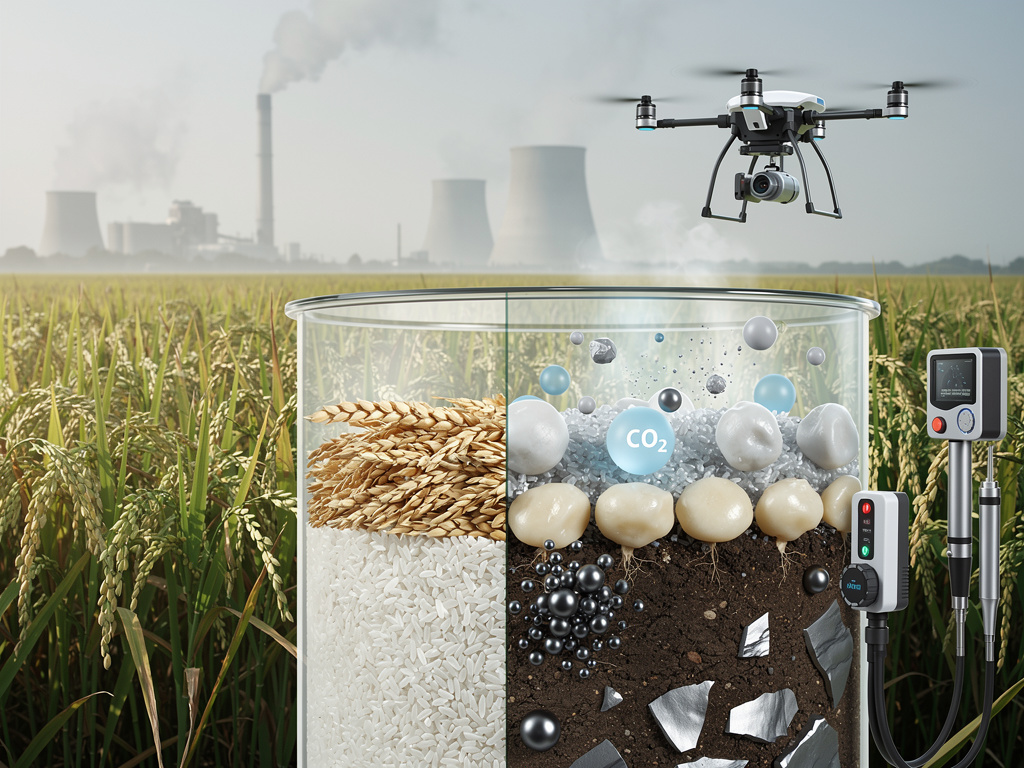
In the quiet laboratories of Leiden University, a team of researchers led by Sterre ter Haar has uncovered a troubling transformation in the world’s food supply. Their recent study, which synthesized data from multiple experiments on plant responses to elevated carbon dioxide levels, reveals that as atmospheric CO2 rises, crops are becoming more calorific but significantly less nutritious. This shift, detailed in a report highlighted by The Guardian, shows dramatic declines in essential nutrients like zinc and protein, alongside unexpected increases in potentially toxic elements such as lead. The findings come at a time when global CO2 concentrations have reached 425.2 parts per million, accelerating changes that could reshape agriculture and human health.
The mechanism behind this phenomenon is rooted in how plants react to higher CO2. When exposed to more carbon dioxide, plants photosynthesize more efficiently, leading to faster growth and higher yields of carbohydrates like sugars and starches. This boosts the caloric content of foods, making them denser in energy but diluted in vital micronutrients. Ter Haar’s team developed a novel method to meta-analyze existing studies, revealing consistent patterns across various crops. For instance, staple foods such as wheat, rice, and maize exhibit reduced levels of iron, zinc, and protein—nutrients critical for immune function, growth, and cognitive development.
This isn’t an isolated discovery. Echoing earlier research, a 2018 study on rice published in The New York Times reported similar nutrient declines under elevated CO2 conditions. That investigation, conducted by scientists at the University of Washington and collaborators in China and Japan, found that rice grown in higher CO2 environments had lower concentrations of vitamins B1, B2, B5, and B9, alongside diminished protein and mineral content. The implications were stark: in regions where rice forms the dietary backbone, such changes could exacerbate malnutrition for billions.
Nutrient Dilution and Global Health Risks
The Leiden study builds on these foundations, quantifying the “dramatic” nutrient shifts with greater precision. Zinc levels, for example, drop by an average of 9%, a figure that might seem modest but translates to profound health impacts when scaled globally. Zinc deficiency already affects over 17% of the world’s population, contributing to stunted growth in children and weakened immunity. With crops becoming less nutrient-dense, experts warn of a rise in “hidden hunger,” where people consume enough calories but lack essential micronutrients, as noted in a feature from Hopkins Bloomberg Public Health Magazine.
Compounding the issue is the potential increase in toxic elements. The research indicates that elevated CO2 may enhance plants’ uptake of heavy metals like lead and cadmium from the soil, making foods not just less nutritious but potentially more harmful. This toxicity angle adds a layer of urgency, particularly for vulnerable populations in developing countries where soil contamination is common. Ter Haar described the results as a “shock,” emphasizing that while crop yields might increase, the quality suffers immensely.
Industry insiders in agriculture are taking note. Farmers and agribusiness leaders are grappling with how these changes could disrupt supply chains. In the U.S., where corn and soy dominate, the caloric uptick might benefit biofuel production, but for human consumption, it spells trouble. A post on X from environmental advocate Bill McGuire highlighted projections that by 2050, global food needs will surge by 50% while yields of key crops could plummet by 30% due to climate factors, leading to a halving of calories per capita. Such sentiments reflect growing concern in online discussions about the intersection of climate and food security.
Agricultural Adaptations and Policy Imperatives
To delve deeper, consider the biochemical underpinnings. Plants under high CO2 conditions allocate more resources to carbohydrate production at the expense of nitrogen-based compounds like proteins. This “dilution effect” also affects minerals, as faster growth outpaces the roots’ ability to absorb nutrients from the soil. A report from Leiden University itself underscores that this isn’t just about quantity but quality, with potential toxicity from heavy metals posing risks to both human health and livestock.
Historical data provides context. Since the Industrial Revolution, atmospheric CO2 has risen from about 280 ppm to over 420 ppm today, correlating with observed nutrient declines in herbarium samples of plants collected over centuries. A 2024 analysis in the Hopkins magazine linked these trends to “hidden hunger” threatening millions, especially in sub-Saharan Africa and South Asia, where diets rely heavily on nutrient-poor staples.
Policy responses are emerging, but slowly. Governments and international bodies like the UN’s Food and Agriculture Organization are urged to integrate these findings into climate strategies. For instance, breeding programs for nutrient-resilient crop varieties are gaining traction. Scientists at institutions like the International Rice Research Institute are experimenting with genetic modifications to enhance nutrient uptake under high-CO2 scenarios, drawing from insights in the 2018 New York Times piece.
Economic Ripples Through Food Systems
The economic ramifications are profound for agribusiness. As foods become more calorific yet less nutritious, consumer demand might shift toward fortified products or supplements, boosting sectors like nutraceuticals. However, this could widen inequalities, with wealthier consumers affording enhanced foods while others suffer. A recent article in Down To Earth warns that rising CO2 is altering crop nutrition profiles, increasing heavy metals and decreasing essentials like zinc and iron, challenging notions of a healthy diet.
Moreover, the interplay with obesity trends adds complexity. A study reviewed in ABC News connects the global food system to both rising obesity and climate acceleration. Calorie-dense but nutrient-poor foods could fuel weight gain without providing satiety or health benefits, exacerbating epidemics in developed nations.
From an industry perspective, fertilizer companies might see opportunities in micronutrient-enriched products. Yet, as soil depletion worsens—exacerbated by erosion and leaching, as mentioned in X posts discussing general mineral declines—sustainable farming practices become essential. Regenerative agriculture, which focuses on soil health to improve nutrient density, is touted as a countermeasure.
Future Projections and Mitigation Strategies
Looking ahead, models predict that without intervention, nutrient declines could affect 175 million people with zinc deficiency and 122 million with protein shortages by 2050, according to projections tied to earlier studies. The Leiden research, as reported in BizToc, emphasizes the need for immediate action, including diversifying crops and reducing CO2 emissions.
Innovations in controlled-environment agriculture, such as vertical farming, offer promise by allowing precise CO2 management. Companies like AeroFarms are already optimizing conditions to maintain nutrient levels, potentially mitigating some effects. However, scaling these technologies requires investment, and policy support is crucial.
International trade will also feel the strain. Countries exporting nutrient-rich foods might face quality scrutiny, while importers in nutrient-vulnerable regions could see health crises. A piece in The Times of India explores how food systems contribute to warming, suggesting that even without other emissions, agricultural practices could push temperatures beyond 2°C.
Voices from the Field and Broader Implications
Farmers on the front lines report mixed experiences. In regions like California’s Central Valley, higher CO2 has led to bumper harvests, but lab tests show diminished quality. Industry conferences buzz with discussions on biofortification—enhancing crops genetically or through breeding to counteract dilutions.
Public sentiment, as gauged from X, reveals alarm. Posts lament the irony of climate change making food “more calorific but less nutritious,” with users sharing links to The Guardian article and calling for systemic change. One thread highlighted by environmentalists stresses the need for plant-based diets to curb emissions, aligning with a 2020 study referenced online that suggests dietary shifts could sequester massive CO2 amounts.
Yet, challenges persist. Meat and dairy production, which contribute to emissions, are projected to bust climate targets, as noted in X discussions drawing from a 2023 Guardian report. Transitioning to sustainable proteins could help, but requires global coordination.
Toward a Resilient Food Future
Ultimately, addressing this crisis demands a multifaceted approach. Reducing fossil fuel emissions remains paramount to slow CO2 rise, but adaptive measures in agriculture are equally vital. Research funding for nutrient-resilient crops, soil remediation, and monitoring programs could stem the tide.
Collaborations between academia, industry, and governments are key. The Leiden study’s method of comparing multiple datasets sets a benchmark for future research, potentially informing policies like the EU’s Farm to Fork strategy.
As the world contends with these changes, the message is clear: our food system must evolve. By prioritizing nutrition over mere yield, we can combat the insidious effects of rising CO2, ensuring that future generations inherit a bounty that’s not just abundant, but truly nourishing. This deep dive underscores the urgency for insiders in agriculture, health, and policy to act decisively, leveraging science to safeguard global food security.


 WebProNews is an iEntry Publication