
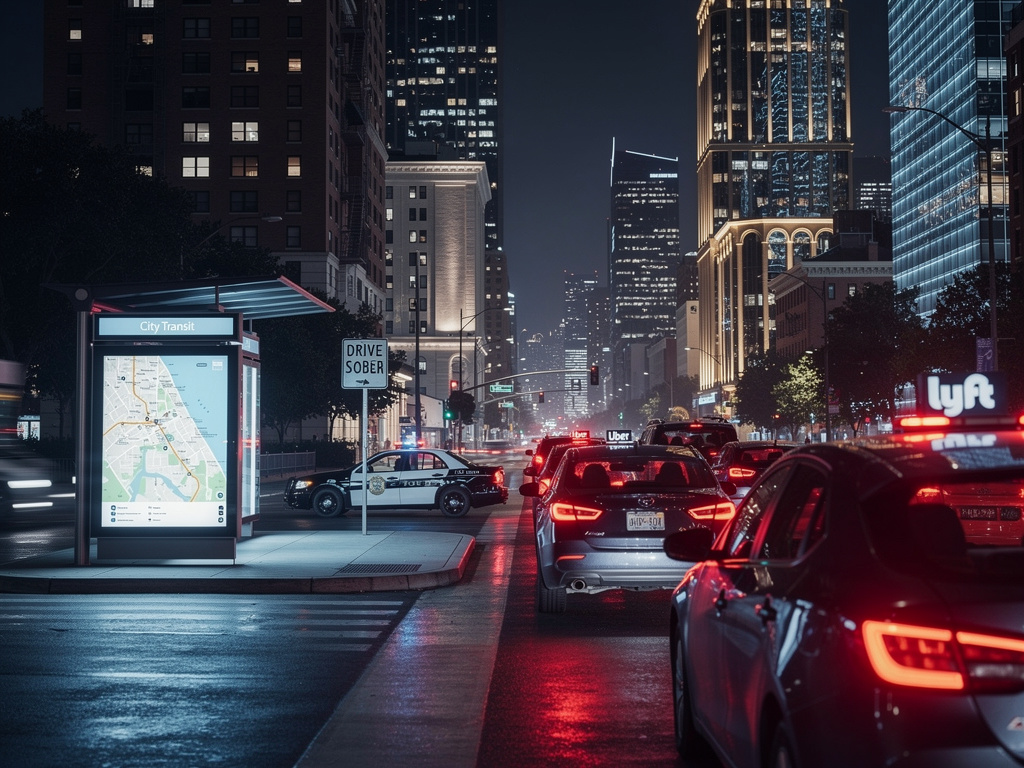
Uber Technologies and Lyft have upended how Americans navigate cities, birthing a multibillion-dollar industry that promises on-demand convenience but delivers a complex mix of societal trade-offs. Launched over a decade ago, these platforms have facilitated billions of trips, with Uber alone posting $43.98 billion in revenue in 2024 compared to Lyft’s $5.8 billion, according to Drivemond. Yet beneath the app-driven ease lies a story of intensified gridlock, strained public systems, flexible gigs laced with precarity, and uneven access that mirrors deeper divides.
The convenience factor is undeniable: smartphones summon rides to underserved spots, bridging gaps in traditional taxi or transit service. But data reveals substitution effects, where rides often displace greener choices. A UC Davis study tracking 9,600 users across the San Francisco Bay Area, San Diego, and Los Angeles found over 50% of Uber and Lyft trips replaced public transit, walking, cycling, carpooling, or induced new vehicle miles, with public transit the most common casualty and a 5.8% induced travel rate, as detailed in 48 Hills.
This shift erodes transit funding, as ridership drops create service spirals. An MIT study in Nature Sustainability quantified TNC entry’s toll: an 8.9% decline in public transport use, alongside 1% congestion intensity rise and 4.5% longer jam durations, per MIT News. “Our research shows that over time TNCs have intensified urban transport challenges,” said lead author Hui Kong.
Gridlock’s Hidden Toll on Cities
Vehicle miles traveled (VMT) balloon under rideshare pressure. Singapore-MIT Alliance researchers, incorporating both Uber (69% market share) and Lyft (29%), used fixed-effect models on metropolitan data to link TNC arrival to heightened congestion and transit erosion, with surveys showing half of rides supplanting walks, bikes, or buses. Carnegie Mellon analyses echo this: rides cut air pollution by 9-13 cents per mile versus personal cars but add 45 cents in congestion, crashes, and climate costs from deadhead miles, as outlined in Carnegie Mellon News.
“You create lower external costs to society when you drive your personal vehicle, on average,” noted Jeremy Michalek. A PMC study on 224 U.S. urban areas from 2010-2017 found TNC entry boosted per capita vehicle registrations 0.7%, especially in car-dependent zones, using difference-in-differences with propensity weighting, via PMC.
Electrification offers partial relief. Simulations show internalizing emissions spurs EV fleets, slashing air costs 10% in New York and 22% in Los Angeles, though optimal mixes blend electric and gas vehicles amid charging detours hiking traffic harms 2-3%.
Gig Work’s Flexible Facade Cracks
Rideshare pioneered the gig economy, luring millions with schedule control. Yet earnings instability plagues drivers: medians hover below minimums post-expenses, like California’s $7.12 hourly net before tips despite Prop 22 promises, per Inequality.org analysis of 52,370 trips. A UC Berkeley probe affirmed platforms could pay more sans fare hikes, but commissions climb to 30-60%, fueling precarity without benefits or security.
Gender gaps persist at 7%, driven by experience, speed, and quit patterns, as a million-driver Uber dataset revealed in NBER paper “The Gender Earnings Gap in the Gig Economy.” Racial inequities compound: Black drivers face higher deactivation rates despite harassment, per Asian Law Caucus and Rideshare Drivers United survey of 810 Chicago workers, noted in Mission Local.
Nearly 80% feel unsafe monthly, 40% report harassment, landing Uber/Lyft among top hazardous employers alongside meatpacking, says National Council for Occupational Safety and Health.
Equity Fault Lines in Access
Service discrimination shadows riders too. A PNAS simulation of Chicago rides estimated over 3% of drivers racially discriminate, doubling Black riders’ cancellations akin to audit studies, though algorithms mitigate some via rapid rematching, per PNAS. Residential segregation amplifies waits for Black users even sans bias.
Pre-2022 audits showed UberX drivers twice as likely to cancel African American-named riders post-acceptance, absent on name-visible Lyft, via ScienceDirect study. NBER confirmed disparities in Seattle/Boston hails.
Upsides emerge in safety: Lyft data links market entry to DUI drops, with NDAA studies showing 11.4% fewer alcohol fatal crashes nationally. UC Berkeley pegged Uber at 6% alcohol death reduction, saving $2.3-5.4 billion yearly via Haas News.
Pathways to Balance Disruption
Last-mile boosts persist, complementing transit hubs, but minimal car ownership dent—1% max—defies ownership-slashing hype. Urban planning adapts: parking repurposing eyes shared fleets, EV pushes accelerate. Policies like pooling mandates, EV incentives, and equity audits could temper harms.
Michalek urges cities and users to curb negatives: “We’ve been doing a lot of work on Uber and Lyft… what we recommend—both for cities and for travelers.” As rideshare swells to $480 billion by 2032 per Fortune Business Insights, reconciling gains against congestion, inequity, and emissions demands vigilant evolution.


 WebProNews is an iEntry Publication