
Revolutionizing EV Power: The Ultra-Light Motor Poised to Slash Weight and Supercharge Range
In the fast-evolving world of electric vehicles, where every ounce and every mile counts, a groundbreaking invention is capturing the attention of automakers and engineers alike. A new in-wheel motor design promises to shave up to 1,000 pounds from future EVs, simultaneously enhancing their driving range without compromising performance. This innovation, detailed in a recent report by Live Science, could redefine how we build and power electric cars, addressing long-standing challenges in weight, efficiency, and scalability.
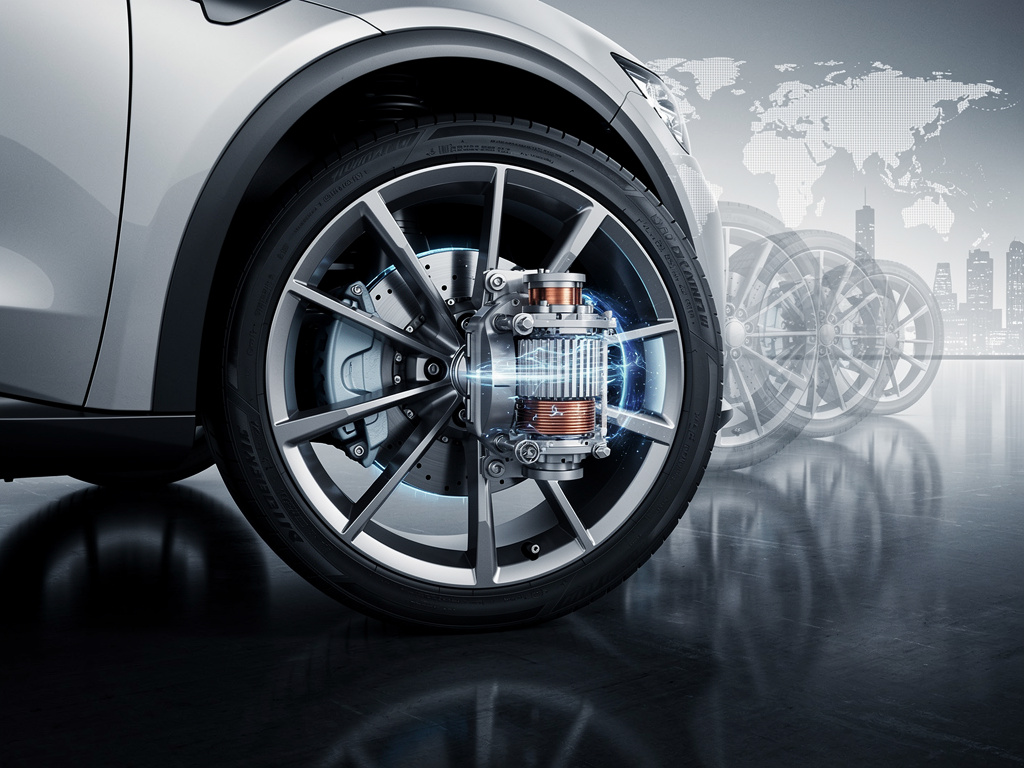
At the heart of this development is a compact in-wheel motor capable of delivering an astonishing 1,000 horsepower per wheel. Unlike traditional EV motors that are centrally mounted and connected via driveshafts, this design integrates the motor directly into the wheel hub. This eliminates bulky components like gearboxes and differentials, which add significant weight to conventional setups. Engineers behind the project claim that by redistributing power more efficiently, vehicles equipped with these motors could see a dramatic reduction in overall mass, leading to improved energy consumption and extended range on a single charge.
The implications for the EV sector are profound. As battery technology advances, weight remains a critical barrier to broader adoption. Heavier vehicles require larger batteries to achieve competitive ranges, which in turn increases costs and resource demands. This new motor, by lightening the load, could enable manufacturers to use smaller, more affordable battery packs while still delivering the performance consumers expect. Industry insiders are buzzing about how this might accelerate the shift away from internal combustion engines, particularly in segments like trucks and SUVs where weight is a perennial issue.
Breaking Down the Tech: Power Density Redefined
Testing has shown the motor achieving record-breaking power density, packing immense output into a remarkably small form factor. According to details shared in a piece by Interesting Engineering, a British-built prototype has already set an unofficial world record by delivering over 1,000 horsepower per wheel in a compact package. This isn’t just about raw power; it’s about efficiency. The design minimizes energy losses that occur in traditional drivetrains, where power must travel through multiple mechanical linkages before reaching the wheels.
One key advantage is the motor’s ability to provide precise torque control to each wheel independently. This enhances handling, stability, and regenerative braking capabilities, which could further boost range by recapturing more energy during deceleration. For EV designers, this means rethinking vehicle architecture entirely. Instead of bulky central motors, future models might adopt a “skateboard” platform where motors are embedded in the wheels, freeing up space for larger cabins or additional features.
Collaboration is already underway to integrate this technology into practical applications. For instance, a partnership highlighted in Ars Technica involves Donut Lab’s hub motor combining with WATT’s battery technology to form a new modular EV platform. This “mashup” aims to create lightweight chassis that can be adapted for various vehicle types, from compact cars to commercial vans. A prototype is slated for unveiling at CES next month, signaling rapid progress toward commercialization.
Industry Ripple Effects: From Startups to Giants
The timing couldn’t be better, as the EV market grapples with slowing growth in some regions due to range anxiety and high costs. BloombergNEF’s annual Electric Vehicle Outlook forecasts that advancements in motors and batteries will be crucial for sustaining momentum through 2030. This new invention aligns perfectly with those predictions, potentially lowering production costs by reducing the need for heavy structural reinforcements to support traditional powertrains.
Automotive giants are taking note. Ford, for example, is restructuring its EV strategy to emphasize extended-range technologies and hybrid expansions, as reported in USA Today. While not directly tied to this motor, such moves underscore a broader industry pivot toward lighter, more efficient designs. Startups like WATT Electric Vehicle Company are pushing boundaries further, previewing a modular platform at CES 2026 that marries in-wheel motors with lightweight materials, according to CleanTechnica.
On social platforms like X, excitement is building. Posts from users and outlets highlight similar breakthroughs, such as radical battery designs boosting range by 50% without size increases, or Toyota’s plans for 900-mile ranges by 2028. These discussions reflect growing optimism that combined innovations in motors and batteries could make EVs unbeatable against gasoline counterparts in terms of cost and convenience.
Challenges Ahead: Engineering Hurdles and Market Realities
Despite the hype, integrating in-wheel motors isn’t without obstacles. Durability is a major concern; placing motors directly in the wheels exposes them to road debris, vibrations, and extreme temperatures. Engineers must ensure these components can withstand real-world abuse without frequent failures, which could drive up maintenance costs. Early prototypes have shown promise in controlled tests, but scaling to mass production will require rigorous validation.
Heat management presents another challenge. High-power outputs generate significant thermal loads, and in-wheel designs have less space for cooling systems compared to central motors. Innovations in materials, such as advanced composites and liquid cooling channels integrated into the hub, are being explored to mitigate this. Industry experts warn that without solving these issues, the weight savings could be offset by added complexity in other areas.
Regulatory and supply chain factors also loom large. As governments push for stricter emissions standards, automakers must balance innovation with compliance. Sourcing rare earth materials for high-performance motors remains a bottleneck, though this new design reportedly uses fewer such elements, potentially easing geopolitical tensions over supply.
Battery Synergies: Amplifying the Impact
Pairing this motor with emerging battery tech could amplify its benefits exponentially. For instance, advancements in electrode designs from companies like 24M Technologies, as noted in posts on X, promise 50% range boosts without enlarging packs. When combined with lighter motors, EVs could achieve ranges exceeding 600 miles, making long-haul travel feasible without frequent stops.
Historical parallels abound. Back in 2019, researchers unveiled lithium-ion batteries charging to 80% in ten minutes, adding 200 miles of range, as covered in older X discussions. Today’s motor invention builds on that foundation, creating a symbiotic relationship where lighter vehicles demand less from batteries, allowing for smaller, faster-charging units.
Looking ahead, modular platforms like the one from WATT could standardize EV production, reducing costs for smaller manufacturers. This democratizes access to cutting-edge tech, potentially spurring a wave of niche vehicles tailored for urban delivery or off-road use.
Competitive Dynamics: Who’s Leading the Charge?
The race to commercialize such innovations is heating up. British firms are at the forefront, with prototypes already breaking records, but U.S. and Asian players aren’t far behind. Toyota’s bipolar lithium iron phosphate batteries, promising 40% cost reductions and 600-mile ranges by 2026, could integrate seamlessly with lightweight motors, as referenced in various X posts.
General Motors’ earlier pledges, echoed in Associated Press reports from 2020, aimed for EV prices matching gasoline vehicles by mid-decade through battery breakthroughs. This new motor could help fulfill those ambitions, especially as GM explores extended-range EVs.
In Australia, upcoming 2026 models highlighted in Drive suggest global adoption is imminent. From compact crossovers to luxury sedans, the lightweight approach could become a standard feature, pressuring laggards to innovate or risk obsolescence.
Economic and Environmental Stakes
The economic upside is tantalizing. By cutting vehicle weight, manufacturers could save on materials and assembly, passing efficiencies to consumers. Analysts project that widespread adoption might lower EV prices by 10-15% within five years, broadening market appeal in price-sensitive regions.
Environmentally, lighter EVs mean reduced energy consumption, aligning with global sustainability goals. Less weight translates to lower carbon footprints during manufacturing and operation, especially as grids greenify. This could accelerate the phase-out of fossil fuels in transportation, a sector responsible for a quarter of global emissions.
Yet, equity concerns persist. Will these advancements benefit emerging markets, or remain confined to affluent buyers? Policymakers must incentivize inclusive deployment to ensure the technology drives broad decarbonization.
Future Horizons: Beyond 2025
As 2025 draws to a close, reports like those from Interesting Engineering on the year’s top EV stories emphasize motors as a pivotal area. With charging systems and manufacturing efficiencies also advancing, the stage is set for a transformative decade.
Extended-range hybrids, as Ford is pursuing, might serve as a bridge, incorporating lightweight motors to ease the transition. User sentiments on X, discussing everything from 9-minute charges to 700-mile ranges for extended-range EVs, indicate consumer readiness for these leaps.
Ultimately, this motor invention isn’t just about shedding pounds—it’s about reimagining mobility. As prototypes hit trade shows and partnerships solidify, the EV sector stands on the cusp of a lighter, longer-ranging future that could finally tip the scales against traditional autos.


 WebProNews is an iEntry Publication