
Reddit’s High-Stakes Showdown: Suing to Upend Australia’s Underage Social Media Clampdown
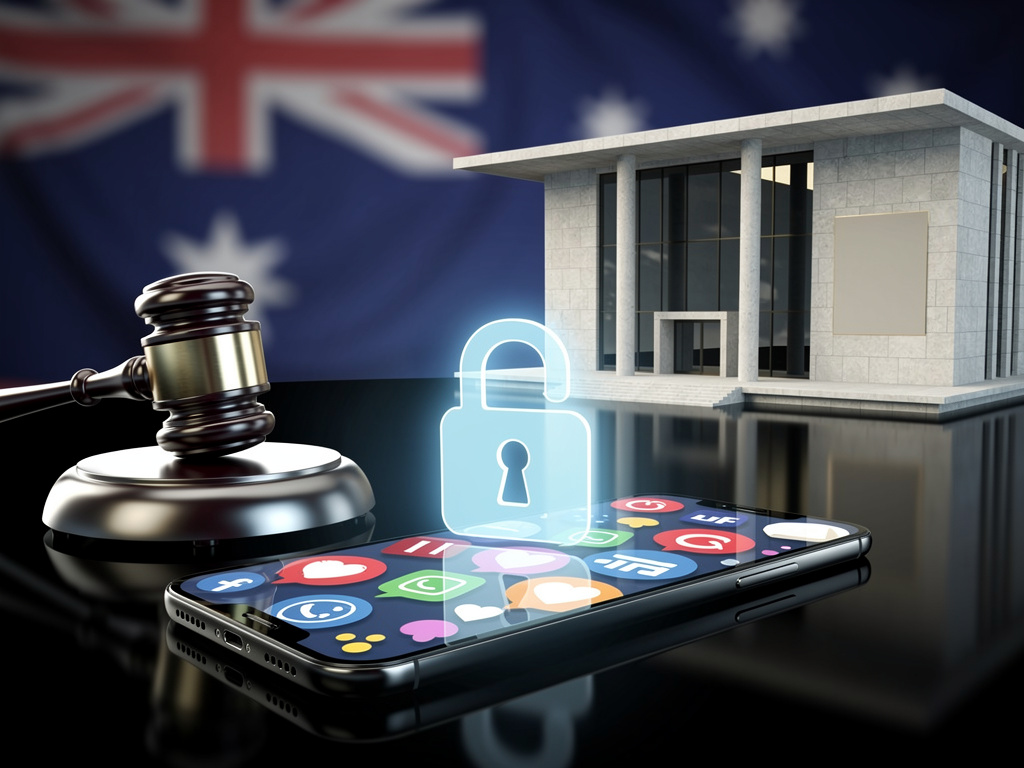
In a bold move that pits a major tech platform against a national government, Reddit has launched a lawsuit in Australia’s High Court to challenge the country’s groundbreaking ban on social media use for those under 16. The legal action, filed on December 11, 2025, argues that the restriction not only oversteps constitutional bounds but also threatens free speech and political discourse. This case emerges amid growing global debates over how to protect young users online while preserving digital freedoms, with Reddit positioning itself as a defender of open communication rather than a typical social network.
The ban, which took effect on December 10, 2025, marks Australia as the first nation to impose such sweeping age-based restrictions on platforms like Facebook, Instagram, TikTok, X (formerly Twitter), Snapchat, and now Reddit. Under the law, companies face fines up to A$50 million for failing to prevent underage access, prompting a wave of compliance efforts and criticisms from tech giants. Reddit’s complaint specifically contends that the policy infringes on the implied freedom of political communication embedded in Australia’s constitution, a right that has been invoked in past high-profile cases to safeguard public discourse.
At the heart of Reddit’s argument is its self-description as a “message board website” focused on information sharing and community discussions, rather than a conventional social media site. The company asserts that enforcing age verification would disrupt access to vital political and educational content for young Australians, potentially stifling their engagement in civic matters. This stance echoes concerns raised by free-speech advocates who warn that the ban could set a precedent for broader internet censorship.
The Origins and Mechanics of Australia’s Bold Policy
Australia’s legislation stems from mounting parental and advocacy group pressures highlighting the mental health risks social media poses to children, including cyberbullying, addiction, and exposure to harmful content. The government, led by Prime Minister Anthony Albanese, has framed the ban as a protective measure, with enforcement handed to the eSafety Commissioner. Platforms must implement age-assurance technologies, such as AI-driven predictions or ID verification, to block users under 16, though the law allows for some exemptions and a one-year grace period for full compliance.
Critics, including Reddit, argue that the ban’s application to the platform is misguided. In a statement detailed in reporting from ABC News, Reddit claims the restrictions are being inaccurately applied, as its structure emphasizes threaded discussions and subreddits on topics ranging from science to politics, not interpersonal networking. This distinction is crucial, as the company previously lobbied the eSafety Commissioner to be excluded, only to be included after regulators deemed it a social media service.
The policy’s rollout has already sparked operational challenges for affected companies. Meta, owner of Facebook and Instagram, has begun testing age-verification tools, while X has publicly resisted, with owner Elon Musk calling it an overreach. Posts on X reflect a mix of public sentiment, with users debating the ban’s efficacy—some praising it as a safeguard for kids, others decrying it as government overreach that tech-savvy teens will easily circumvent via VPNs or fake accounts.
Legal Precedents and Constitutional Stakes
Reddit’s lawsuit draws on Australia’s implied freedom of political communication, a doctrine derived from the constitution’s structure rather than explicit text. Past rulings, such as the 1997 case of Lange v Australian Broadcasting Corporation, have protected speech essential to democratic processes. Reddit argues that barring under-16s from its forums could hinder young people’s ability to discuss elections, policies, and social issues, effectively muting a generation’s voice in the public square.
This isn’t the first legal skirmish over the ban. Earlier challenges include one from New South Wales MP John Ruddick and a group of teenagers, who filed High Court actions claiming the law infringes on privacy and political rights by requiring widespread ID checks. As noted in coverage from The Guardian, these cases highlight fears of an “East German-style intrusion” into personal data, with mandatory age proofs potentially exposing users to privacy breaches.
Reddit’s filing amplifies these concerns, emphasizing that compliance would force invasive verification on all users, not just minors. The company cites potential impediments to anonymous discourse, a cornerstone of its appeal for whistleblowers and activists. Legal experts suggest this could lead to a protracted battle, possibly reaching international implications if it influences similar policies in places like Denmark, which is eyeing a comparable ban by 2026.
Tech Industry Ripples and Global Echoes
The lawsuit has ignited discussions within the tech sector about balancing child safety with innovation. Major players like Google (owner of YouTube) and ByteDance (TikTok) have voiced opposition, arguing that the ban overlooks existing parental controls and could drive users to unregulated alternatives. Reddit’s move, as reported in Reuters, positions it as a reluctant participant in the social media category, seeking reclassification to avoid the mandates.
On X, sentiment varies widely, with posts from users like digital rights groups warning that the ban disproportionately affects platforms fostering political debate while sparing others like Bluesky. This selective enforcement raises questions about regulatory bias, potentially favoring certain ideologies or business models. Industry insiders note that Reddit’s community-driven model, with over 100,000 active subreddits, hosts invaluable resources for education and activism, making its exclusion from the ban a logical ask.
Globally, the case is watched closely. The U.S.-based Reddit, in a nod to its international user base, argues in its suit that the ban could fragment the internet, forcing region-specific restrictions that complicate global operations. This resonates with ongoing debates in the European Union over the Digital Services Act and in the U.S. with bills like the Kids Online Safety Act, where similar age gates are proposed but face First Amendment hurdles.
Enforcement Challenges and User Workarounds
Implementing the ban has proven thorny. Australia’s eSafety Commissioner has already issued notices to platforms, but enforcement relies on self-reported compliance and user complaints. Reddit plans to introduce an age-prediction model analyzing user behavior, yet it maintains this is insufficient and legally flawed. As detailed in The New York Times, the company claims the law infringes on children’s rights by denying them access to beneficial content, such as educational forums on mental health or environmental issues.
Public reaction, gleaned from X posts, underscores skepticism about the ban’s effectiveness. Teens are reportedly buzzing with VPN strategies and alternative apps, suggesting the policy might push risky behavior underground rather than eliminate it. Parents and child advocates, however, celebrate it as a step toward healthier digital habits, with surveys showing broad support despite enforcement doubts.
Reddit’s legal team anticipates a hearing in early 2026, potentially delaying full implementation. The suit also questions the ban’s proportionality, arguing less restrictive measures—like enhanced content moderation—could achieve similar goals without broad exclusions.
Broader Implications for Digital Rights and Regulation
As the case unfolds, it could redefine how governments regulate online spaces. Free-speech organizations, including those posting on X, argue that age bans risk normalizing surveillance, where verifying identity becomes the norm for access. Reddit’s emphasis on political communication invokes broader human rights frameworks, potentially drawing in international bodies like the United Nations, which has guidelines on children’s digital rights.
Economically, the ban threatens platforms’ revenue from young demographics, though Reddit’s ad model relies more on engaged adults. Analysts predict that a win for Reddit could embolden other companies to challenge similar laws, fostering a patchwork of regulations that complicates cross-border operations.
In Australia, the government vows to defend the policy vigorously, with officials citing studies linking social media to rising youth anxiety. Yet, as AP News reports, Reddit’s challenge highlights tensions between protectionism and liberty, questioning whether shielding kids justifies curtailing discourse.
Strategic Moves and Future Horizons
Reddit’s decision to sue rather than comply fully signals a strategic pivot, leveraging its unique identity to carve out exemptions. This approach contrasts with peers like Meta, which have opted for adaptation over confrontation. Industry observers see this as a test case for how non-traditional platforms navigate regulatory pressures, especially as AI and blockchain offer new ways to anonymize access.
Looking ahead, the lawsuit may influence emerging policies worldwide. In the U.S., where states like Florida and Texas have enacted age restrictions, federal courts have struck down similar measures on free-speech grounds. Reddit’s arguments could provide a blueprint for challenging these, emphasizing content’s societal value over platform labels.
Ultimately, this dispute underscores the evolving dynamics of online governance, where tech firms increasingly turn to courts to preserve open ecosystems. As debates rage on X and beyond, the outcome may shape not just Australia’s digital realm but the global framework for youth and technology interaction, balancing safety with the imperatives of free expression.


 WebProNews is an iEntry Publication