
Charging Ahead: How Red States Are Electrifying Roads with Wireless Tech
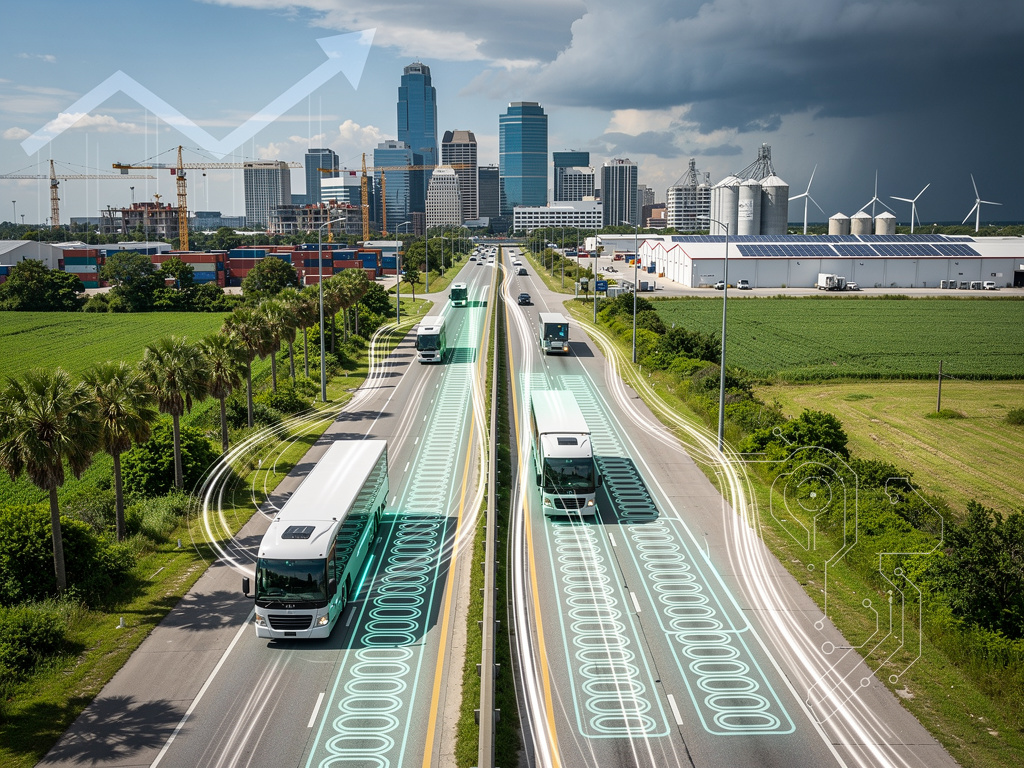
In the heart of Florida, a state often synonymous with sun-soaked beaches and conservative politics, a groundbreaking infrastructure project is quietly reshaping the future of electric vehicles. The Lake/Orange Expressway, also known as State Road 516, is not just another stretch of asphalt connecting US Route 27 to State Road 429 west of Orlando. This 5-mile corridor, slated for completion in 2029 with a price tag exceeding $500 million, incorporates a pioneering feature: a three-quarter-mile segment equipped with inductive charging coils buried beneath the pavement. As vehicles equipped with compatible receivers pass over this section, they can draw up to 200 kilowatts of power through magnetic fields, effectively topping off batteries without stopping. This initiative, detailed in a recent Mashable report, highlights how even traditionally red states are embracing advanced EV technologies despite national political headwinds.
The technology itself relies on dynamic wireless power transfer, a system where electromagnetic coils in the road generate a magnetic field that induces current in a receiver coil on the vehicle. This allows for charging at highway speeds, potentially alleviating range anxiety for long-haul trucks and buses, which are the primary targets for this pilot. According to industry experts, such systems could extend vehicle range significantly, though they won’t provide a full charge in such short segments. Florida’s Department of Transportation has partnered with tech firms to embed these coils, ensuring they withstand the rigors of heavy traffic and weather. This isn’t Florida’s first foray into innovative transport; the state has invested heavily in toll roads and smart infrastructure, but this marks a bold step into electrification.
Politically, the project stands out in a state where Republican leaders have often critiqued federal EV mandates. Yet, local economic development agencies see it as a boon for attracting logistics firms and reducing emissions in a region prone to traffic congestion. The expressway’s design includes dedicated lanes for autonomous vehicles and fiber-optic cables for data transmission, positioning it as a testbed for future mobility. As one transportation official noted, the wireless charging could serve as a model for interstate highways, where continuous power delivery might one day make battery sizes smaller and vehicles lighter.
Pioneering Pilots in Conservative Strongholds
Beyond Florida, other red states are dipping toes into wireless EV charging waters. Indiana, for instance, has been embedding similar chargers into roadways, allowing motorists to recharge while in motion. A CleanTechnica article from late December 2025 details how Indiana’s pilot on a stretch of highway near Purdue University has successfully charged a battery-electric semi-truck at highway speeds for the first time in the U.S. This achievement, reported just hours ago in an Electrek update, demonstrates transfer rates sufficient to maintain heavy-duty vehicle operations without frequent stops.
These developments come amid a broader push for EV infrastructure, even as the Trump administration’s stance has created friction at the federal level. A November 2025 piece from GovTech explores how red-state officials are navigating this divide, investing hundreds of millions in EV projects to spur economic growth. In states like Texas and Georgia, similar incentives have lured battery factories and charging networks, underscoring a pragmatic approach that prioritizes jobs over ideology. Florida’s expressway, with its $500 million budget, exemplifies this, funded through state toll revenues and federal grants aimed at innovative transport.
Technical challenges abound in these pilots. Ensuring coil durability against potholes and extreme weather is paramount, as highlighted in posts on X where users debate maintenance nightmares. One post humorously imagined patching a pothole only to hit a high-voltage coil, reflecting real concerns about long-term viability. Innovations in materials science, such as reinforced composites, are being tested to mitigate these issues, drawing from aerospace engineering principles.
Technological Underpinnings and Innovations
At the core of wireless EV charging is inductive power transfer, a concept dating back to Nikola Tesla but refined for modern use. Companies like WiTricity and Electreon have led the charge, developing systems that achieve efficiencies above 90% at speeds up to 70 mph. In Florida’s case, the 0.75-mile pilot on State Road 516 uses coils that can deliver power to vehicles with attachable receivers, focusing initially on commercial fleets. A WebProNews report from four days ago emphasizes how this could reduce the need for massive stationary charging stations, streamlining logistics in busy corridors.
Innovations extend to battery tech synergies. Recent advancements in solid-state batteries, as covered in a December 2025 Electrek story, promise ranges over 745 miles, which could pair seamlessly with wireless roads to enable near-unlimited travel. China’s new national standards for solid-state batteries, detailed in another Electrek piece from three days ago, signal global competition that U.S. states are keen to match. Red states, with their manufacturing bases, are positioning themselves as hubs for these technologies, attracting investments from firms like QuantumScape.
However, standardization remains a hurdle. Vehicles need compatible receivers, and without industry-wide agreement, adoption could falter. Posts on X from EV enthusiasts highlight this “real battle,” noting that retrofitting existing fleets is costly. Florida’s pilot includes provisions for testing multiple receiver designs, aiming to influence federal guidelines.
Political and Economic Dynamics
The politicization of EVs traces back decades, as a New York Times retrospective on the Toyota Prius illustrates. Released 25 years ago, the hybrid sparked debates that have intensified with battery-powered cars. In red states, this creates a tough spot for officials balancing anti-EV rhetoric from national figures with local economic imperatives. Florida’s expressway, by focusing on commercial applications, sidesteps some controversy, framing it as a tool for freight efficiency rather than consumer mandates.
Economic incentives are driving these projects forward. Red states have shelled out billions in subsidies for EV-related factories, creating thousands of jobs in regions hit hard by manufacturing declines. A Reuters overview of EV strategies, accessible via their autos and transportation section, notes how automakers are adapting to this shift, with investments in wireless tech seen as a hedge against policy volatility.
Challenges include grid capacity and energy sourcing. Critics on X question if the power for these roads comes from fossil fuels, undermining green credentials. Florida’s pilot addresses this by integrating renewable sources, with solar arrays planned along the corridor to offset demand.
Challenges and Future Prospects
Maintenance and scalability pose significant obstacles. Burying coils requires specialized construction, increasing costs and timelines. A post on X from a local Florida resident expressed skepticism about the project’s value, given the brief charging window it provides. Yet, proponents argue that even short bursts can extend ranges for heavy vehicles, reducing downtime and emissions.
Interoperability with emerging tech like autonomous driving is another frontier. Florida’s expressway includes smart sensors that could enable vehicle-to-infrastructure communication, as suggested in X discussions about cars synchronizing movements. This could enhance safety and efficiency, but requires robust cybersecurity to prevent hacks.
Looking ahead, these red-state initiatives could influence national policy. With pilots in Florida and Indiana proving feasibility, calls for federal funding might grow, bridging partisan divides. A year-end roundup from electrive.com recaps 2025’s EV milestones, including wireless charging breakthroughs, setting the stage for widespread adoption.
Industry Implications and Global Context
For automakers, wireless charging represents a paradigm shift. Legacy players, criticized in X posts for lagging in tech investments, are now racing to catch up. Toyota’s early hybrid success, as per the New York Times piece, shows how innovation can transcend politics, but today’s EV wars demand bolder moves.
Globally, Europe and Asia lead in dynamic charging, with Sweden’s electrified roads and China’s solid-state standards pushing boundaries. U.S. red states, by pioneering in conservative contexts, could export these models, fostering international partnerships.
Ultimately, projects like Florida’s expressway signal a maturing EV ecosystem, where technology trumps ideology. As more states experiment, the road to electrification grows smoother, promising a future where charging is as seamless as driving itself.
Stakeholder Perspectives and Path Forward
Industry insiders view these developments as critical for decarbonizing transport. Logistics firms, facing pressure to go green, see wireless roads as a game-changer for fleet operations. However, consumer adoption hinges on affordability and convenience, areas where pilots like Indiana’s provide valuable data.
Environmental groups applaud the potential for reduced emissions, though they caution against over-reliance on highways that encourage sprawl. Balancing growth with sustainability will be key.
As 2026 unfolds, watch for expansions in these technologies. With real-world tests yielding positive results, red states might lead the charge in America’s electric mobility revolution, proving that innovation knows no partisan bounds.


 WebProNews is an iEntry Publication